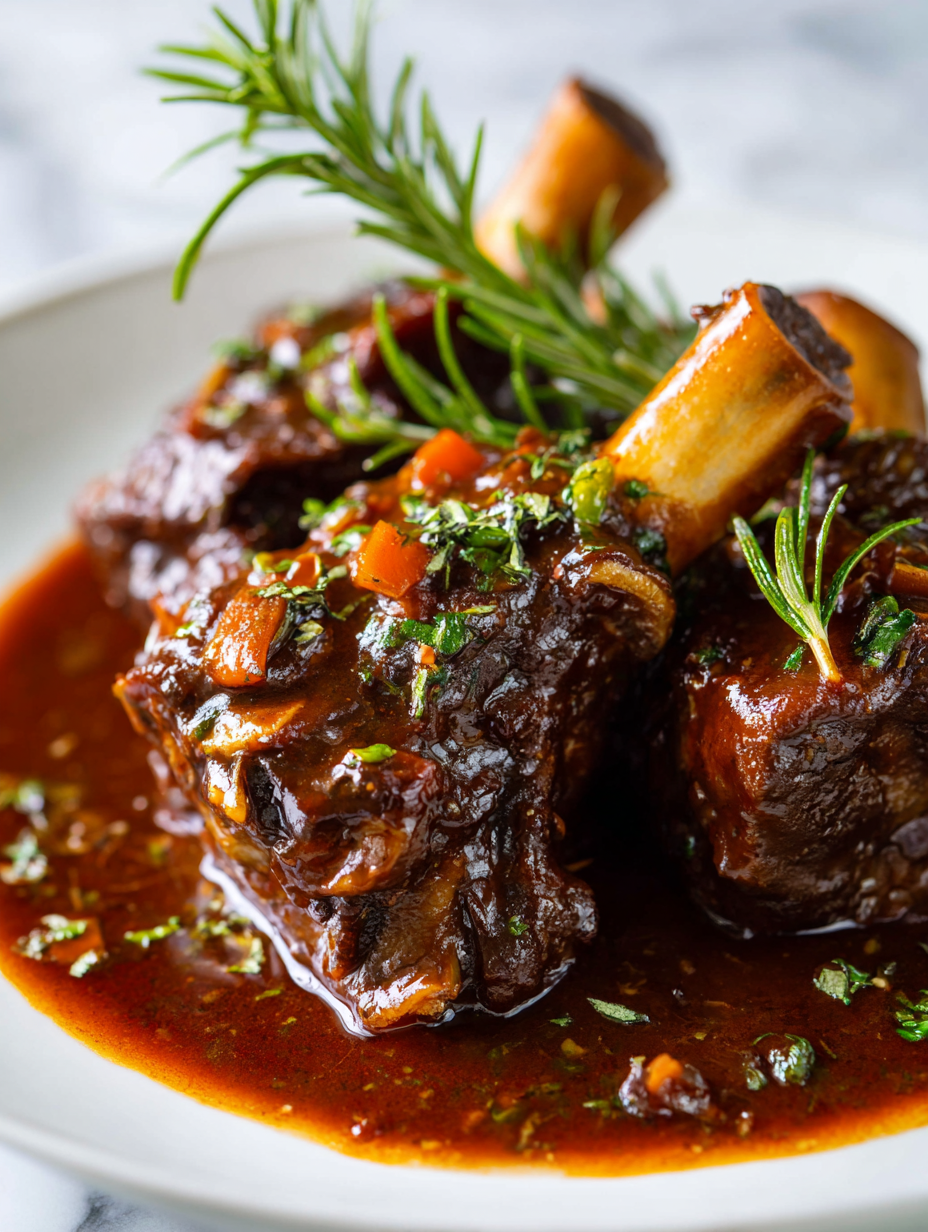
Pat the lamb shanks dry with paper towels and season generously with salt and pepper. Heat olive oil in a Dutch oven over medium-high heat until shimmering, then carefully place the shanks in the hot oil. Sear for about 4-5 minutes per side until deeply caramelized and golden brown, releasing a rich aroma.
Remove the shanks and set aside. Reduce heat to medium, then add chopped onions, carrots, and crushed garlic to the same pot. Sauté the vegetables, stirring frequently, until they soften and develop a slight caramel color, about 5 minutes, filling the kitchen with a fragrant aroma.
Pour in the red wine, scraping up any browned bits from the bottom of the pot with a wooden spoon. Bring the wine to a gentle simmer and cook until it reduces by half, about 8 minutes, until the mixture is fragrant and slightly syrupy.
Nestle the seared lamb shanks back into the pot among the vegetables. Tuck in sprigs of rosemary and thyme, then add enough broth to almost cover the meat. Toss in a bay leaf for added aroma.
Bring the mixture to a gentle simmer, then cover with a lid and transfer the Dutch oven to a preheated oven at 160°C (320°F). Let it braise slowly for about 2.5 to 3 hours, or until the meat is irresistibly tender and falling off the bone, and the sauce has thickened to a glossy consistency.
Check the sauce occasionally; if it reduces too much, add a splash more broth. If it’s too thin, uncover the Dutch oven and simmer on the stovetop for an additional 15-20 minutes to allow the sauce to thicken further.
Once cooked, remove the Dutch oven from the oven and let the shanks rest in the sauce for about 10 minutes. This helps the flavors meld and the sauce to set into a beautiful, shiny glaze that clings to the meat.
Serve the lamb shanks hot, spooning the thick, flavorful sauce over the meat. Garnish with fresh herbs if desired, and enjoy the tender, fall-apart texture and rich, wine-infused aroma that make this dish truly special.