
This recipe for lamb shanks with red wine sauce is about more than just dinner; it’s a quiet ritual that demands patience and presence. There’s something soulful about braising meat until it’s fall-apart tender, the aroma filling the kitchen with deep, roasted notes and a hint of wine’s tang. It’s a dish that asks you to slow down, to enjoy each step and savor the transformation of simple ingredients into something rich and comforting.
I find that the unspoken act of simmering lamb slowly in red wine becomes a moment of pause amid chaos—an invitation to reconnect with tradition and each other. The sauce, thick and glossy with a burst of fruity acidity, sticks to the tender meat as a reminder that good things take time. It’s a dish that’s perfect for sharing, for celebrating small victories or just soaking in the quiet warmth of a home-cooked meal.
Focusing on the unspoken ritual of slow-cooking lamb shanks with red wine, this recipe is about reclaiming a moment of pause in a busy life. It’s a reminder that the simplest ingredients, when treated patiently, can create a rich tapestry of flavor and memory.
Finding solace in slow braising
- Cooking this dish always takes me back to family Sunday dinners, where patience was the secret ingredient.
- There’s a quiet joy in watching the sauce thicken and cling to the meat, like a little culinary victory.
- I love how the rich aroma of red wine and lamb fills the house—it’s both nostalgic and oddly calming.
- Sometimes, I mess up the searing step, but a quick splash of broth and a longer simmer fixes it right up.
- Sharing this meal feels like a slow, deliberate act of love—worth every extra minute in the kitchen.
The story behind this recipe
- This dish came about after a long day when I craved something hearty but didn’t want to rush. I remember the first time I braised lamb shanks in red wine—it was an act of stubborn patience, waiting hours for the meat to loosen from the bone and soak up all that deep, fruity richness. That slow, unhurried process became a kind of meditative ritual, a moment to slow down and really savor the act of cooking. Now, it’s become my go-to for weekends when I want to make something special without fussing over it.
- There’s a quiet pleasure in watching the sauce reduce into a glossy, fragrant glaze that clings to the meat. It’s about reclaiming that slow-cooked magic, the kind that fills the house with warm, smoky, wine-soaked notes. Every time I make this, I remind myself that good things happen when you give ingredients the time they deserve. It’s a dish that celebrates patience, tradition, and those small moments of culinary calm.
- heading: The story behind this recipe
Historical & Cultural Tidbits
- Lamb shanks have been a staple in Mediterranean cuisine for centuries, valued for their rich, gelatinous meat.
- Red wine braising is believed to have originated in French and Italian kitchens, where slow-cooked stews celebrate the wine’s depth.
- The term ‘shank’ comes from Old English, referring to the leg part of the animal, prized for its flavor and tenderness when cooked slowly.
- In many cultures, slow braised meats like lamb shanks symbolize celebration and communal gathering, often served during festivals.
Key ingredients breakdown
- Lamb shanks: The star of the show, their rich, gelatinous texture becomes tender and fall-apart with slow braising. If you prefer leaner meat, try beef short ribs, but the lamb offers a uniquely deep flavor.
- Red wine: The backbone of the sauce, I prefer a fruity, medium-bodied wine like Grenache or Merlot. Skip the cheap stuff—quality really shows in the depth of the sauce. For a non-alcoholic version, substitute with beef or vegetable broth infused with a splash of balsamic vinegar.
- Onions: They melt into the sauce, adding sweetness and body. Yellow onions work well, but shallots lend a more delicate, nuanced flavor—go for those if you have them.
- Garlic: Essential for that aromatic punch, I love crushing cloves and letting them mellow into the sauce. If you’re sensitive to garlic’s punch, add it later or reduce the quantity—sometimes a little less is more.
- Herbs: Rosemary and thyme are classic, but I also toss in a bay leaf or two for complexity. Fresh herbs give a brighter, more vibrant flavor—you can swap with dried, but use less to avoid overpowering.
- Carrots: They add a subtle sweetness and balance the acidity. Use finely chopped or sliced, and if you prefer a thicker sauce, mash some cooked carrots into it near the end. Carrots also absorb the wine’s richness, making the sauce more velvety.
- Olive oil: For searing and sautéing, I use a good extra virgin olive oil. If you want a milder flavor, vegetable oil works too, but don’t skip the initial sear—it’s where much of the flavor begins.
Spotlight on key ingredients
Lamb shanks:
- The gelatinous, tender meat that transforms into melt-in-your-mouth goodness with slow braising. Its rich flavor deepens as it absorbs the wine and herbs.
- Red wine: The sauce’s backbone, offering fruity acidity and a smoky undertone. When simmered, it reduces into a glossy, flavorful glaze that clings to the meat.
Red wine:
- Its vibrant, fruity aroma intensifies as it reduces, adding depth to the sauce. A good-quality wine makes a noticeable difference in flavor.
- Herbs (rosemary & thyme): Fresh herbs release fragrant oils into the sauce, brightening the richness and adding a subtle pine and earthiness that balances the dish.
Notes for ingredient swaps
- Meat: Bone-in lamb shanks give richer flavor, but boneless or beef shanks work if you prefer easier carving. Expect slightly different texture and cooking times.
- Red wine: Use a dry, fruity wine like Merlot or Grenache for depth. For non-drinkers, substitute with beef broth infused with a splash of balsamic vinegar.
- Onions: Yellow onions add sweetness, but shallots lend a more delicate, nuanced flavor—try those for a subtle upgrade.
- Garlic: Fresh cloves are best, but roasted garlic adds a mellow, smoky sweetness if you prefer less punch.
- Herbs: Fresh rosemary and thyme are classic, but dried herbs can be used—use half as much to avoid overpowering the sauce.
- Carrots: Use finely chopped carrots for sweetness, or parsnips for a similar texture with a slightly earthier flavor. Both absorb the wine’s richness.
- Olive oil: Extra virgin olive oil adds a fruity note, but vegetable oil is a neutral swap if you want a milder base for searing.
Equipment & Tools
- Dutch oven: braise the lamb evenly in the oven
- Tongs: turn and handle the hot shanks
- Wooden spoon: deglaze and stir vegetables
- Sharp knife: prep vegetables and seasonings
Step-by-step guide to lamb shanks
- Gather your equipment: a heavy Dutch oven or ovenproof pot, tongs, a wooden spoon, and a sharp knife. Preheat your oven to 160°C (320°F).
- Pat the lamb shanks dry with paper towels. Season generously with salt and pepper. Heat a tablespoon of olive oil in the Dutch oven over medium-high heat until shimmering.
- Sear the shanks: place them in the hot oil. Cook for 4-5 minutes per side until deeply caramelized, a rich brown. Adjust heat if they start to burn or stick—add more oil if needed.
- Remove the shanks and set aside. Reduce heat to medium. In the same pot, add chopped onions, carrots, and garlic. Sauté until fragrant—about 5 minutes, they should soften and develop a bit of color.
- Deglaze with red wine: pour in 1 cup (240 ml), scraping up browned bits. Let the wine simmer until reduced by half, about 8 minutes, smelling fruity and slightly smoky.
- Add herbs: toss in sprigs of rosemary and thyme, along with a bay leaf. Return the shanks to the pot, nestling them among the vegetables. Pour in enough beef or chicken broth to nearly cover the meat—about 2 cups.
- Bring to a simmer, then cover with a lid. Transfer to the oven. Cook for 2.5 to 3 hours, or until the meat is fall-apart tender and the sauce is thick and glossy.
- Check occasionally: if the sauce reduces too much, add a splash more broth. If it’s too thin, uncover and simmer on the stovetop for last 15-20 minutes to thicken. The meat should jiggle easily when done.
- Remove from oven. Rest the shanks in the sauce for 10 minutes, uncovered, to allow flavors to meld and sauce to thicken slightly further. Gently turn the meat to coat.
- Serve hot: spoon the sauce over the lamb shanks, garnish with fresh herbs if desired. Pair with crusty bread or mashed roots for a hearty finish.
Let the lamb rest uncovered for 10 minutes to settle juices. Serve with sauce spooned over, garnished with herbs. For a richer presentation, spoon some sauce onto the plate before plating the meat.
How to Know It’s Done
- Meat easily pulls away from the bone with a gentle jiggle.
- Sauce is thick, glossy, and clings to the meat without being watery.
- A probe thermometer inserted into the meat reads around 85°C (185°F).
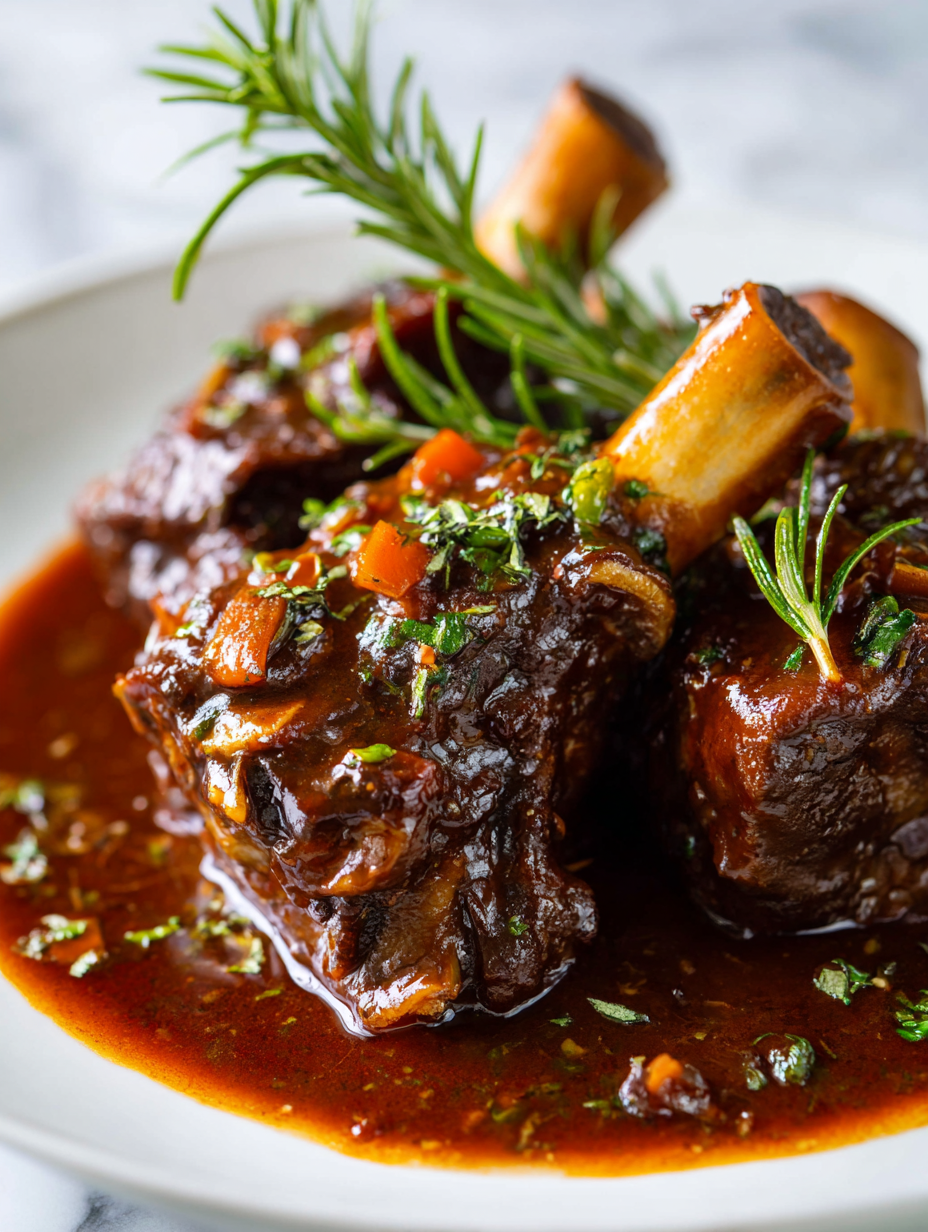
Lamb Shanks with Red Wine Sauce
Ingredients
Equipment
Method
- Pat the lamb shanks dry with paper towels and season generously with salt and pepper. Heat olive oil in a Dutch oven over medium-high heat until shimmering, then carefully place the shanks in the hot oil. Sear for about 4-5 minutes per side until deeply caramelized and golden brown, releasing a rich aroma.
- Remove the shanks and set aside. Reduce heat to medium, then add chopped onions, carrots, and crushed garlic to the same pot. Sauté the vegetables, stirring frequently, until they soften and develop a slight caramel color, about 5 minutes, filling the kitchen with a fragrant aroma.
- Pour in the red wine, scraping up any browned bits from the bottom of the pot with a wooden spoon. Bring the wine to a gentle simmer and cook until it reduces by half, about 8 minutes, until the mixture is fragrant and slightly syrupy.
- Nestle the seared lamb shanks back into the pot among the vegetables. Tuck in sprigs of rosemary and thyme, then add enough broth to almost cover the meat. Toss in a bay leaf for added aroma.
- Bring the mixture to a gentle simmer, then cover with a lid and transfer the Dutch oven to a preheated oven at 160°C (320°F). Let it braise slowly for about 2.5 to 3 hours, or until the meat is irresistibly tender and falling off the bone, and the sauce has thickened to a glossy consistency.
- Check the sauce occasionally; if it reduces too much, add a splash more broth. If it’s too thin, uncover the Dutch oven and simmer on the stovetop for an additional 15-20 minutes to allow the sauce to thicken further.
- Once cooked, remove the Dutch oven from the oven and let the shanks rest in the sauce for about 10 minutes. This helps the flavors meld and the sauce to set into a beautiful, shiny glaze that clings to the meat.
- Serve the lamb shanks hot, spooning the thick, flavorful sauce over the meat. Garnish with fresh herbs if desired, and enjoy the tender, fall-apart texture and rich, wine-infused aroma that make this dish truly special.
Tips for Perfect Lamb Shanks
- Brown thoroughly: Sear the lamb shanks until deeply caramelized to develop rich flavor and color.
- Deglaze well: Use a generous splash of wine to loosen flavorful browned bits from the pan, enhancing the sauce.
- Reduce with patience: Let the wine simmer until it’s thick and glossy, concentrating its fruity acidity.
- Check for tenderness: The meat should be fall-apart soft, jiggle easily, and the sauce should coat the meat without being watery.
- Adjust seasoning at end: Taste and add salt or a squeeze of lemon if needed to brighten the final dish.
- Control heat during searing: Keep the pan hot enough for a good sizzle but not so hot that the oil smokes or burns.
- Use fresh herbs: Add herbs towards the end of cooking for a brighter aroma and flavor, avoiding overcooking them.
Common mistakes and how to fix them
- FORGOT to sear the lamb: sear until deeply browned, then deglaze with wine to loosen flavorful bits.
- DUMPED the sauce: keep an eye on reduction; if too thick, add a splash of broth to loosen it.
- OVER-TORCHED the meat: sear over moderate heat for even caramelization, avoid burning to preserve flavor.
- SKIPPED resting time: let the meat rest for 10 minutes to redistributes juices and deepen flavor.
Quick fixes and pantry swaps
- When sauce is too watery, splash in a little tomato paste to thicken quickly.
- If meat is tough, cover and cook longer; slow heat softens collagen for melt-in-mouth texture.
- Splash some vinegar or lemon juice if sauce feels flat or dull in acidity.
- Patch over burnt pan spots with a bit of water and a scrub brush, then resume cooking.
- Shield meat from over-torching by lowering heat or removing the pan from direct flame for a moment.
Prep, store, and reheat tips
- Prep the sauce ingredients—chop vegetables and measure wine—ahead to streamline cooking and intensify flavors as they meld overnight.
- Store cooked lamb shanks and sauce separately in airtight containers; they keep well in the fridge for up to 3 days, with flavors mellowing slightly.
- For longer storage, freeze the lamb in its sauce for up to 2 months; defrost overnight in the fridge before reheating.
- Reheat gently on the stovetop over low heat, stirring occasionally until hot and fragrant—look for a glossy, bubbling sauce that coats the meat.
- Sensory note: reheated lamb should be tender and juicy, with a sauce that’s thick and aromatic, not greasy or watery.
Top questions about lamb shanks with red wine sauce
1. What should I look for when buying lamb shanks?
Look for shanks with a good amount of meat and some marbling; it adds flavor and keeps the meat moist during slow cooking.
2. Can I use any wine for cooking?
Using a quality dry red wine makes a noticeable difference. Choose something fruity and medium-bodied like Grenache or Merlot.
3. Why is searing important in this recipe?
Searing the shanks until deeply browned is key for flavor. Don’t rush this step; it creates the foundation of your sauce.
4. How long does it take to cook the lamb shanks?
Cooking time varies, but generally 2.5 to 3 hours at 160°C (320°F) until the meat is fall-apart tender.
5. Can I make this dish in advance?
Yes, you can prepare the sauce ahead. Just reheat gently and add a splash of broth if it thickens too much.
6. How do I know when the lamb is done?
The sauce should be glossy and cling to the meat without being watery. The meat should jiggle easily and pull away from the bone.
7. What if the sauce is too watery?
If the sauce is too thin, uncover the pot and simmer on the stove for 15-20 minutes until it thickens into a rich glaze.
8. Can I substitute fresh herbs with dried ones?
Use fresh herbs like rosemary and thyme for brightness. Dried herbs work in a pinch, but use half as much.
9. What if I burn the meat while searing?
Over-torched meat can be fixed by lowering the heat and allowing it to simmer slowly—don’t rush the process.
10. How should I reheat leftovers?
Reheat gently on the stovetop over low heat, stirring occasionally. The sauce should be thick and fragrant, and the meat tender.
This dish is more than just a hearty meal; it’s about reclaiming a slow moment in a busy life. The aroma alone, with its deep wine and roasted notes, makes the effort feel worthwhile. It’s a reminder that patience in the kitchen can turn simple ingredients into something truly memorable.
Sharing lamb shanks with red wine sauce feels like a quiet act of taking time—whether to savor a weekend or a special occasion. The richness, the tender meat, the glossy sauce—these are the small, unspoken rewards that make this dish worth every minute in the kitchen.

Founded by Rachel Morgan, a proud home cook and foodie from Austin, Texas, this blog is all about transforming everyday meals into moments of joy.