Turning cottage cheese into pancakes might seem odd at first, but it’s a secret I’ve kept for mornings when I need something quick, filling, and a little different. The cheese adds a creamy tang and a boost of protein that keeps me full longer, without feeling heavy.
There’s a charm in how these pancakes come together—no fancy ingredients, just simple staples, and a little patience in flipping. They’re perfect for when you want breakfast that’s satisfying but not stodgy, and they hold up well enough to be made ahead and reheated with a quick zap.
Honestly, I love how the cottage cheese makes the pancakes feel almost indulgent, even though they’re wholesome. They’re great with a drizzle of honey or a dollop of sour cream, and they remind me that sometimes, the simplest tweaks turn breakfast into a real treat.
Turning cottage cheese into a savory, protein-packed breakfast that feels indulgent yet wholesome, perfect for mornings when you need a quick, satisfying start without compromising on flavor.
A Hidden Breakfast Treasure
- These pancakes remind me of lazy weekend mornings at my grandmother’s house, where everything felt simple and warm.
- I used to shy away from cottage cheese in baking, but now I see it as my secret weapon for fluffy, protein-rich pancakes.
- There’s a nostalgic joy in flipping these pancakes—each crackle and sizzle makes the morning feel alive.
- Honestly, I love how versatile they are—sweet with honey or savory with herbs—like a blank canvas for breakfast.
The story behind this recipe
- This recipe came from a Sunday morning experiment that turned into a weekly staple. I was tired of standard pancakes and wanted something creamy with a little tang, but still easy to whip up. Cottage cheese adds this unexpected richness that makes the pancakes feel indulgent, even when I’m rushing.
- It’s a bit of a cheat — I love how the curds break down and create tiny pockets of flavor and moisture. Plus, it’s a sneaky way to pack in protein without much fuss. Now, it’s become a morning ritual, especially when I want something quick but satisfying enough to hold me through a busy day.
- heading: The story behind this recipe
Historical & Cultural Tidbits
- These cottage cheese pancakes have roots in Eastern European breakfasts, where dairy-rich recipes are common for a hearty start.
- The use of cottage cheese in pancakes became popular in the mid-20th century, as a way to boost protein intake with simple ingredients.
- In some cultures, this dish is a brunch staple, celebrated for its balance of creamy texture and crispy edges when cooked properly.
Ingredient breakdown: key components
- Cottage Cheese: I love how the curds add a creamy, slightly tangy flavor. If you want a milder taste, try ricotta instead.
- Flour: I prefer all-purpose for a fluffy texture, but almond flour gives a nutty twist—just watch the moisture levels.
- Eggs: They bind everything together and give structure. For fluffier pancakes, add an extra yolk or a splash of sparkling water.
- Baking Powder: This is my secret for light, airy pancakes. If you don’t have any, a pinch of baking soda with lemon juice works well.
- Sweetener (honey or sugar): I like a touch of honey for a subtle sweetness and a hint of caramel. Skip if savory.
- Oil or Butter: It helps crisp the edges and makes flipping easier. A neutral oil like canola is fine, but butter adds richness and aroma.
- Optional Add-ins: Blueberries, herbs, or spices—whatever makes your pancakes special. Just fold gently so they don’t sink or bleed.
Spotlight on key ingredients
Cottage Cheese:
- I love how the curds add a creamy, slightly tangy flavor. If you want a milder taste, try ricotta instead.
- This ingredient behaves like a sponge in the pan—softening quickly and creating pockets of moisture, which keeps the pancakes tender and moist.
Flour:
- I prefer all-purpose for a fluffy texture, but almond flour gives a nutty twist—just watch the moisture levels.
- It provides the structure and body; during cooking, it helps the pancakes set and develop that tender crumb with a slight chew.
Notes for ingredient swaps
- Dairy-Free: Swap cottage cheese for silken tofu or almond ricotta. Slightly milder, but still creamy and satisfying.
- Gluten-Free: Use a blend of rice flour and tapioca starch instead of all-purpose flour. Expect a slightly denser pancake.
- Low-Carb: Replace flour with almond flour or coconut flour. Be aware these will change the texture and moisture absorption.
- Sweetener: Honey or maple syrup can be swapped for agave nectar or coconut sugar, affecting sweetness and flavor depth.
- Eggs: Flaxseed meal or chia seeds mixed with water can replace eggs for a vegan version, though texture may vary.
- Oil: Use coconut oil or apple sauce to reduce saturated fat and add subtle flavor, but watch for moisture content.
- Herbs & Add-ins: Fresh herbs, spices, or berries can be swapped or omitted—play with flavors to suit your palate.
Equipment & Tools
- Non-stick skillet or griddle: Provides an even cooking surface for flipping pancakes.
- Spatula: Turns and removes pancakes without breaking them.
- Mixing bowl: Holds and combines the batter ingredients.
- Whisk: Ensures smooth, lump-free batter.
- Measuring cup: Helps portion the batter evenly.
Step-by-step guide to pancakes
- Gather your equipment: a non-stick skillet or griddle, a spatula, a mixing bowl, a whisk, and a measuring cup. Preheat the skillet over medium heat, about 160°C (320°F).
- In the mixing bowl, combine 1 cup of cottage cheese, 2 large eggs, and 1/2 teaspoon of salt. Whisk until smooth and slightly frothy, about 30 seconds.
- Add 3/4 cup of all-purpose flour and 1 teaspoon of baking powder to the wet ingredients. Gently fold with a spatula until just combined. Do not overmix; some lumps are fine.
- Let the batter rest for 5 minutes. This helps the flour hydrate and prevents pancakes from being too dense.
- Lightly oil the skillet with a small amount of butter or neutral oil. Once shimmering, pour 1/4 cup of batter for each pancake. Cook for about 2-3 minutes, until bubbles form and edges look set.
- Flip carefully with a spatula. Cook for another 2 minutes or until golden brown and cooked through. The pancakes should be firm around the edges and slightly springy in the center.
- Check the color and aroma. The pancakes should be golden on both sides, smell slightly nutty, and have a gentle crackle when flipped. If they look pale, increase heat slightly.
- Remove from heat and let rest for a minute. Serve warm with your favorite toppings, like fresh fruit or a drizzle of honey.
Let the cooked pancakes rest for a minute on a plate to set their shape. Serve immediately with toppings. For reheating, warm in a 150°C (300°F) oven for 5 minutes, or microwave for 20-30 seconds until steaming hot.
How to Know It’s Done
- Pancakes are golden and crispy on the edges.
- A gentle jiggling shows they are cooked through but still tender inside.
- They release easily from the pan without sticking or tearing.
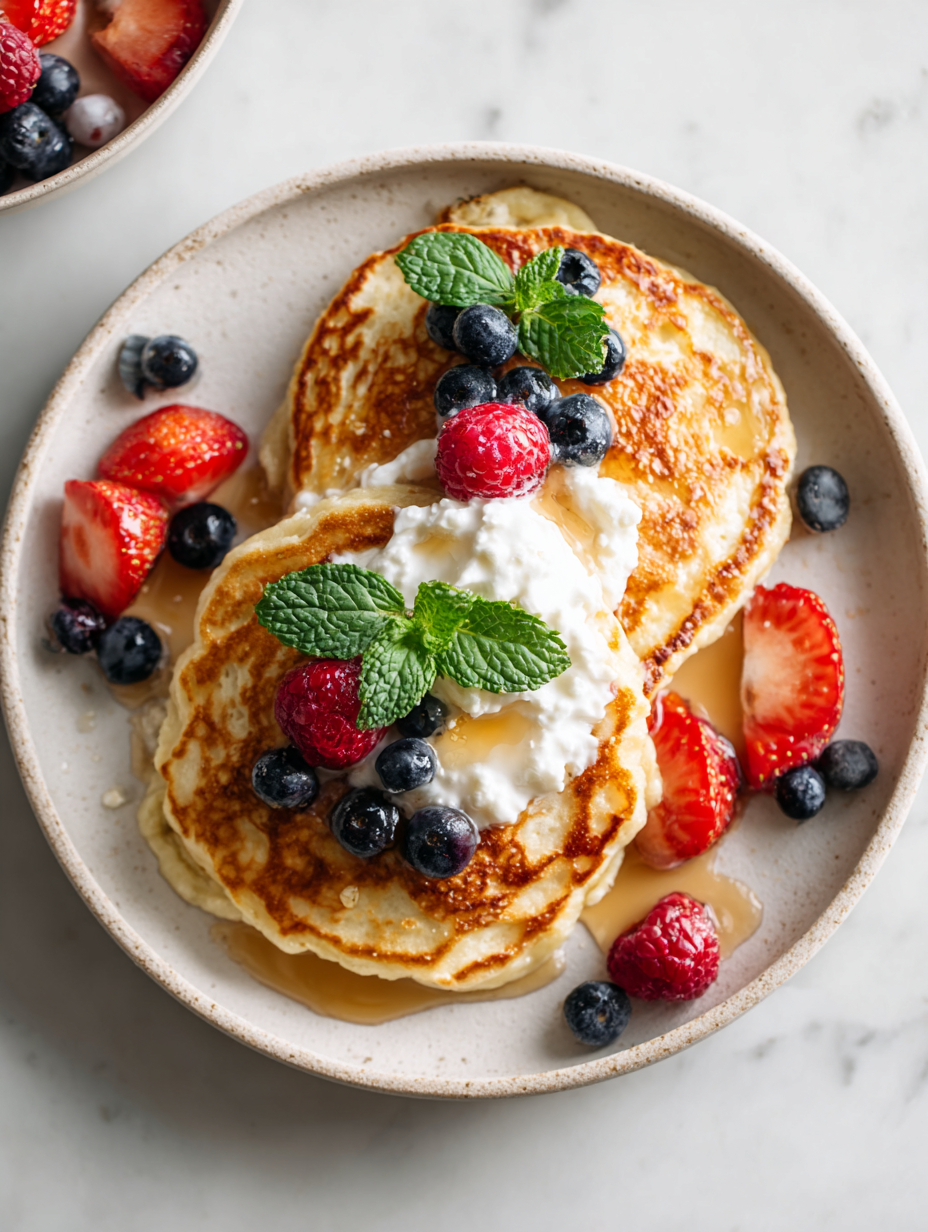
Cottage Cheese Pancakes
Ingredients
Equipment
Method
- In a mixing bowl, whisk together the cottage cheese, eggs, and a pinch of salt until the mixture is smooth and slightly frothy. This helps incorporate air for fluffiness.
- Add the flour, baking powder, and honey or sugar to the wet ingredients. Gently fold with a spatula until just combined, being careful not to overmix; some lumps are fine. Rest the batter for 5 minutes to allow the flour to hydrate.
- Preheat your non-stick skillet or griddle over medium heat until it feels hot and a few drops of water sizzle upon contact. Lightly brush the surface with oil or butter.
- Pour about 1/4 cup of batter onto the skillet for each pancake. Cook for 2-3 minutes, observing as bubbles appear on the surface and the edges look set and slightly golden.
- Carefully flip each pancake with a spatula, listening for a gentle crackle as they turn golden brown. Cook for another 2 minutes until the underside is crispy and the pancakes are cooked through.
- Remove the pancakes from the skillet and let them rest on a plate for a minute. Repeat with the remaining batter, adding more oil as needed to prevent sticking.
- Serve the pancakes warm with your favorite toppings like honey, sour cream, or fresh fruit. Enjoy their tender, crispy edges and fluffy interior.
Notes
Pro tips for perfect cottage cheese pancakes
- Use a gentle hand when folding in add-ins to prevent deflation.
- Rest the batter for at least 5 minutes to improve texture and rise.
- Maintain medium heat to prevent burning while ensuring golden edges.
- Flip when bubbles form and edges look set—don’t rush it.
- Use a non-stick pan for easy flipping and clean-up.
- Check for doneness by pressing lightly—pancakes should spring back.
- Keep cooked pancakes warm in a low oven to serve all at once.
Common mistakes and how to fix them
- TOO DRY: Overmixing dough dries out pancakes. Mix until just combined, no more.
- TOO SOGGY: Using too much cottage cheese makes pancakes dense. Measure precisely and drain excess whey if needed.
- UNEVEN COOKING: Pan too hot or uneven heating causes burnt edges. Adjust heat to medium and preheat evenly.
- FAILED FLIP: Pancakes stick or break when flipped too early. Wait until bubbles form and edges are set.
Quick Fixes & Pantry Swaps
- When pancakes are too dense, splash in a little sparkling water to lighten the batter.
- If they stick, patch with a gentle nudge and reduce heat slightly for even cooking.
- Dumped batter too thick? Open the fridge door, rescue with a splash of milk, and stir gently.
- Over-torched edges? Shield with a bit of foil and lower the heat for a gentler finish.
- Pan shimmer absent? Swap to a neutral oil like canola for a crisp, crackly exterior.
Prep, store, and reheat tips
- Prepare the batter up to 24 hours in advance; keep refrigerated in an airtight container. The batter may thicken slightly—stir gently before cooking.
- Cooked pancakes can be stored in the fridge for up to 2 days; reheat in a warm skillet or microwave, watching for a slight shimmer and soft interior.
- Freezing is best for longer storage—layer pancakes with parchment between, then seal in a bag. Reheat directly from frozen in a hot pan or oven, until steaming and crispy around the edges.
- Reheated pancakes tend to be softer and less fluffy; add a splash of milk or a tiny bit more baking powder when reheating to revive some fluffiness.
- For optimal texture, reheat only what you plan to eat. Over-reheating can make them dry or rubbery, especially in the microwave.
Top questions about cottage cheese pancakes
1. Can I use low-fat cottage cheese?
Use full-fat cottage cheese for the best creamy texture and flavor. Skim works, but the pancakes may be a bit drier.
2. Can I replace cottage cheese with ricotta?
Yes, you can substitute ricotta cheese for a milder, smoother pancake with less tang.
3. How can I flavor these pancakes?
Adding a pinch of cinnamon or vanilla can boost flavor, especially if you like a sweet breakfast.
4. What temperature should I cook them at?
Cook over medium heat, about 160°C (320°F), until bubbles form and edges look set, then flip.
5. Do I need a special pan?
Use a non-stick skillet and a little oil or butter to prevent sticking and make flipping easier.
6. Should I let the batter rest?
Let the batter rest for 5 minutes before cooking to improve fluffiness and prevent dense pancakes.
7. How do I reheat leftovers?
Reheat in a warm skillet or microwave, but avoid overcooking to keep them tender and moist.
8. Can I freeze these pancakes?
You can freeze cooked pancakes layered with parchment paper for up to 3 months. Reheat directly from frozen.
9. What if my pancakes turn out dense?
If pancakes are too dense, fold in a splash of sparkling water or milk to lighten the batter.
10. How can I make them savory?
For a savory twist, add chopped herbs or grated cheese into the batter before cooking.
These cottage cheese pancakes are a reminder that simple ingredients can create something unexpectedly special. The tangy, creamy bite makes them stand out, especially when topped with fresh fruit or a drizzle of honey. They’re a breakfast that feels both comforting and a little bit different, perfect for slow weekend mornings or whenever you need a quick, hearty start.
In the rush of everyday life, it’s nice to have a dish like this up your sleeve—something that’s easy to make, satisfying, and leaves you feeling nourished. Plus, they hold a bit of that homemade magic, even when reheated. Sometimes, the simplest recipes turn out to be the most memorable.

Founded by Rachel Morgan, a proud home cook and foodie from Austin, Texas, this blog is all about transforming everyday meals into moments of joy.