
This Lemon Garlic Chicken Thighs recipe is all about that perfect balance — the zest of lemon brightens up the fatty richness of the thighs, making every bite feel like a little celebration. It’s one of those dishes I turn to when I want something satisfying but also lively enough to lift my mood. The garlic adds a warm, savory depth that keeps it from feeling too citrusy or sharp.
I love how quick this comes together — a simple marinade, a hot pan, and you’re almost there. No fancy ingredients needed, just good chicken thighs and a few pantry staples. It’s the kind of meal I make on a weeknight when I want something flavorful without spending hours in the kitchen. Plus, the aroma filling the kitchen — lemon, garlic, and that sizzling chicken — it’s enough to make anyone stop and get hungry.
This recipe focuses on how the bright acidity of lemon cuts through the richness of chicken thighs, transforming a simple comfort food into a lively, almost celebratory dish, perfect for those busy weeknights when you need a quick, flavorful uplift.
Bright and Savory Chicken
- The smell of lemon and garlic bubbling in the pan always takes me back to summer evenings at my grandma’s place.
- Cooking this dish feels like a small celebration — bright, lively, and surprisingly simple for how impressive it looks.
- There’s a quiet pride in mastering the perfect sear on chicken thighs, especially when they turn out juicy and golden.
- This recipe became my go-to comfort food during hectic weeks — quick to prep, yet full of flavor that lifts the spirit.
The story behind this recipe
- This dish came about one busy evening when I needed something quick, bright, and satisfying. I remembered how my grandmother used to squeeze lemon over almost everything — chicken, fish, roasted veggies — and it always brought a fresh spark to the table. That memory, combined with a desire for bold, clean flavors, made me experiment with this simple marinade for chicken thighs.
- Cooking it reminds me of lazy Sunday afternoons, the smell of garlic and lemon filling the kitchen, making everything feel a little more special. It’s a recipe born from the chaos of weeknights but elevated enough to serve when friends unexpectedly drop by. Honestly, it’s become a favorite because it’s straightforward but feels like you’ve put in some effort.
- heading: ‘The story behind this recipe’
Historical and Cultural Roots
- Lemon and garlic have been staples in Mediterranean cooking for centuries, used to brighten dishes and add depth.
- Chicken thighs, once considered less desirable, gained popularity in the last century for their rich flavor and forgiving texture.
- The combination of lemon and garlic was historically prized for its preservative qualities before refrigeration.
- This recipe echoes rustic farm-to-table traditions, where simple ingredients were transformed into vibrant, everyday meals.
Key ingredients and tips
- Chicken thighs: I prefer bone-in, skin-on for flavor and juiciness, but boneless works if you want less fuss and faster cooking—just watch the heat so they don’t dry out.
- Lemon juice: Freshly squeezed lemon brightens the dish with a zesty punch that’s more vibrant than bottled juice—don’t skip the zest for that aromatic citrus oil.
- Garlic: I love how whole cloves mellow and sweeten as they cook, but if you’re pressed for time, minced garlic adds a quick, pungent punch—just watch it so it doesn’t burn.
- Olive oil: Use a good-quality extra virgin for richness and depth; its fruity notes really enhance the sear and help prevent sticking, especially if you’re cooking skin-on thighs.
- Herbs: Fresh thyme or rosemary add earthy notes, but if dried herbs are all you have, use half the amount—dried can be overpowering if you’re not careful.
- Salt & pepper: Always season generously—especially the chicken skin—because it’s the baseline for all the bright flavors to pop. A pinch of flaky sea salt just before serving adds a nice crunch.
- Optional: A splash of white wine or chicken broth can deglaze the pan and add a subtle layer of complexity—oozy and smoky when reduced.
Spotlight on Key Ingredients
Lemon:
- I love how fresh lemon juice and zest bring a bright, zingy contrast to the rich chicken thighs, especially when they’re sizzling in the pan, releasing that citrusy aroma that cuts through the savory scent of garlic.
- Garlic: Whole cloves mellow and sweeten as they cook, turning golden and fragrant, adding a warm, pungent depth that balances the acidity of the lemon perfectly.
Garlic:
- Chicken thighs: I prefer bone-in, skin-on for that crispy skin and juicy meat, but boneless works if you want quicker cooking—just keep an eye on the heat to prevent drying out.
- Herbs: Fresh thyme or rosemary add an earthy layer—during cooking, their aroma intensifies, filling the kitchen with a comforting, green scent that complements the lemon and garlic.
Notes for ingredient swaps
- Dairy-Free: Swap butter for extra olive oil—loses some richness but keeps the bright, savory profile.
- Low-Sodium: Use unsalted chicken broth instead of seasoned if you need to cut salt without losing moisture.
- Vegan: Tofu or tempeh marinated in lemon and garlic—though different in texture, they absorb flavors well.
- Herb Variations: Fresh parsley or basil can replace thyme—each adds a different aromatic punch.
- Citrus Swap: Lime or orange juice can replace lemon—bring a slightly different tang, but still lively and fresh.
- Garlic Alternatives: Shallots or garlic powder—less pungent but still add depth if fresh garlic isn’t available.
- Oil Choice: Avocado oil works great for high heat, with a mild, buttery note—if olive oil isn’t on hand.
Equipment & Tools
- Heavy skillet or cast-iron pan: Provides even heat and a good sear
- Tongs: Flip and handle the chicken safely
- Small bowl: Mix marinade ingredients
- Meat thermometer: Check internal temperature for doneness
- Paper towels: Pat chicken dry for crispy skin
Step-by-step guide to pan searing
- Equipment & Tools: Use a heavy skillet or cast-iron pan for even heat and a good sear; tongs for flipping; a small bowl for marinade; a meat thermometer for doneness; paper towels for patting chicken dry.
- Pat the chicken thighs dry with paper towels—this helps get crispy skin. Season generously with salt and pepper on both sides.
- Mix lemon juice, lemon zest, minced garlic, olive oil, chopped herbs, and a pinch of salt in a small bowl. Marinate the chicken for at least 15 minutes or up to 30 minutes in the fridge.
- Heat your skillet over medium-high heat—around 200°C/400°F. When hot, add the chicken skin-side down. Sear for about 5-7 minutes until the skin is golden and crispy, then flip.
- Step 4a: Reduce heat to medium (about 180°C/350°F). Continue cooking for another 8-10 minutes, or until the internal temperature reaches 75°C/165°F. If skin isn’t crispy enough, increase heat slightly at the end.
- Step 4b: Baste the chicken with the pan juices occasionally. The smell of caramelized garlic and lemon should fill the air.
- Step 4c: For uneven cooking, cover loosely with foil and let rest for 5 minutes. If juices run pink, cook a little longer.
- Resting & Finishing: Transfer chicken to a plate, let rest for 5 minutes so juices redistribute. Spoon pan juices over the top for extra flavor. Serve with lemon wedges for an extra bright punch.
- Checkpoints & How to Know It’s Done: Skin should be crispy and golden; juices run clear when pierced; internal temp hits 75°C/165°F.
Rest the chicken for 5 minutes on a plate, uncovered. Spoon pan juices over the top, then serve with lemon wedges for that extra zing.
How to Know It’s Done
- Skin is deeply golden and crispy.
- Juices run clear without pinkness.
- Internal temperature reaches 75°C/165°F.
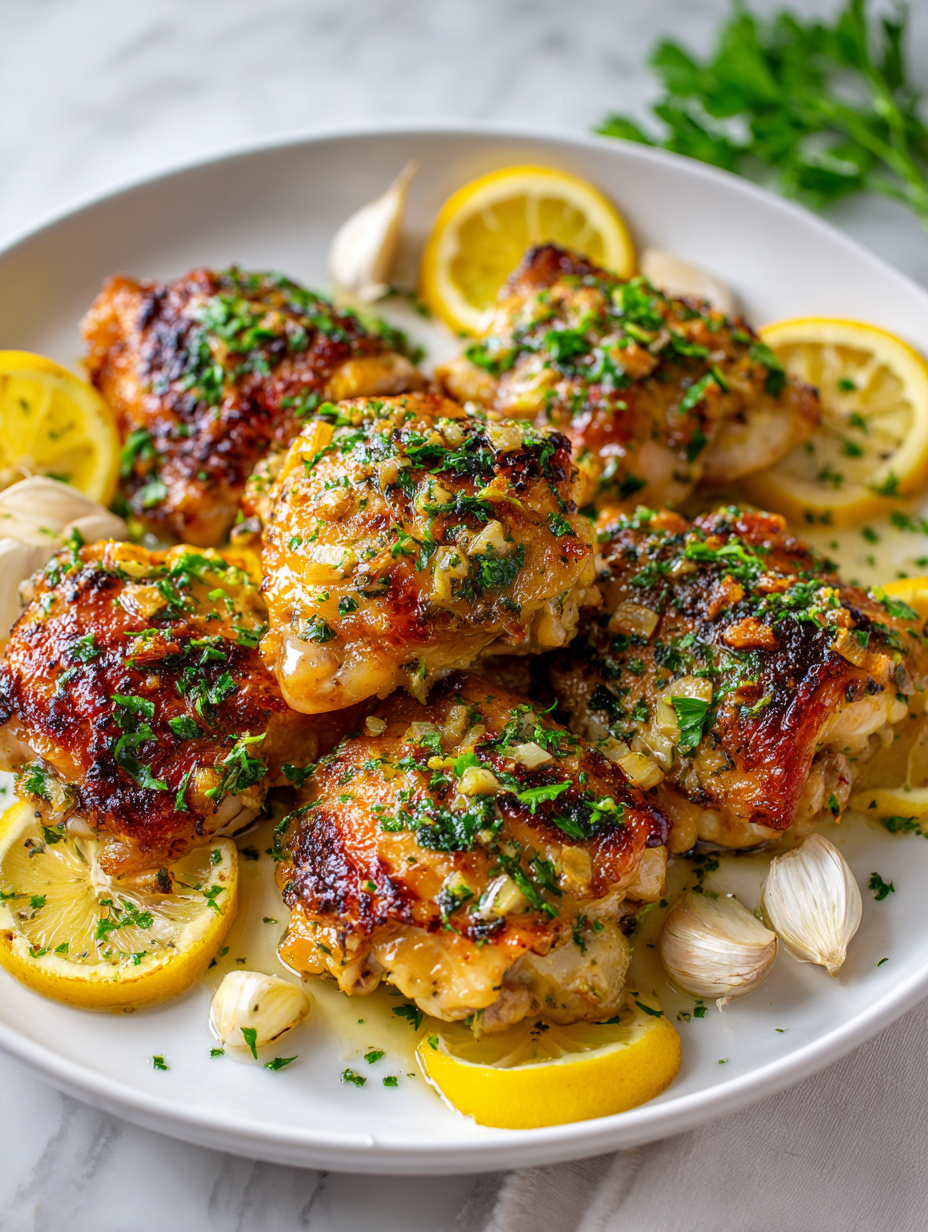
Lemon Garlic Chicken Thighs
Ingredients
Equipment
Method
- Pat the chicken thighs dry with paper towels to ensure crispy skin. Season generously with salt and pepper on both sides.
- In a small bowl, whisk together the juice and zest of the lemon, minced garlic, olive oil, chopped herbs, and a pinch of salt. Marinate the chicken in this mixture for at least 15 minutes in the fridge.
- Heat your heavy skillet over medium-high heat until hot and shimmering. Carefully place the chicken thighs skin-side down and sear for about 5-7 minutes, pressing gently to ensure contact. The skin should turn golden brown and crispy with a sizzle sound.
- Flip the chicken thighs using tongs and continue cooking on the other side for another 8-10 minutes. Reduce the heat slightly if the skin starts to burn, and baste occasionally with pan juices to keep the meat moist. The skin should be deeply golden and crispy.
- Check the internal temperature with a meat thermometer; it should read 75°C (165°F). Once done, transfer the chicken to a plate and let it rest for 5 minutes to allow juices to redistribute.
- Spoon the pan juices over the rested chicken and squeeze fresh lemon wedges on top for an extra burst of brightness. Serve immediately, enjoying the crispy skin and tender, flavorful meat.
Pro tips for perfect chicken thighs
- Bolded mini-head: Use a hot pan to achieve a crisp, golden skin—listen for that satisfying crackle.
- Bolded mini-head: Pat chicken dry thoroughly—moisture prevents skin from crisping properly.
- Bolded mini-head: Sear skin-side down first—this helps develop a deep, caramelized crust before flipping.
- Bolded mini-head: Baste with pan juices during cooking—enhances flavor and keeps the meat juicy.
- Bolded mini-head: Let the chicken rest for 5 minutes—resting redistributes juices for maximum tenderness.
- Bolded mini-head: Add lemon zest at the end—preserves the bright, aromatic oils for a lively punch.
Common mistakes and how to fix them
- FORGOT to pat chicken dry → Results in less crispy skin, so dry thoroughly before seasoning.
- DUMPED marinade too early → Let chicken rest at least 15 minutes for better flavor absorption.
- OVER-TORCHED skin → Reduce heat or move chicken to cooler part of pan to prevent burning.
- SKIPPED resting → Rest chicken 5 minutes for juicy, evenly cooked meat and better flavor.
Quick fixes and pantry swaps
- If sauce shimmers, splash a splash of water—rescue that bright lemon aroma.
- When skin isn’t crispy enough, increase heat slightly and cook 1-2 minutes longer.
- Splash lemon juice after searing for extra zing—adds fresh brightness instantly.
- Patch overcooked chicken with a quick squeeze of lemon—cuts through dryness with fresh acid.
- Shield burnt garlic with a dollop of butter—mutes bitterness and adds richness.
Prep, store, and reheat tips
- Marinate the chicken up to 24 hours ahead in lemon, garlic, and herbs—flavors deepen as it sits in the fridge and the citrus aroma intensifies.
- Store cooked chicken thighs in an airtight container for up to 3 days—reheat gently to preserve juiciness, aiming for a warm, fragrant bite with a slight crisp on the skin.
- Reheat in a hot skillet over medium heat, about 180°C/350°F, until warmed through and skin regains some crispness—listen for a gentle crackle.
- For longer storage, freeze cooked thighs wrapped tightly for up to 2 months—thaw overnight in the fridge and reheat with a splash of broth to revive moisture and flavor.
- Flavor may mellow slightly after refrigeration; a squeeze of fresh lemon and a quick reheat will bring back brightness and aroma—look for a shimmering sauce and fragrant lemon zest.
Top questions about Lemon Garlic Chicken Thighs
1. Can I use bottled lemon juice instead of fresh?
Use fresh lemon juice for brightness and zest for aroma—bottled lemon can taste flat and dull. The zest also releases essential oils that enhance the flavor.
2. Should I use skinless or skin-on chicken thighs?
Cooking chicken thighs with skin on and bone-in helps keep the meat juicy and adds flavor. Boneless skinless thighs cook faster but may be less flavorful and crispy.
3. How do I know when the chicken is cooked through?
Cook until the skin is deeply golden and crispy, and the internal temperature hits 75°C/165°F. Juices should run clear when pierced.
4. Why is resting the chicken important?
Let the chicken rest for about 5 minutes after cooking. This allows juices to redistribute, keeping the meat tender and moist.
5. Can I marinate the chicken longer?
Marinate the chicken for at least 15 minutes to absorb flavors. Up to 24 hours is fine, but keep it refrigerated and covered.
6. My chicken skin isn’t crispy, what should I do?
If your skin isn’t crispy enough, turn the heat higher or cook a little longer at the end. Just watch to prevent burning the garlic or zest.
7. What’s the best pan for searing chicken thighs?
Use a heavy skillet or cast-iron pan for even heat and a better sear. It helps develop that deep, caramelized crust.
8. How do I fix a burnt or too-thick sauce?
If the sauce reduces too much or gets burnt, add a splash of water or broth and scrape up browned bits for flavor.
9. How do I reheat cooked chicken without drying it out?
Reheat leftovers gently in a skillet over medium heat or in the oven, adding a splash of broth to revive moisture and aroma.
10. Can I use dried herbs instead of fresh?
Use fresh herbs for the best aroma, but dried herbs can work—use half as much and add them early in cooking for flavor infusion.
This dish feels like a little reminder that simple ingredients can create something lively and satisfying. The bright lemon, warm garlic, and crispy chicken come together in a way that’s both familiar and unexpectedly fresh. It’s the kind of meal that sticks with you long after the plates are cleared.
Whenever I cook this, I think about how quick and unpretentious it is, but still feels like a little celebration. It’s perfect for nights when you want something flavorful without fuss, and the aroma alone makes the whole kitchen feel inviting. Sometimes, that’s exactly what we need.

Founded by Rachel Morgan, a proud home cook and foodie from Austin, Texas, this blog is all about transforming everyday meals into moments of joy.