
Some mornings call for a breakfast that feels like a warm, familiar hug, even when time is tight. Scrambled eggs with vegetables hit that spot for me—simple, nourishing, and endlessly adaptable. It’s the kind of dish that invites you to toss in whatever’s left in the fridge and makes you feel like you’ve got your act together before 8 a.m.
Over the years, I’ve realized that the secret to truly satisfying scrambled eggs isn’t just the eggs themselves but how you treat the vegetables. A splash of olive oil, a little patience to soften them just right—those small steps create a depth of flavor that turns a basic morning habit into a cozy ritual. It’s honest food, made with a little bit of love and a lot of flexibility.
This dish became my go-to when mornings felt chaotic but I still wanted something warm and grounding. The vegetables add a crunch and vibrancy that contrast beautifully with the creamy eggs. It’s a recipe that’s forgiving—change the veg, tweak the seasonings—and always makes me feel a little more ready to face the day.
Focusing on how to turn simple scrambled eggs with vegetables into a comforting, customizable breakfast that feels like a warm hug on busy mornings.
A Cozy Twist on Breakfast Classics
- That first bite of fluffy eggs with a burst of sweet bell peppers still makes me smile, even on rushed mornings.
- I used to think scrambled eggs were boring, but adding a handful of kale or spinach changed the game entirely—more vibrant, more satisfying.
- There’s a quiet pride in turning humble leftovers into a colorful, nourishing breakfast that fuels the whole day.
- Sometimes, I crave the simple comfort of eggs and veggies, especially when I need a break from heavier weekend brunches.
- This dish reminds me of lazy Sunday mornings with family, where everyone’s plate is loaded with whatever greens and bits they love.
A personal touch on busy mornings
- This recipe was born out of a hectic Saturday morning when I found a few leftover bell peppers, some wilting spinach, and a couple of eggs that needed using up fast. Instead of the usual scramble, I tossed the veggies into the pan first, letting them soften until they smelled sweet and a little smoky. When the eggs hit the pan, everything came together quickly, and I realized how these simple ingredients could turn into a surprisingly vibrant, satisfying breakfast that felt like a small victory amidst the chaos.
- I’ve been making this for years, tweaking it with whatever I have—sometimes mushrooms, sometimes cherry tomatoes—and it always feels like a little act of improvisation that pays off. It’s become my go-to when I want something nourishing but don’t want to fuss over it. The best part? It’s forgiving—no two mornings are the same, but each one leaves me with a plate of colorful, cozy comfort.
- heading: ‘A Breakfast That Embraces Flexibility’
Historical tidbits about veggie eggs
- Early versions of scrambled eggs with vegetables date back to rustic European peasant meals, where leftovers were transformed into hearty breakfast fare.
- In some Asian cuisines, stir-fried eggs with greens have been a breakfast staple for centuries, emphasizing quick, nourishing bites to start the day.
- The concept of enriching eggs with vegetables gained popularity in the 20th century as a way to make simple ingredients more nutritious and colorful.
Ingredient breakdown: key components
- Eggs: I like using large, organic eggs for a richer flavor and creamier texture—think of that silky yellow glow. If you want fluffier eggs, whisk thoroughly until bubbly before pouring into the pan.
- Bell Peppers: I prefer red or yellow for sweetness and vibrant color, but any color works. Roasting briefly before adding can deepen their smoky flavor and add a tender bite.
- Spinach: Fresh spinach adds a gentle bitterness and a splash of color. Wilt it quickly in the pan with a pinch of salt—don’t overcook or it’ll turn mushy and dull the bright green.
- Onion: A small yellow onion diced finely brings sweetness and depth. Sauté until translucent and fragrant—if they burn, lower the heat and add a splash of water to soften.
- Olive Oil: Use good-quality extra virgin olive oil for flavor—watch it shimmer and smell nutty as it heats. If you prefer butter, it adds richness but less of that fruity aroma.
- Salt & Pepper: Season generously—these enhance all the other flavors. Add salt toward the end if you want to avoid overseasoning; pepper is best freshly cracked.
- Optional Cheese: A sprinkle of feta or cheddar at the end adds a salty, creamy finish. Use sparingly if watching salt intake, or skip for a lighter bite.
Spotlight on key ingredients
Eggs:
- I prefer large, organic eggs for their rich flavor and creamy yolk, which makes the scramble silky and satisfying. Skip if you want a lighter texture—use egg whites instead.
- Bell Peppers: Red or yellow add sweetness and vibrant color, but any color works. Roasting them briefly deepens their smoky aroma and softens their bite, adding depth to the dish.
Vegetables:
- Spinach: Fresh spinach offers a tender, slightly bitter note and a splash of bright green. During cooking, it wilts quickly, losing its raw sharpness but gaining a mellow, earthy flavor.
- Onion: Diced yellow onion adds sweetness and depth. When sautéed until translucent, it releases a fragrant aroma that forms the flavor base—overcooking turns it bitter, so watch the heat.
Notes for ingredient swaps
- Dairy-Free: Swap regular milk or cream in recipes that call for it with coconut milk or almond milk. Keeps things creamy without dairy, but expect a slightly different flavor profile.
- Gluten-Free: Use tamari instead of soy sauce for a soy sauce swap that’s gluten-free. It adds a rich, salty umami without the wheat.
- Vegetarian: Replace meat-based broths with vegetable broth to keep dishes flavorful and plant-friendly, maintaining a vibrant, savory base.
- Low-Sodium: Opt for reduced-sodium soy sauce or omit salt altogether. The dish might lose some punch but stays heart-healthy.
- Sweetener: Use honey or maple syrup instead of sugar in dressings or marinades. Adds natural sweetness, with a subtle floral or caramel note.
- Herbs & Spices: Fresh herbs like basil or cilantro can be swapped with dried versions, but use less—dried is more concentrated.
- Oil: Substitute olive oil with avocado oil or walnut oil for different flavor notes and higher smoke points, but expect a change in aroma and richness.
Equipment & Tools
- Non-stick skillet: For gentle, even cooking without sticking.
- Silicone spatula: To fold and gently scramble the eggs.
- Small bowl: To beat eggs and season them separately.
- Sharp knife: For chopping vegetables efficiently.
Step-by-step guide to scrambled eggs
- Equipment & Tools: Gather a non-stick skillet (for gentle heat), a silicone spatula (for soft folding), a small bowl (to beat eggs), and a sharp knife (for chopping).
- Prep the vegetables: Dice bell peppers and onion, roughly chop spinach. Keep everything within arm’s reach.
- Heat the skillet: Set over medium-low (about 150°C / 300°F). Add a tablespoon of olive oil and let it shimmer with a nutty aroma.
- Sauté the veggies: Toss in peppers and onions. Cook for 3-4 minutes until softened and fragrant. If they start to burn, lower heat or add a splash of water.
- Wilt the greens: Add spinach. Stir for 30 seconds until just wilted and vibrant green. Remove veggies to a plate or set aside temporarily.
- Beat the eggs: In the small bowl, whisk 3 large eggs until bubbly and slightly frothy—about 20 seconds. Season with a pinch of salt and pepper.
- Pour eggs into skillet: Reduce heat slightly. Pour in eggs, tilting the pan to distribute evenly. Let sit for 10 seconds until edges begin to set.
- Gentle folding: Using the spatula, slowly push eggs from edges to center, letting uncooked eggs flow outward. Do this for 1-2 minutes. If eggs stick or brown, turn down the heat.
- Combine veggies: When eggs are mostly set but still slightly runny on top, fold in the sautéed vegetables. Cook for another 30 seconds, just to combine flavors.
- Final check: The eggs should be soft and slightly creamy, with no visible liquid. The veggies should be heated through but still vibrant. If overcooked, they turn rubbery—reduce heat next time.
- Rest & plate: Remove from heat. Let sit for 30 seconds, then spoon onto warm plates. Garnish with fresh herbs or cheese if desired.
Rest the cooked eggs for 30 seconds after removing from heat. Serve immediately, garnished with herbs or cheese if desired.
How to Know It’s Done
- Look for fluffy, slightly creamy eggs that jiggle gently when moved.
- Veggies should be tender but still retain bright color and a slight crunch.
- Eggs should be fully set but moist, not dry or rubbery.
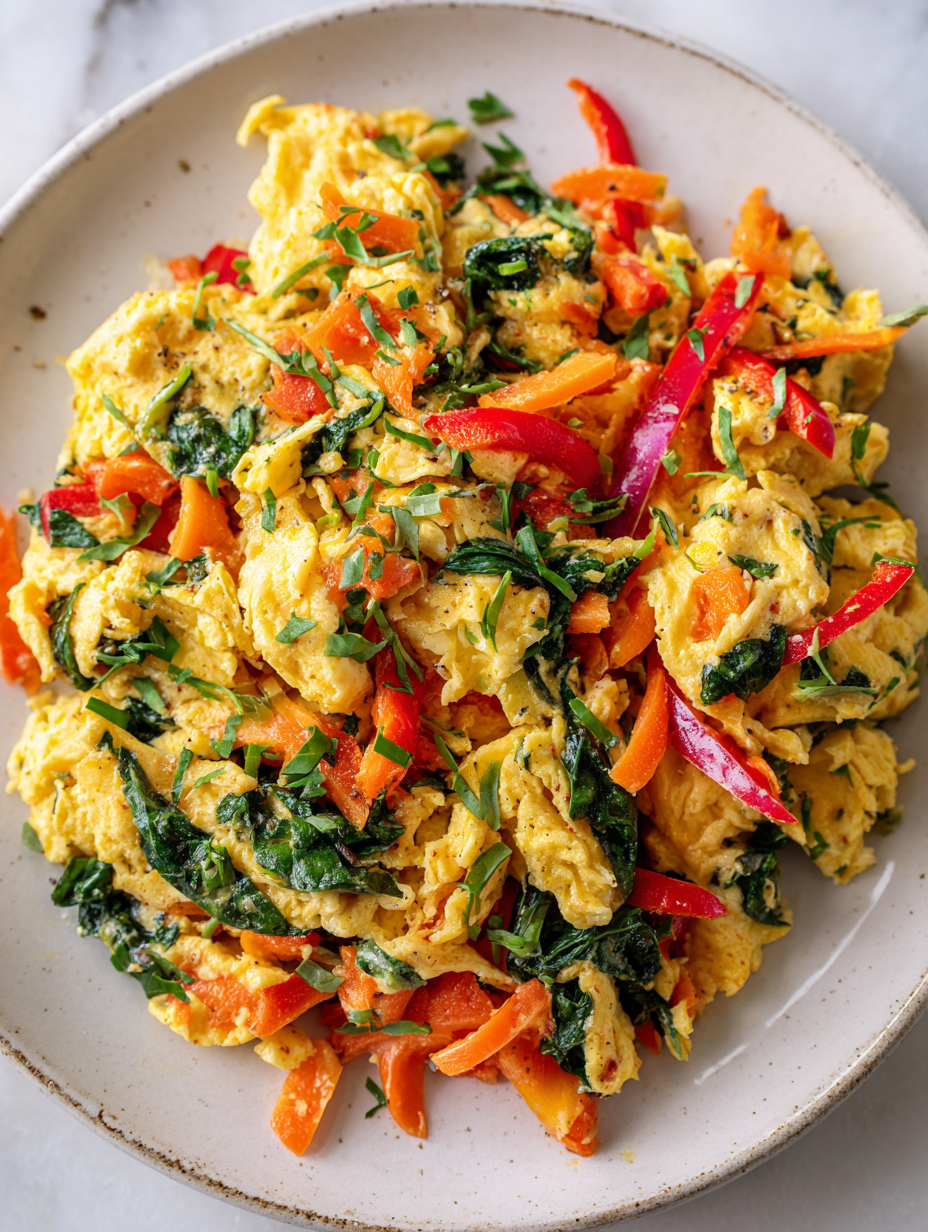
Scrambled Eggs with Vegetables
Ingredients
Equipment
Method
- Gather your ingredients: dice the bell pepper and onion, wash and roughly chop the spinach, and crack the eggs into a small bowl. Whisk the eggs until bubbly and slightly frothy, then season with a pinch of salt and pepper.
- Heat the skillet over medium-low heat and add the olive oil. When it shimmers and smells nutty, add the diced onion and bell pepper. Sauté for about 3-4 minutes until the veggies soften and become fragrant.
- Stir in the chopped spinach and cook for about 30 seconds until just wilted and vibrant green. Use your spatula to push the vegetables to one side of the pan, then pour the beaten eggs into the empty side.
- Let the eggs sit undisturbed for about 10 seconds until they start to set at the edges. Begin gently folding the eggs from the outside in with your spatula, creating soft curds. Keep the heat low and be patient; the eggs should cook slowly and stay creamy.
- Continue folding and stirring for about 1-2 minutes until the eggs are mostly cooked but still slightly moist and glossy on top. Incorporate the sautéed vegetables as you go, mixing everything evenly.
- Remove the skillet from heat while the eggs are still soft and creamy. If desired, sprinkle with crumbled feta or shredded cheese and cover briefly to allow the cheese to melt.
- Serve immediately, garnished with additional herbs or cheese if you like. The eggs should be fluffy, tender, and vibrant with colorful vegetables, ready to enjoy as a warm, comforting breakfast.
Tips for perfect scrambled eggs
- Use low heat early to let eggs gently set, avoiding rubbery textures.
- Slightly undercook the eggs; they will finish cooking in residual heat when removed from the pan.
- Add vegetables after the eggs begin to set for a colorful, tender contrast.
- Fold the eggs softly, don’t stir constantly—this keeps them fluffy and moist.
- Incorporate a splash of milk or cream for extra creaminess and a tender bite.
- Season eggs at the end of cooking to prevent curdling and maximize flavor.
- Use a silicone spatula to gently scrape and fold, preserving delicate curds.
Common mistakes and how to fix them
- FORGOT to adjust heat, eggs turn rubbery—lower heat to gentle simmer.
- DUMPED vegetables in all at once—sauté in batches for even cooking.
- OVER-TORCHED eggs—remove early if edges brown, eggs should stay soft.
- MISSED seasoning—taste before serving, add salt and pepper gradually.
Quick fixes and pantry swaps
- When eggs stick, splash cold water into the pan and gently loosen with a spatula.
- If vegetables release too much water, drain briefly before adding eggs.
- Splash a little milk or cream if eggs are too dry or crumbly.
- Patch over overcooked eggs with a dollop of sour cream for extra creaminess.
- Shield delicate greens with a lid during sautéing to retain vibrant color and freshness.
Prep, store, and reheat tips
- Prep the vegetables: Dice peppers and onion, wash and chop spinach. Store in an airtight container for up to 24 hours—freshness keeps the color bright and the flavors crisp.
- Beat the eggs in advance: Whisk until bubbly, season lightly, and keep covered in the fridge for up to 24 hours. They’ll be ready to pour when you are, just give a quick stir.
- Storage of leftovers: Keep cooked scrambled eggs in an airtight container in the fridge for up to 2 days. The texture may change slightly—expect more firmness and a less fluffy bite.
- Reheating tips: Warm gently in a skillet over low heat, stirring occasionally. The eggs will crackle as they heat, and they should smell warm and savory—avoid overheating to prevent rubberiness.
Top questions about scrambled eggs with vegetables
1. Should I use fresh eggs or could I use older ones?
Use fresh eggs for the best fluffiness and flavor—fresh eggs tend to hold together better when scrambled.
2. Do I have to cook the vegetables before adding eggs?
Cook the vegetables first until tender and fragrant, then pour in the beaten eggs; this layering creates a better texture.
3. Can I add milk or cream to my eggs?
Yes, adding a splash of milk or cream makes the eggs creamier and more tender—about a tablespoon per 3 eggs.
4. What’s the best heat level for fluffy eggs?
Use a gentle, low heat to prevent overcooking, and remove from heat just before they look fully done—residual heat finishes the job.
5. Can I substitute the vegetables?
You can swap bell peppers for zucchini or mushrooms; just cook them until tender and slightly caramelized for added flavor.
6. When should I add salt and pepper?
Season the eggs at the end of cooking to avoid curdling and to keep the flavors bright and fresh.
7. How should I stir the eggs while cooking?
Stir gently and intermittently, folding the eggs over the vegetables, to keep the scramble fluffy and moist.
8. How should I store and reheat leftovers?
Store leftovers in an airtight container in the fridge for up to 2 days; reheat gently in a skillet to preserve texture.
9. What if my eggs become rubbery?
If eggs turn rubbery, turn down the heat immediately and add a splash of water or milk to soften.
10. What tools are best for fluffy scrambled eggs?
Use a silicone spatula for gentle folding, which helps keep the eggs tender and prevents breaking the curds.
This dish is a quiet reminder that simple ingredients, treated with care, can turn into something comforting and satisfying. It’s easy to customize, forgiving for busy mornings, and always a little bit nourishing in both body and mind.
Sometimes, the smallest tweaks—like adding a pinch of smoked paprika or a squeeze of lemon—can make all the difference. It’s that kind of flexible, honest cooking I keep coming back to, especially when mornings feel hectic and the fridge is a little sparse.

Founded by Rachel Morgan, a proud home cook and foodie from Austin, Texas, this blog is all about transforming everyday meals into moments of joy.