
Mushroom risotto might seem like a humble dish, but I’ve always loved how it turns out—rich, earthy, and somehow grounding. It’s not about fancy ingredients; it’s about coaxing the most flavor out of those mushrooms, letting them shine without a ton of cheese or cream masking their complexity.
I remember the first time I made this for friends, I was nervous about getting the texture just right—creamy but not gluey, with tender mushrooms that still had a bit of bite. When it finally came together, I realized it’s less about technique and more about patience and tasting as you go.
This dish is perfect for when you want something warm and satisfying, but also crave that deep, umami punch. It’s my go-to for cozy nights, a reminder that simple ingredients, treated well, can turn into something memorable.
Focusing on the earthy, umami-packed mushrooms as the star ingredient, this risotto celebrates their complex textures and flavors, highlighting how they transform a simple dish into something deeply satisfying without relying on cheese or cream.
Why mushroom risotto has become my go-to dish for quiet weekends and imperfect days. It’s a recipe that demands patience and attention, yet rewards with a deep, soulful flavor that feels like a warm hug. There’s something about watching the mushrooms slowly release their umami and the rice turn creamy that makes me feel rooted, present, and just a little more grounded.
- Cooking this dish always reminds me of my grandmother’s kitchen, where the smell of sautéed mushrooms filled the air and made everything feel cozy.
- There’s a quiet joy in slowly stirring the rice, watching it turn from pearl-like grains to a creamy, tender mound—like a small act of meditation.
- I love how mushroom risotto feels like a blank canvas—each batch can be tweaked with different mushrooms or herbs, making it uniquely mine every time.
- Sometimes, I get frustrated when the rice isn’t perfectly al dente, but that moment of fixing it with a splash more broth is oddly satisfying.
- Sharing this with friends on a chilly evening always sparks conversations about childhood memories and favorite earthy flavors.
A Personal Take on Mushroom Risotto
- Years ago, I was wandering through a local farmers’ market and stumbled upon a basket of wild mushrooms, their earthy aroma pulling me in. That moment sparked the idea to focus on mushrooms as the star of a dish that celebrates their deep, complex flavors, rather than masking them with cheese or cream.
- Ever since, I’ve been obsessed with coaxing every ounce of umami out of those fungi—slowly sautéing, layering flavors, and patiently letting the rice absorb all those rich, mushroomy juices. It’s a simple act that feels like a quiet meditation, each step revealing more of what makes mushrooms magical.
- heading: A Mushroom-Focused Journey
Contextual Trivia and Origins of Mushroom Risotto
- Mushroom risotto has roots in Italian countryside kitchens, where foraging wild fungi was a seasonal tradition.
- Historically, mushrooms were prized for their earthy flavor and were often a luxury ingredient in rustic Italian dishes.
- The technique of slowly cooking rice with broth, called ‘risotto,’ originated in Northern Italy, particularly in Lombardy and Piedmont.
- Different regions favored local mushroom varieties, from porcini in the north to chanterelles in the south, influencing regional risotto styles.
- In some traditions, mushroom risotto was considered a celebratory dish, served during harvest festivals or special family gatherings.
Ingredient Breakdown
- Mushrooms: I love using a mix of shiitake and cremini; their earthy, smoky aroma really makes the dish come alive. Swap in portobellos if you want a meatier bite.
- Arborio rice: This rice’s high starch content creates that luscious, creamy texture I crave. For a lighter version, try carnaroli, which holds its bite better.
- Vegetable broth: I prefer homemade or low-sodium store-bought for control over salt. Use mushroom or veggie broth for an extra umami punch—your nose will thank you.
- Onion and garlic: Sauté until translucent and fragrant; this builds the flavor base. If you dislike garlic, just add a pinch of onion powder instead, but don’t skip the garlic if you love that aromatic kick.
- Olive oil: Use a good quality extra virgin—its peppery, fruity notes deepen the savor. A splash of butter at the end can add richness if you’re feeling indulgent.
- Fresh herbs: Parsley or thyme brighten the dish with a fresh, green note. Dried herbs won’t give the same vibrancy; add those earlier during sautéing.
- Finish: A squeeze of lemon juice and a drizzle of good olive oil right before serving lifts all the earthy flavors and keeps the dish feeling fresh.
Mushrooms: The Heart of the Risotto
Mushrooms:
- I love using a mix of shiitake and cremini; their earthy, smoky aroma really makes the dish come alive. Swap in portobellos if you want a meatier bite.
- Shiitakes release a deep umami that intensifies as they cook, turning silky and juicy, almost like a concentrated broth of earth and smoke.
- Creminis stay tender and absorb flavors beautifully, offering a subtle sweetness that balances the smoky mushrooms.
Mushrooms (continued):
- Their spongy texture soaks up the broth, swelling and softening without losing their chew—watch for that perfect tender bite.
- During sautéing, they turn a rich caramel color, releasing a fragrant, smoky aroma that’s essential for depth in this dish.
- Wild mushrooms can add a more pungent, complex flavor, but always ensure they’re cleaned well to avoid grit and bitterness.
Notes for ingredient swaps
- Dairy-Free: Use coconut cream or cashew cheese instead of butter and Parmesan. The flavor will be richer and slightly sweeter.
- Vegan: Swap vegetable broth for mushroom or miso broth for an earthy boost, and omit cheese or use plant-based cheese alternatives.
- Gluten-Free: Ensure your broth is gluten-free; most store-bought versions are, but always check the label—no change in flavor or texture.
- Lower Sodium: Use homemade broth with minimal salt, or dilute store-bought broth slightly to control saltiness without losing umami.
- Different Mushrooms: Switch shiitake for portobellos or oyster mushrooms for a meatier, more robust flavor, adding a slightly different texture.
- Rice Type: If arborio isn’t available, try carnaroli or vialone nano—these still produce a creamy risotto but may differ slightly in texture.
- Herbs & Finish: Use fresh thyme or basil instead of parsley for a different herbal note; add toward the end for maximum freshness.
Equipment & Tools
- Wide sauté pan: Allows even cooking and proper stirring for creamy texture.
- Wooden spoon: Gentle stirring to prevent rice from breaking and sticking.
- Ladle: Helps add broth gradually and control moisture.
- Sharp knife: Efficiently chop mushrooms, onion, and garlic.
- Saucepan: To keep broth hot and ready for addition.
Step-by-Step Guide to Perfect Mushroom Risotto
- Gather your equipment: a wide sauté pan (about 30cm/12 inches), a wooden spoon, a ladle, and a sharp knife. Have your broth heated and ready to go in a separate pot, kept at a gentle simmer.
- Clean and chop your mushrooms: slice creminis and shiitakes into bite-sized pieces. Set aside; they’ll release a lot of juice and aroma as they cook.
- Dice one small onion and mince two cloves of garlic. Heat a tablespoon of olive oil in the pan over medium heat (about 160°C/320°F).
- Add the onion and cook until translucent—about 3-4 minutes. Toss in the garlic and cook for another 30 seconds until fragrant, stirring constantly to prevent burning.
- Add the mushrooms to the pan. Sauté until they release their juices and start to brown—about 5-7 minutes. Keep stirring, scraping up any browned bits from the bottom.
- Pour in 1 ½ cups (300g) of arborio rice. Stir well so each grain is coated with oil and starts to look a bit translucent at the edges—about 2 minutes. This is where the starch begins to develop.
- Begin adding warm broth, ladle by ladle—about ½ cup (120ml)—stirring constantly. Wait until the liquid is mostly absorbed before adding the next ladle. Continue this process for about 20-25 minutes, maintaining a gentle simmer.
- As the rice approaches doneness, check for creaminess and tenderness. The rice should be al dente—firm but not hard—when you bite into it. The mixture should look velvety, with a slight jiggle in the pan.
- If you notice the risotto thickening too much before the rice is tender, add a splash more broth. If it’s too soupy, increase the heat slightly to thicken it up. Adjust seasoning with salt and freshly ground black pepper as needed.
- Once perfect, remove from heat. Stir in a knob of butter or a splash of olive oil for extra richness, if desired. Let sit for 1-2 minutes to settle.
- Serve immediately, garnished with chopped fresh parsley or thyme. Drizzle with a little olive oil or a squeeze of lemon for brightness.
Let the risotto rest for 1-2 minutes off heat. Serve immediately with a drizzle of olive oil and fresh herbs. Stir gently before plating to incorporate any settling ingredients.
How to Know It’s Done
- The rice should be tender with a slight bite, and the mixture velvety in texture.
- The mushrooms will be juicy and slightly caramelized, with a smoky aroma.
- The risotto will have a creamy sheen, not runny or gluey, and smell deeply earthy and garlic-infused.
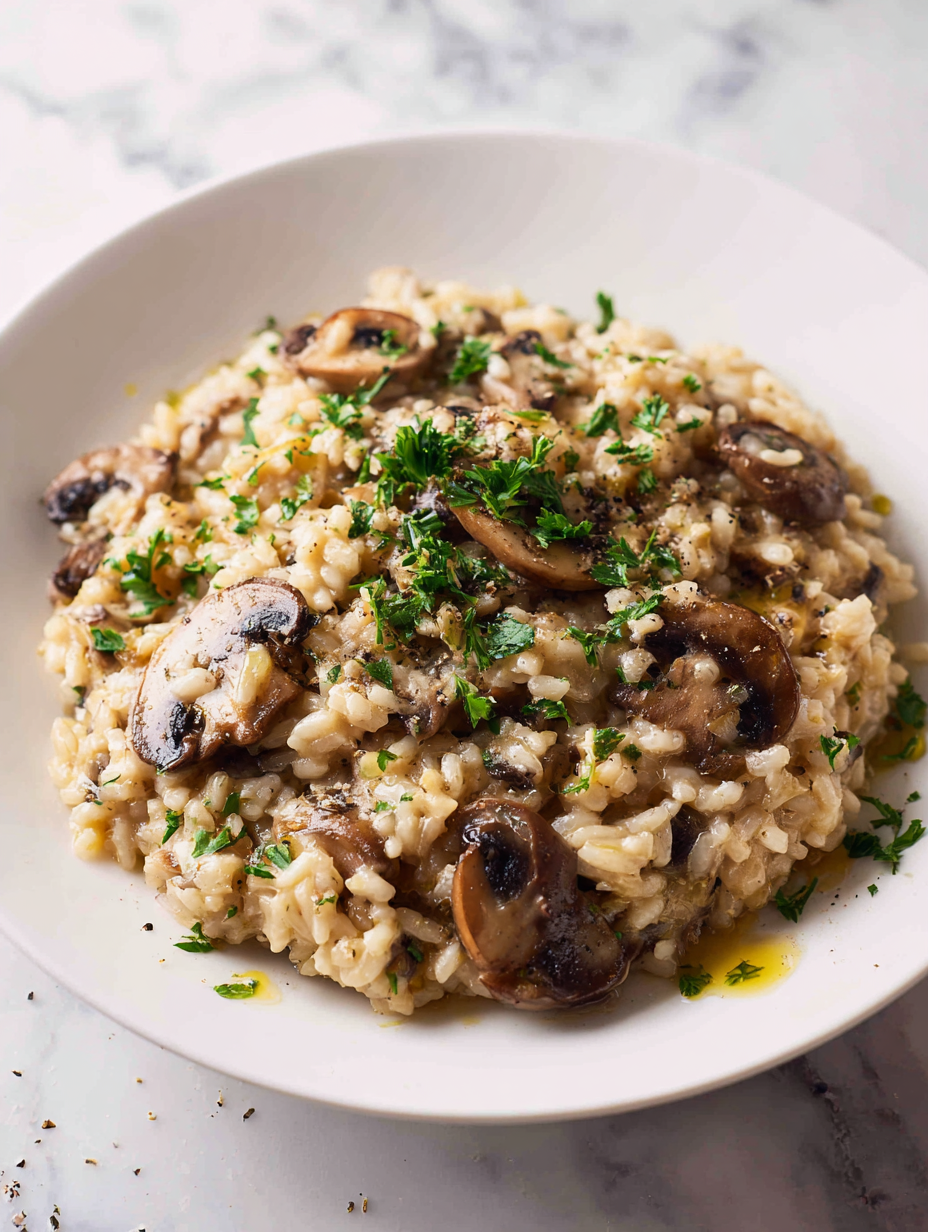
Mushroom Risotto
Ingredients
Equipment
Method
- Place the vegetable broth in a saucepan and gently warm it over low heat; keep it at a simmer throughout the cooking process.
- Clean and thinly slice the mushrooms, then set aside; this will help them release their earthy aroma and juices when sautéed.
- Dice the onion finely and mince the garlic cloves, preparing both for sautéing to build a flavorful base.
- Heat the olive oil in a wide sauté pan over medium heat until shimmering, releasing a fragrant aroma as it warms.
- Add the diced onion to the pan and cook, stirring frequently, until it turns translucent and soft—about 3-4 minutes.
- Stir in the minced garlic and cook for another 30 seconds until fragrant, being careful not to burn it.
- Add the sliced mushrooms to the pan and sauté until they release their juices and turn a deep golden brown—about 5-7 minutes—stirring occasionally.
- Pour in the arborio rice and stir well to coat each grain with oil and mushroom juices, cooking for about 2 minutes until the edges look translucent.
- Begin adding the warm broth, about half a cup at a time, stirring constantly and waiting until it’s mostly absorbed before adding more. Repeat this process for around 20-25 minutes, until the rice is tender but still slightly al dente.
- Check the texture—if the risotto is too thick or the rice needs a little more time, add a splash more broth and stir until creamy and velvety.
- Remove the pan from heat, then stir in chopped fresh herbs and a squeeze of lemon juice; add a knob of butter if desired for extra richness.
- Let the risotto rest for a minute or two, then give it a gentle stir to combine all flavors. Serve immediately, garnished with additional herbs if desired.
Cooking Tips & Tricks
- Bolded Mini-Head: Use a wide pan → Ensures even heat distribution and helps develop a creamy texture.
- Bolded Mini-Head: Keep broth warm → Adds to the gradual cooking process, preventing rice from sticking or cooking unevenly.
- Bolded Mini-Head: Stir constantly during adding broth → Releases starch, creating that silky, cohesive risotto.
- Bolded Mini-Head: Taste as you go → Adjust seasoning and doneness; the rice should be tender but still have a slight bite.
- Bolded Mini-Head: Finish with lemon or herbs → Brightens earthy flavors and adds freshness to the dish.
Common Mistakes and How to Fix Them
- FORGOT to stir the rice continuously → Stir often for even cooking and creamy texture.
- DUMPED too much broth at once → Add broth gradually, letting it absorb before the next ladle.
- OVER-TORCHED the mushrooms → Sauté mushrooms over medium heat until golden, not burnt.
- UNDERESTIMATED cooking time → Cook until rice is tender and velvety, about 20-25 minutes.
Quick Fixes for Mushroom Risotto
- When sauce shimmers and mushrooms crackle, add broth quickly to stop sticking and burning.
- If rice is too firm, simmer a bit longer, stirring often until velvety and tender.
- Splash a little lemon juice when risotto is too earthy—brightens flavors instantly.
- Patch over-salted risotto with a small potato cooked in the broth—absorb excess salt.
- Shield delicate mushrooms from overcooking by adding them later in the process, preserving texture.
Make-Ahead and Storage Tips
- You can prep the mushroom cleaning and chopping a day ahead; keep them refrigerated in an airtight container for freshness.
- Cook the risotto up to the point of finishing, then cool quickly and store in a shallow container for up to 24 hours in the fridge. Reheat gently with a splash of broth until creamy and hot, tasting for seasoning adjustments.
- Leftover risotto will thicken as it sits; stir in a bit of warm broth or water when reheating to restore its velvety texture and release a faint aroma of earth and umami.
- For longer storage, freeze in portions for up to 2 months; thaw in the fridge overnight, then reheat on the stove with extra broth, watching for a fresh, aromatic finish.
Practical Q&As about Mushroom Risotto
1. What mushrooms work best for this risotto?
Use a mix of shiitake and cremini mushrooms for a deep, smoky flavor and juicy texture. Swap in portobellos for a meatier bite.
2. Can I use a different rice than Arborio?
Arborio rice releases starch as it cooks, creating that creamy, velvety texture. Carnaroli is a good substitute if you prefer a slightly firmer bite.
3. Why is it important to keep the broth hot?
Keep your broth warm in a separate pan; adding hot broth helps the rice cook evenly and prevents it from sticking.
4. How often should I stir the risotto?
Stir the rice constantly when adding broth to release starch, which makes the risotto creamy without being gluey.
5. How do I know when my risotto is done?
Taste the risotto near the end of cooking. It should be tender but still have a slight bite—about 20-25 minutes total.
6. What if my risotto is too thick or too runny?
If the risotto becomes too thick, stir in a splash of warm broth. If it’s too runny, cook a bit longer until it thickens and becomes velvety.
7. How should I finish the risotto for the best flavor?
Finish with a squeeze of lemon juice and fresh herbs like parsley or thyme to brighten earthy flavors and add freshness.
8. Can I make mushroom risotto ahead of time?
Reheat leftover risotto gently on the stove with a splash of broth, stirring until it’s creamy and hot again. It thickens when cooled.
9. Are there flavor boosters I can add?
If you want extra umami, add a splash of soy sauce or a sprinkle of nutritional yeast during cooking for an extra flavor boost.
10. Can I use dried or wild mushrooms?
Yes, wild mushrooms like chanterelles or morels can add a unique, fragrant aroma, but clean them thoroughly to avoid grit.
This mushroom risotto feels like a quiet act of devotion—slowly coaxing flavor from humble ingredients. Its earthy aroma and creamy texture are a reminder that simple, well-treated components can create something unexpectedly comforting.
In these busy times, I find that taking the time to make and enjoy a dish like this helps me reconnect with the small, grounding pleasures of cooking and sharing food that’s honest and true. It’s a dish that asks for patience, but always rewards with a rich, soulful bite.

Founded by Rachel Morgan, a proud home cook and foodie from Austin, Texas, this blog is all about transforming everyday meals into moments of joy.