
This Honey Mustard Chicken recipe is a little tribute to those nights when simplicity meets a touch of unexpected sweetness. I love how the honey and mustard mingle into a glaze that’s both tangy and sticky, clinging to tender chicken thighs. It’s one of those dishes that feels like a warm hug, but with a little kick of flavor that surprises you.
What draws me in is how effortless it is—no fancy ingredients, just a handful of pantry staples, thrown together in one pan. It’s perfect for busy weeknights when you want something comforting yet lively on the table. Plus, the aroma of caramelizing honey and mustard filling the kitchen is a little slice of home, no matter where I am.
This recipe is inspired by my late grandmother’s love for combining unexpected flavors, like honey and mustard, to create comfort food that feels both nostalgic and surprisingly sophisticated. I’ve tweaked her method over the years, adding my own little touches, but the core idea of balancing sweet and tangy remains. It’s a dish that reminds me of family dinners, where imperfectly perfect moments unfolded around the table.
Balancing Sweet and Tangy Flavors
- This dish reminds me of lazy Sunday afternoons at my grandma’s house, where the sweet and tangy smell would fill every corner of the kitchen.
- I used to think honey and mustard couldn’t be friends, but this recipe proved me wrong with its unexpected harmony.
- Cooking this feels like a little act of rebellion—breaking from the usual and embracing a bold, flavorful twist.
- Every time I make this, I feel a rush of pride, knowing I’ve created something that’s both simple and deeply satisfying.
The story behind this recipe
- This honey mustard chicken came about during a kitchen chaos moment—wanted something quick, sweet, and tangy that wouldn’t require a fuss. I was tired of the usual roast or stir-fry, so I started experimenting with what I had: honey, mustard, chicken, and a splash of improvisation. Turns out, the simple combo hits just right, balancing richness with a bright kick.
- It’s become a go-to for me when I need comfort but also crave a little zing. The flavors remind me of the first time I tried a similar glaze at a tiny bizzeria, where the chef’s reckless mix of ingredients created magic. Now, I keep that memory alive in my own kitchen, tweaking the amounts to match my mood and pantry.
- heading: The story behind this recipe
Historical and Cultural Roots
- This recipe traces back to mid-20th-century American home cooking, where sweet and tangy flavors became a family staple.
- Honey mustard glaze was originally popularized by European cuisines, especially in French and German kitchen traditions.
- During wartime rationing, cooks often used honey and mustard as affordable flavor enhancers, giving rise to this comforting dish.
- The combination of honey and mustard has long been used in marinades for its preservative qualities and flavor complexity.
Key Ingredients Breakdown
- Chicken thighs: I prefer bone-in, skin-on for flavor and juiciness, but boneless breasts work if you want leaner meat—just watch the cooking time. The skin crisps up beautifully and adds a smoky crunch.
- Honey: I love local wildflower honey, its floral notes add depth, but a mild clover honey will do if that’s what you have. The oozy sweetness caramelizes nicely and gives that sticky glaze.
- Dijon mustard: It’s my secret weapon—adds tang and helps emulsify the sauce. If you’re out, yellow mustard can work, but the flavor will be milder and less sharp.
- Garlic: Fresh is best—peel and crush to release that pungent aroma. If you want a milder, sweeter note, toss in a bit of roasted garlic at the end. The raw garlic crackles in the pan and perfumes the dish.
- Olive oil: Use good-quality extra virgin; it’s the base for searing and helps the glaze stick. If you’re out, a neutral vegetable oil works, but the flavor won’t be as rich.
- Vinegar: A splash of apple cider vinegar brightens everything—adds a little zing that balances the sweetness. If you don’t have it, a squeeze of lemon works, but keep it subtle to avoid overpowering.
- Herbs: Fresh thyme or rosemary—I sprinkle these in at the end for a fragrant hit. Dry herbs are okay but won’t give the same lively aroma; crush them slightly to release essential oils.
Spotlight on key ingredients
Honey Mustard:
- Chicken thighs: I prefer bone-in, skin-on for flavor and juiciness, but boneless breasts work if you want leaner meat—just watch the cooking time. The skin crisps up beautifully and adds a smoky crunch.
- Honey: I love local wildflower honey, its floral notes add depth, but a mild clover honey will do if that’s what you have. The oozy sweetness caramelizes nicely and gives that sticky glaze.
- Dijon mustard: It’s my secret weapon—adds tang and helps emulsify the sauce. If you’re out, yellow mustard can work, but the flavor will be milder and less sharp.
Notes for ingredient swaps
- Dairy-Free: Use coconut milk or a splash of olive oil instead of butter in the sauce. It won’t be as creamy but still flavorful.
- Sweetener: Maple syrup can replace honey for a different floral sweetness, though it may alter the glaze’s sticky texture slightly.
- Mustard: Yellow mustard works in a pinch, but it’s milder. For sharper tang, try Dijon or whole grain mustard.
- Vinegar: Apple cider vinegar adds brightness, but lemon juice or white wine vinegar can swap in without losing zing.
- Herbs: Fresh thyme or rosemary can be replaced with dried herbs—crush them a bit more to release aroma, but fresh is best for vibrancy.
- Chicken: Boneless, skinless breasts can be used if you prefer leaner meat. Adjust cooking time—less than thighs, around 12-15 minutes total.
- Sweetener (alternative): Agave nectar can substitute honey, providing similar sweetness with a slightly different flavor profile.
Equipment & Tools
- Large cast iron skillet: For even searing and caramelization
- Tongs: To flip and handle chicken safely
- Meat thermometer: To check internal temperature
- Small mixing bowl: To whisk the glaze ingredients
- Basting spoon: To spoon glaze over chicken
Step-by-step guide to honey mustard chicken
- Equipment & Tools: Use a large skillet—preferably cast iron—for even heat and good searing; a spoon for basting; a meat thermometer to check doneness; a brush for glazing; and tongs for flipping.
- Prep the chicken: Pat dry with paper towels. Season with salt and pepper. Let sit at room temp for 15 minutes.
- Heat skillet: Warm over medium-high heat (about 200°C/390°F). Add a splash of olive oil and let it shimmer.
- Sear the chicken: Place thighs skin-side down. Sear for 6-8 minutes until skin is golden and crisp. Flip and cook for another 5 minutes. If sticking occurs, gently loosen with tongs.
- Make the glaze: In a small bowl, whisk together 2 tbsp honey, 1 tbsp Dijon mustard, 1 minced garlic clove, and a splash of vinegar. Set aside.
- Glaze the chicken: Once seared, lower heat to medium. Pour the honey mustard mixture over the chicken. Spoon glaze over the thighs every minute for 4-5 minutes, allowing it to thicken and caramelize.
- Check doneness: Insert the meat thermometer into the thickest part; aim for 75°C/165°F. The juices should run clear, and the glaze should be sticky and amber-colored.
- Rest the chicken: Transfer to a plate, tent loosely with foil. Let rest for 5 minutes to let juices redistribute.
- Serve: Plate the chicken with a drizzle of the remaining glaze. Garnish with fresh herbs if desired. The skin should be crispy, and the glaze glossy and sticky.
Transfer chicken to a warm plate, tent loosely with foil, and let rest for 5 minutes. Finish with a final spoonful of glaze and garnish with fresh herbs for aroma and visual appeal. Serve with your favorite sides while the skin stays crispy and the glaze remains glossy.
How to Know It’s Done
- Skin is crispy and golden when seared.
- Glaze is sticky and deep amber after caramelizing.
- Internal temperature reaches 75°C/165°F for perfect doneness.
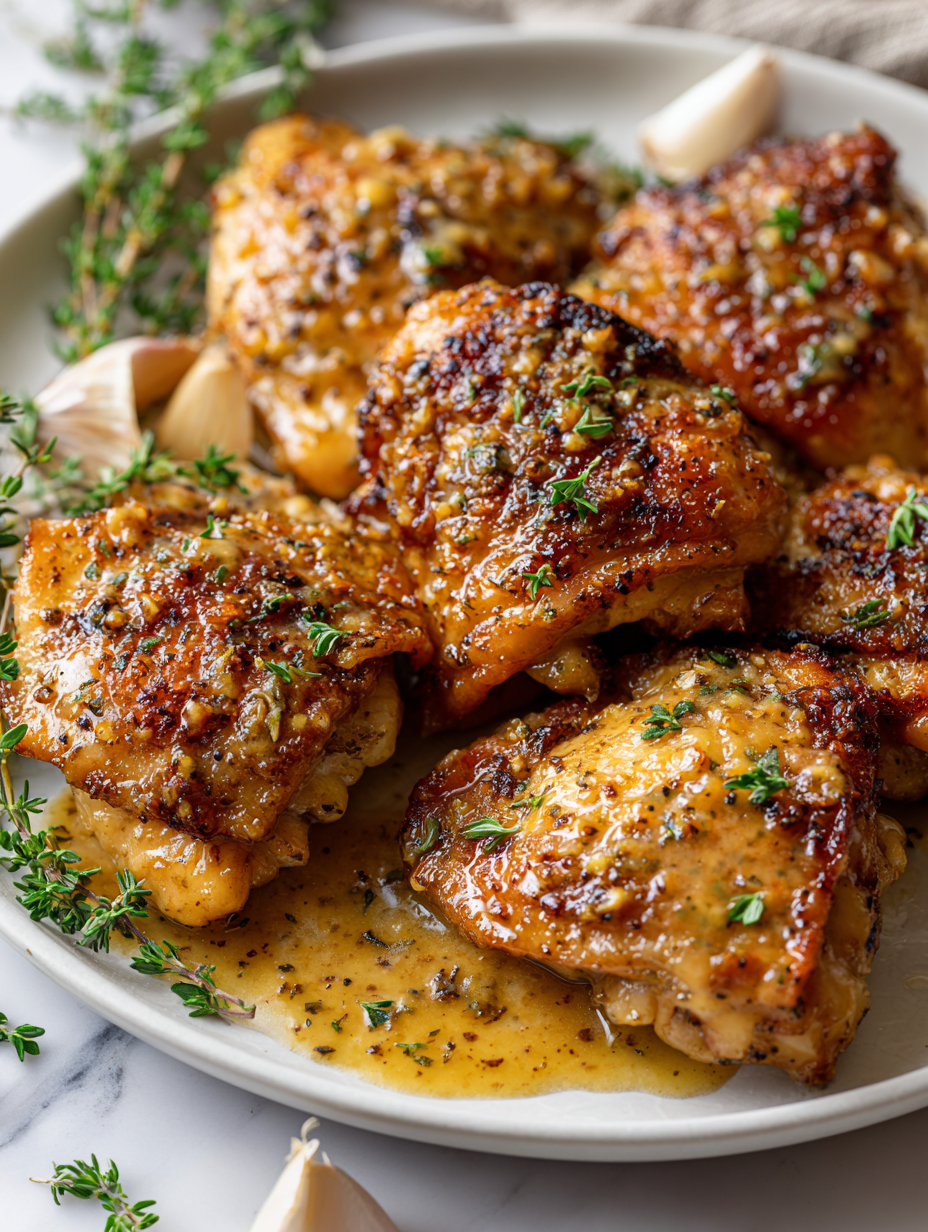
Honey Mustard Chicken Thighs
Ingredients
Equipment
Method
- Pat the chicken thighs dry with paper towels, then season generously with salt and pepper. Let them sit at room temperature for about 15 minutes to help them cook evenly.
- Heat your cast iron skillet over medium-high heat until it’s hot and shimmering. Add a tablespoon of olive oil, swirling to coat the bottom of the pan.
- Place the chicken thighs skin-side down in the hot skillet, pressing lightly to ensure contact. Cook for about 6–8 minutes until the skin is golden brown and crispy, hearing a satisfying sizzle. Flip the thighs using tongs and cook for another 5 minutes until they’re nearly cooked through.
- While the chicken is cooking, whisk together the honey, Dijon mustard, minced garlic, and apple cider vinegar in a small bowl. This creates your sticky, tangy glaze.
- Once the chicken is nearly cooked, lower the heat to medium. Pour the honey mustard mixture over the thighs, spooning some of the glaze onto each piece. Use a basting spoon to coat the chicken evenly.
- Allow the glaze to simmer gently, spooning it over the chicken every minute. Cook for about 4–5 minutes until the sauce thickens into a glossy, caramelized coating and the chicken reaches an internal temperature of 75°C/165°F.
- Transfer the chicken thighs to a plate and let them rest for 5 minutes. This helps juices redistribute and keeps the meat tender.
- Sprinkle freshly chopped thyme or rosemary over the chicken for an aromatic finish. Drizzle any remaining glaze from the pan over the top for extra flavor and shine.
- Serve the chicken hot, with the crispy skin and sticky glaze intact. Pair with your favorite sides and enjoy the perfect balance of sweetness and tang.
Pro tips for perfect honey mustard chicken
- Caramelize carefully: Use medium heat to develop a deep, smoky flavor without burning the honey glaze.
- Baste consistently: Spoon the glaze over the chicken every minute during the final minutes for a sticky, glossy finish.
- Rest properly: Let the chicken rest for 5 minutes after cooking to lock in juices and keep it tender.
- Use a meat thermometer: Ensure perfect doneness at 75°C/165°F—no guesswork, just juicy, safe meat.
- Manage heat: Lower the heat once the glaze thickens to prevent it from burning or becoming bitter.
- Pat dry the chicken: Before searing, dry the skin thoroughly for maximum crispiness and even browning.
- Finish with herbs: Sprinkle fresh thyme or rosemary right before serving to boost aroma and flavor.
Common mistakes and how to fix them
- FORGOT to sear chicken skin side down first → Sear skin-side down until golden before flipping.
- DUMPED the glaze in all at once → Add glaze gradually and baste for even caramelization.
- OVER-TORCHED the honey glaze → Reduce heat once glaze thickens to avoid burning.
- MISSED resting time → Let chicken rest for 5 minutes to retain juices and finish cooking.
Quick fixes for honey mustard chicken
- When sauce is too thin, splash in a bit more honey and simmer until sticky.
- If chicken skin isn’t crisp enough, increase heat for a minute or two—watch closely to prevent burning.
- Splash a dash of lemon juice if glaze is too sweet or dull; brightens the flavors instantly.
- Patch over a burnt glaze with fresh honey and mustard, then quick-baste to revive shine and flavor.
- Shield pan from drafts — cold air can slow caramelization, so cook in a warm kitchen for best results.
Prep, store, and reheat tips
- You can prepare the honey mustard glaze up to 2 days ahead; store in an airtight container in the fridge. The sweet and tangy notes develop nicely overnight.
- Season and pat dry the chicken thighs the night before. Keep covered in the fridge for up to 24 hours to save time on cooking day.
- Cooked chicken leftovers keep well in the fridge for 3-4 days. Reheat in a skillet over medium heat until warmed through, about 3-4 minutes, and the glaze shimmers again.
- To reheat from frozen, thaw chicken in the fridge overnight. Reheat gently in a covered skillet or oven until the juices are hot and the skin remains crispy if reheated in the oven.
Frequently Asked Questions
1. Can I use chicken breasts instead of thighs?
Use chicken thighs with skin on for best flavor and juiciness; skin gets crispy and adds smoky notes, but boneless breasts work if cooked carefully.
2. How long should I cook chicken breasts?
Yes, but reduce cooking time to about 12-15 minutes total, and watch for overcooking. Thinner breasts cook faster and can dry out.
3. Can I make the glaze ahead of time?
Absolutely. Just keep an eye on the glaze as it can burn quickly. Lower the heat once it thickens and keep stirring.
4. What if my glaze turns out too thin?
If the glaze is too runny, simmer it for a few more minutes until sticky and glossy. If it’s too thick, add a splash of water or vinegar.
5. How do I know when the chicken is cooked?
Use a meat thermometer inserted into the thickest part of the chicken. It’s done at 75°C/165°F and juices run clear.
6. Can I freeze leftovers?
Yes, you can freeze cooked chicken in an airtight container for up to 3 months. Reheat gently in the oven or skillet until hot and the glaze shimmers.
7. Can I add herbs or spices?
Add fresh herbs like thyme or rosemary at the end for aroma. For more flavor, marinate chicken in the glaze for 30 minutes beforehand.
8. What kind of honey is best?
Use good-quality honey for a richer flavor and better caramelization. Raw or local honey adds floral notes that enhance the glaze.
9. Can I substitute the mustard?
Adjust the amount of mustard based on your tang preference. Dijon gives sharpness; yellow mustard offers milder flavor.
10. Can I make this dairy-free?
Yes, for a dairy-free version, skip butter and use olive oil or coconut oil in the sauce for flavor and richness.
This honey mustard chicken isn’t just a weeknight fix; it’s a reminder of how simple flavors can come together in a surprisingly satisfying way. The crispy skin, sticky glaze, and tangy kick make it hard to put down my fork.
Whenever I make this, I think about how a little improvisation—like adjusting the sweetness or adding herbs—can turn a basic dish into something memorable. It’s honest food, straightforward and full of honest flavor, perfect for those cozy nights or last-minute dinners.

Founded by Rachel Morgan, a proud home cook and foodie from Austin, Texas, this blog is all about transforming everyday meals into moments of joy.