
This recipe started as a kitchen experiment, trying to marry tropical flavors with something simple and quick. Marinating shrimp in coconut milk and lime zest seemed odd at first, but it brought a bright, creamy kick that transformed the usual grill fare. It’s perfect for when you want to surprise guests or just treat yourself to something lively and fresh.
There’s a certain joy in the process—watching the shrimp soak up that fragrant marinade, then sizzling over the grill until they develop a smoky char. It’s a recipe that feels festive, but it’s straightforward enough to throw together on a weeknight. Plus, the tropical twist makes it a little more special, even if you’re just eating on your patio.
I love how the unexpected ingredients turn what could be a simple skewer into a little escape to a warm, breezy coast. The lime zest and coconut milk bring a vibrant, zingy aroma that lingers, making every bite feel like a mini vacation. It’s one of those dishes that reminds me cooking can be playful, even with everyday ingredients.
Focusing on how marinating shrimp with unexpected ingredients like coconut milk and lime zest can add a fresh, tropical twist that elevates the classic grilled skewer.
Unexpected marinade magic
- I love how marinating shrimp with lime zest and coconut milk turns the grilling process into a mini tropical escape, even in my backyard.
- There’s a thrill in watching the shrimp sizzle and turn pink, releasing that smoky, sweet aroma that makes my mouth water.
- Sometimes, I get nostalgic for seaside dinners, and this dish instantly transports me there with its bright, fresh flavors.
- It’s incredibly satisfying to see guests’ surprised faces when I tell them about the unexpected marinade ingredients—coconut and lime—then see them love it.
- Cooking these skewers reminds me that simple ingredients, combined thoughtfully, can create something lively and memorable.
The story behind this recipe
- This recipe was born out of a backyard experiment, trying to bring a little unexpected brightness to my usual grilling routine. I was tired of the same old lemon and garlic, so I started playing with tropical flavors—coconut milk and lime zest. Turns out, the shrimp soak up that creamy, zesty marinade beautifully, making each bite both juicy and fragrant.
- One summer evening, I marinated a batch of shrimp while the sun set, then threw them on the grill. The aroma of smoky coconut and citrus filled the air, and I realized I’d stumbled onto something special. It’s a reminder that sometimes, the simplest tweaks—like a splash of coconut milk—can turn a familiar dish into a little celebration.
- heading: ‘Unexpected marinade magic’
Trivia and historical tidbits
- Shrimp skewers have roots in ancient Mediterranean and Asian grilling traditions, where skewers made cooking quicker and more communal.
- The use of tropical ingredients like coconut and lime in marinades became popular in coastal cuisines, especially in Southeast Asia and the Caribbean, blending local flavors with grilling techniques.
- Marinating seafood before grilling isn’t just about flavor—it helps tenderize delicate shrimp and prevents them from drying out over high heat.
- The concept of skewering seafood dates back centuries, with variations seen in Middle Eastern kebabs and Japanese yakitori, adapting to regional tastes and ingredients.
Key ingredients
- Shrimp: I prefer deveined, peeled shrimp for quick marinating and grilling—look for pink, firm, with a slight sheen; it’s the sign of freshness, and it helps them cook evenly. Feel free to buy frozen, just thaw thoroughly and pat dry for better marinade absorption.
- Coconut Milk: I use full-fat coconut milk for a rich, silky marinade that clings to the shrimp and adds a creamy, tropical aroma—look for a can without additives, and give it a good shake before measuring. If you want a lighter touch, swap half with lime juice, but you might lose some of that luscious mouthfeel.
- Lime Zest: I always zest fresh limes—bright, fragrant, with a zing that wakes up the shrimp. A microplane makes quick work of it, and I recommend zesting just before marinating to keep that citrus aroma lively. Skip if you prefer a milder citrus note.
- Garlic: I crush fresh garlic cloves until fragrant—its pungency mellows during marination but still adds a savory backbone. Use more if you love garlic, or substitute with garlic powder for convenience; just start with half the amount.
- Olive Oil: I toss in a splash of good-quality olive oil—smooth, slightly peppery, and helps prevent sticking on the grill. If you prefer a neutral oil, avocado oil works well without changing the flavor much, especially at high heat.
- Salt & Pepper: I season generously to balance the tropical sweetness—coarse sea salt and freshly cracked black pepper. Adjust to taste; if you’re watching sodium, go easy but remember, seasoning makes all the difference.
- Additional flavor: I sometimes add a pinch of smoked paprika or chili flakes—smoky or spicy kick that complements the sweetness of shrimp. Feel free to tweak according to your heat preference, but don’t skip the salt—it’s what makes the flavors pop.
Spotlight on key ingredients
Coconut Milk:
- Shrimp: I prefer deveined, peeled shrimp for quick marinating and grilling—look for pink, firm, with a slight sheen; it’s the sign of freshness, and it helps them cook evenly. Feel free to buy frozen, just thaw thoroughly and pat dry for better marinade absorption.
- I use full-fat coconut milk for a rich, silky marinade that clings to the shrimp and adds a creamy, tropical aroma—look for a can without additives, and give it a good shake before measuring. If you want a lighter touch, swap half with lime juice, but you might lose some of that luscious mouthfeel.
Lime Zest:
- I always zest fresh limes—bright, fragrant, with a zing that wakes up the shrimp. A microplane makes quick work of it, and I recommend zesting just before marinating to keep that citrus aroma lively. Skip if you prefer a milder citrus note.
- Shrimp: I prefer deveined, peeled shrimp for quick marinating and grilling—look for pink, firm, with a slight sheen; it’s the sign of freshness, and it helps them cook evenly. Feel free to buy frozen, just thaw thoroughly and pat dry for better marinade absorption.
Notes for ingredient swaps
- Dairy-Free: Swap coconut milk for a mixture of lime juice and a splash of water. Keeps it tangy and light, but loses some creaminess.
- Shellfish Alternative: Use firm fish like scallops or firm tofu for a vegetarian option. They’ll absorb marinade differently but still grill beautifully.
- Sweetener: Add a touch of honey or agave syrup if you want a subtle sweetness to balance the lime zest. Use sparingly to avoid overpowering the tropical vibe.
- Herbs: Substitute fresh cilantro with parsley or basil if you prefer a milder herbal note. It changes the aroma but still freshens the dish.
- Oil: Olive oil can be replaced with avocado or grapeseed oil for a neutral, high-heat option. Keeps the marinade smooth without altering flavor.
- Citrus Zest: If limes aren’t available, lemon or orange zest can work, but expect a different citrus brightness—less sharp, more sweet or floral.
- Spice: Incorporate a pinch of smoked paprika or chili flakes for extra smoky or spicy kick. Adjust according to your heat preference, but don’t skip seasoning.
Equipment & Tools
- Wooden skewers: To thread and cook the shrimp evenly over the grill.
- Grill or grill pan: To achieve high heat and smoky char.
- Microplane or zester: To zest lime for fresh citrus flavor.
- Bowl: To marinate and mix ingredients.
- Tongs: To turn and handle skewers safely.
Step-by-step guide to grilling shrimp
- Prepare your skewers: Soak wooden skewers in water for at least 30 minutes to prevent burning. If using metal, just have them ready.
- Marinate the shrimp: In a bowl, combine peeled shrimp with coconut milk, lime zest, minced garlic, a splash of olive oil, salt, and pepper. Mix well and let sit for 20-30 minutes at room temp or fridge if ahead.
- Preheat your grill: Get it hot—aim for around 200°C (390°F). Clean grates and oil lightly to prevent sticking.
- Thread the shrimp: Carefully skewer 3-4 pieces per stick, leaving a little space for even cooking. Handle gently so shrimp don’t break apart.
- Grill the skewers: Place over direct heat. Grill for 2-3 minutes per side, until shrimp turn pink and develop a slight char. Watch for smoky, fragrant aroma and color change.
- Turn and cook: Flip skewers, cook another 2-3 minutes. Check for even pink coloring and a little caramelization on edges. If overdone, shrimp will be rubbery—remove them promptly.
- Rest and serve: Let skewers rest for 2 minutes off heat. Serve with extra lime wedges and your favorite sides. Drizzle with a little more olive oil if needed.
- Final check: Shrimp should be opaque, firm but tender, and lightly charred. The aroma should be smoky with citrus notes. If the shrimp are still translucent, give them another minute.
- Plate and enjoy: Arrange skewers on a platter, garnish with fresh herbs if desired. Dive in while hot, flavors vibrant and juicy.
Rest the skewers for 2 minutes off heat to allow juices to settle. Serve immediately with lime wedges and your favorite sides, perhaps a fresh salad or grilled vegetables.
How to Know It’s Done
- Shrimp are opaque and pink with slight char.
- Faint smoky aroma with citrus brightness.
- Skewers feel firm but tender when touched.
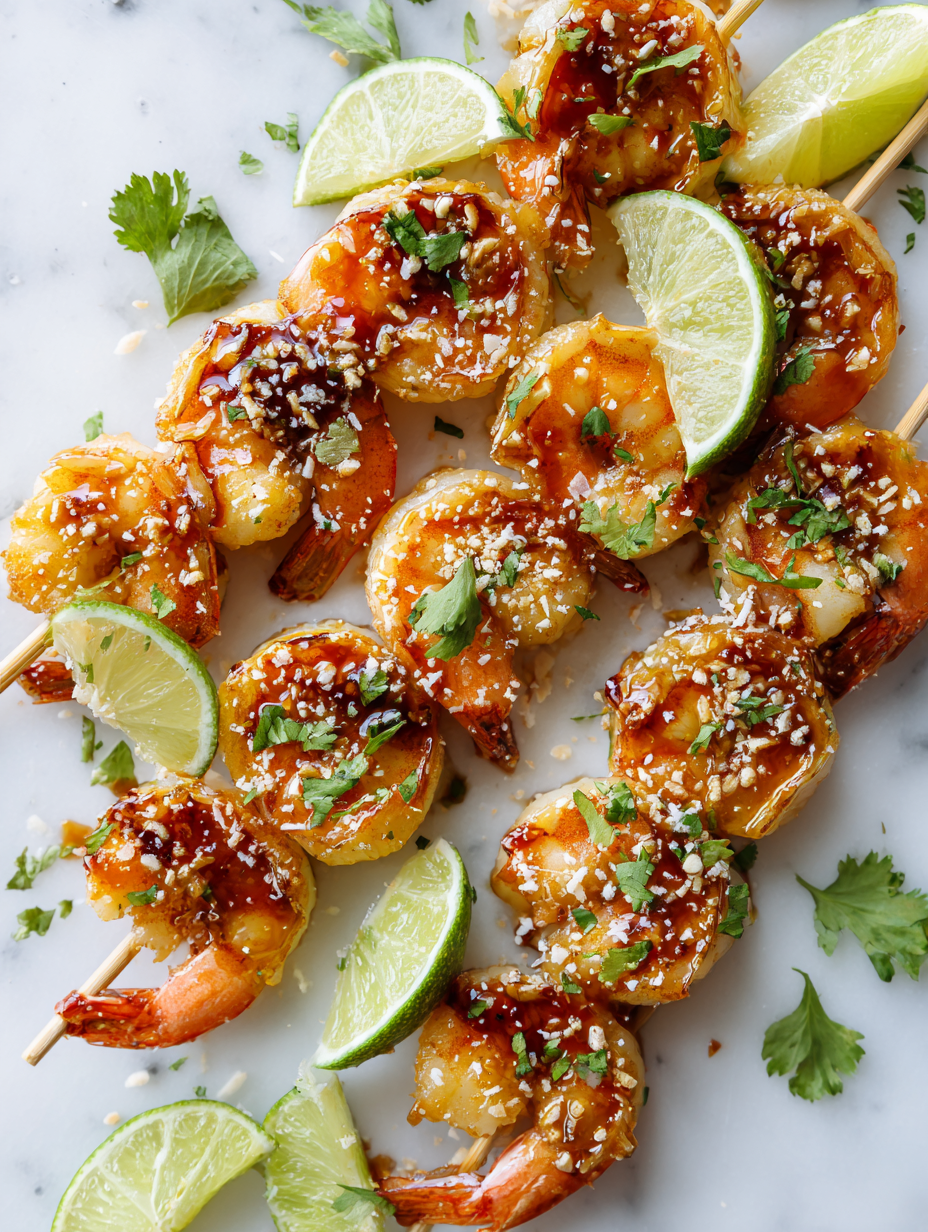
Tropical Coconut Lime Shrimp Skewers
Ingredients
Equipment
Method
- Start by soaking wooden skewers in water for at least 30 minutes to prevent burning. If using metal skewers, have them ready nearby.
- In a bowl, combine the coconut milk, lime zest, minced garlic, olive oil, salt, pepper, and chili flakes if using. Whisk until well blended and fragrant.
- Add the shrimp to the bowl and toss gently to coat all pieces evenly with the marinade. Cover and let sit at room temperature or refrigerate for 20-30 minutes to absorb the flavors.
- Preheat your grill or grill pan over high heat until hot and slightly smoky, about 200°C (390°F). Lightly oil the grates to prevent sticking.
- Thread 3-4 shrimp onto each skewer, leaving a small space between pieces for even cooking and flipping.
- Place the skewers onto the hot grill. Cook for about 2-3 minutes on each side, until the shrimp turn a bright pink and develop light char marks, releasing a smoky, fragrant aroma.
- Flip the skewers carefully using tongs, and cook the other side for another 2-3 minutes until the shrimp are opaque and slightly caramelized.
- Remove the skewers from the grill and let rest for 2 minutes. The shrimp should be tender, juicy, and smoky with a slight char.
- Serve immediately, garnished with extra lime wedges and fresh herbs if desired, for a bright, tropical flavor burst with every bite.
Notes
Pro tips for perfect skewers
- Use a hot grill—aim for high heat (around 200°C/390°F)—for quick, smoky searing.
- Marinate shrimp just enough—20-30 minutes—to absorb flavor without turning mushy.
- Thread skewers loosely—leave space between shrimp—to ensure even cooking and easy flipping.
- Watch for color change—shrimp turn pink and slightly charred when done; don’t overcook, they turn rubbery.
- Oil the grill grates lightly—prevent sticking and achieve those perfect grill marks.
- Rest skewers for 2 minutes after grilling—to keep juices in and enhance flavor.
- If shrimp stick, brush with a little oil before flipping—saves the delicate seafood from tearing.
Common mistakes and how to fix them
- FORGOT to soak wooden skewers, causing burning—soak for at least 30 minutes before use.
- DUMPED marinade too early—let shrimp marinate for minimum 20 minutes for flavor penetration.
- OVER-TORCHED shrimp—remove when pink and slightly charred, avoid excessive charring to prevent toughness.
- UNDERCOOKED shrimp—ensure opaque and firm, cook for additional minute if translucent or soft.
Quick fixes and pantry swaps
- When shrimp stick, splash with vinegar to loosen—they release easily and shimmer again.
- If skewers burn, patch with foil shields and lower the heat slightly.
- Dumped marinade before marinating? Open a fresh lime for a quick citrus spritz to revive flavor.
- Overcooked shrimp? Rescue with a squeeze of lime to brighten and add moisture, then serve immediately.
- Pantry swap: use smoked paprika instead of chili flakes for a smoky kick and vibrant color.
Prep, store, and reheat tips
- Marinate the shrimp up to 24 hours in advance in the fridge—cover tightly—flavors deepen, and the shrimp absorb that tropical zest, making grilling quicker and more fragrant.
- Store cooked skewers in an airtight container in the fridge for up to 2 days—reheat gently in a warm oven or on a low grill, watching for smoky aroma and tender texture. Avoid microwave reheating to prevent rubberiness.
- Raw shrimp marinated and stored in the fridge develop a richer flavor if kept for 12-24 hours—notice the aroma intensify, but do not marinate beyond that to prevent mushiness.
- For best results, reheat skewers over medium-low heat—look for a slight shimmer and aroma of smoky citrus. Reheat only until warmed through to keep shrimp tender and juicy, not rubbery.
- Frozen marinated shrimp can be thawed in the fridge overnight—note the shrimp will be slightly more tender, and the marinade may be less vibrant but still flavorful.
Top questions about grilled shrimp skewers
1. Should I buy fresh or frozen shrimp?
Use raw, deveined shrimp for best flavor and texture. They turn pink and opaque when cooked through, releasing a smoky aroma.
2. How long should I marinate the shrimp?
Marinate the shrimp for at least 20 minutes to absorb flavors without turning mushy. Longer marinating can be fine if kept refrigerated.
3. How hot should the grill be?
Preheat your grill to high, around 200°C (390°F). Look for a consistent, hot surface to get those nice char marks.
4. How do I know when shrimp are done?
Cook the shrimp for about 2-3 minutes per side until they turn pink and develop a slight char. Overcooking makes them rubbery.
5. Can I use wooden skewers?
Soak wooden skewers in water for 30 minutes before use to prevent burning. Metal skewers require no prep.
6. How many shrimp per skewer?
Thread 3-4 shrimp per skewer, leaving space for even heat. Handle gently to avoid tearing delicate shrimp.
7. How should I serve the skewers?
Serve immediately after resting for 2 minutes. Garnish with lime wedges and herbs for extra freshness.
8. What if the shrimp stick or burn?
If shrimp stick, brush with oil or spray a little cooking spray on the grill. For uneven cooking, turn more frequently.
9. Can I prepare ahead?
Refrigerate marinated raw shrimp in an airtight container for up to 24 hours. Reheat cooked skewers gently, avoiding microwave to keep tenderness.
10. How do I reheat leftovers?
Add a splash of lime juice or a sprinkle of herbs if flavor dulls after storage. Reheat over low heat until fragrant and warm.
Cooking these shrimp skewers is a reminder that simple ingredients can create something unexpectedly memorable. The smoky aroma and bright citrus flavor linger long after the last bite, making it a dish I keep coming back to. It’s a quick, honest way to bring a little escape to your table.
In the end, there’s a quiet satisfaction in tossing shrimp on the grill and watching them turn from translucent to tender, juicy perfection. It’s a dish that feels both relaxed and special, perfect for summer nights or whenever you need a break from the usual. No fuss, just good flavors and good company.

Founded by Rachel Morgan, a proud home cook and foodie from Austin, Texas, this blog is all about transforming everyday meals into moments of joy.