
There’s something about marinating chicken with unexpected ingredients like pineapple juice or a dash of cinnamon that turns an ordinary skewer into a flavor adventure. It’s like giving the chicken a secret, tasty passport to new places, and I love how it makes even the simplest grill feel special. These skewers are perfect for when you want to surprise your guests or just break out of your usual routine.
I’ve found that the magic really happens in the marinating step, where the fruit juices and spices mingle and tenderize the chicken, infusing it with layers of bright, unexpected flavors. It’s not about fancy techniques; it’s about playing with what you have and trusting that a little experimentation can lead to something memorable. Plus, the aroma that drifts through the backyard as they cook? Pure comfort.
Focusing on how marinating chicken skewers with unexpected ingredients like fruit juices or spices can transform a simple grill into a complex, flavor-layered experience that surprises and delights the senses.
The story behind this recipe
One summer, I was camping with friends and brought along some chicken and skewers just to keep things simple. As we sat around the fire, I remembered a flavor combo I’d read about—using a splash of citrus and a dash of spice. That night, those skewers became the highlight of our trip, the smoky aroma mingling with laughter and the crackling fire. Since then, I’ve kept that improvisation alive, tweaking the marinade with what’s in the fridge and always aiming for that perfect balance of tang and heat. It’s one of those dishes that feels like a little celebration, no matter if you’re outdoors or in the backyard.
Key ingredients and tips
- Chicken breasts: I prefer skinless, boneless for quick grilling and even cooking. You might try thighs for juiciness, but watch the fat content.
- Lemon juice: Brightens everything and tenderizes the meat. Use fresh lemon for that zesty, juicy punch—bottled works in a pinch but less vibrant.
- Garlic: I crush mine to release the oils; it’s pungent and savory. If you’re not a garlic fan, a pinch of garlic powder can work but won’t be quite the same.
- Red pepper flakes: Adds a kick of heat and a smoky hue. Adjust quantity to match your spice tolerance—start small, then go bold if you like it fiery.
- Honey: I keep mine handy for a touch of sweetness that balances acidity. If you’re out, maple syrup or agave can soften the marinade without losing sweetness.
- Fresh herbs: Parsley or cilantro brighten up the skewers. Dried herbs can work but won’t give you that lively, fresh aroma during grilling.
- Olive oil: I use a good extra virgin for richness and to help the marinade cling. If you want a lighter touch, a neutral oil like sunflower is fine, but skip the flavorless oils for better taste.
Spotlight on key ingredients
Chicken breasts:
- I prefer skinless, boneless for quick grilling and even cooking. You might try thighs for juiciness, but watch the fat content.
- Lemon juice: Brightens everything and tenderizes the meat. Use fresh lemon for that zesty, juicy punch—bottled works in a pinch but less vibrant.
- Garlic: I crush mine to release the oils; it’s pungent and savory. If you’re not a garlic fan, a pinch of garlic powder can work but won’t be quite the same.
Lemon juice:
- Brightens everything and tenderizes the meat. Use fresh lemon for that zesty, juicy punch—bottled works in a pinch but less vibrant.
- Garlic: I crush mine to release the oils; it’s pungent and savory. If you’re not a garlic fan, a pinch of garlic powder can work but won’t be quite the same.
Notes for ingredient swaps
- Dairy-Free: Swap yogurt-based marinades for coconut milk or olive oil. Keeps the flavor bright but skips the creaminess.
- Sweeteners: Use agave syrup or maple syrup instead of honey. They add a slightly different sweetness and aroma, but work just as well.
- Citrus: Lime juice can replace lemon for a slightly different tang—think more floral and less tart.
- Herbs: Fresh thyme or oregano can substitute parsley or cilantro. They bring earthy or savory notes that work beautifully.
- Spice: Smoked paprika in place of red pepper flakes will give a smoky depth without the heat, ideal for a milder flavor.
Equipment & Tools
- Grill or grill pan: To cook the skewers evenly with direct heat.
- Mixing bowls: For marinating the chicken.
- Whisk: To blend marinade ingredients smoothly.
- Basting brush (optional): To apply marinade during grilling for extra flavor.
- Tongs: To turn and remove skewers safely.
- Meat thermometer: To check internal temperature for safety and doneness.
- Water bath or bowl: To soak wooden skewers and prevent burning.
Guide to Perfect Chicken Skewers
- Gather all your equipment and ingredients. Soak wooden skewers in water for at least 30 minutes to prevent burning.
- Cut chicken into 1.5-inch cubes. Pat dry with paper towels to ensure good marinade adherence.
- In a bowl, whisk together marinade ingredients: lemon juice, garlic, honey, red pepper flakes, olive oil, and herbs. Adjust spice to taste.
- Toss chicken cubes in marinade, ensuring all pieces are coated. Cover and refrigerate for at least 1 hour, preferably 2-3 hours for deeper flavor.
- Preheat your grill or grill pan to medium-high heat (~200°C / 390°F). Light smoke should rise when hot enough.
- Thread chicken pieces onto skewers, leaving small gaps for even cooking. If using wooden skewers, ensure they are soaked to avoid charring.
- Place skewers on grill, turning every 2-3 minutes. Cook for about 10-12 minutes total, until chicken is golden and cooked through.
- Check for doneness: the chicken should be firm, juices clear, and internal temp reach 75°C / 165°F. The exterior should be nicely charred but not burnt.
- Remove skewers from grill. Let rest for 5 minutes to redistribute juices. Serve hot, garnished with fresh herbs if desired.
Let the skewers rest for 5 minutes off the heat to allow juices to settle. Serve with a squeeze of lemon or fresh herbs for brightness. Plate directly or lay on a platter for sharing, maintaining the charred aroma and juicy interior.
How to Know It’s Done
- Juices run clear when pierced with a skewer.
- Internal temperature hits 75°C / 165°F.
- Exterior is golden with light charring and aroma of spices.
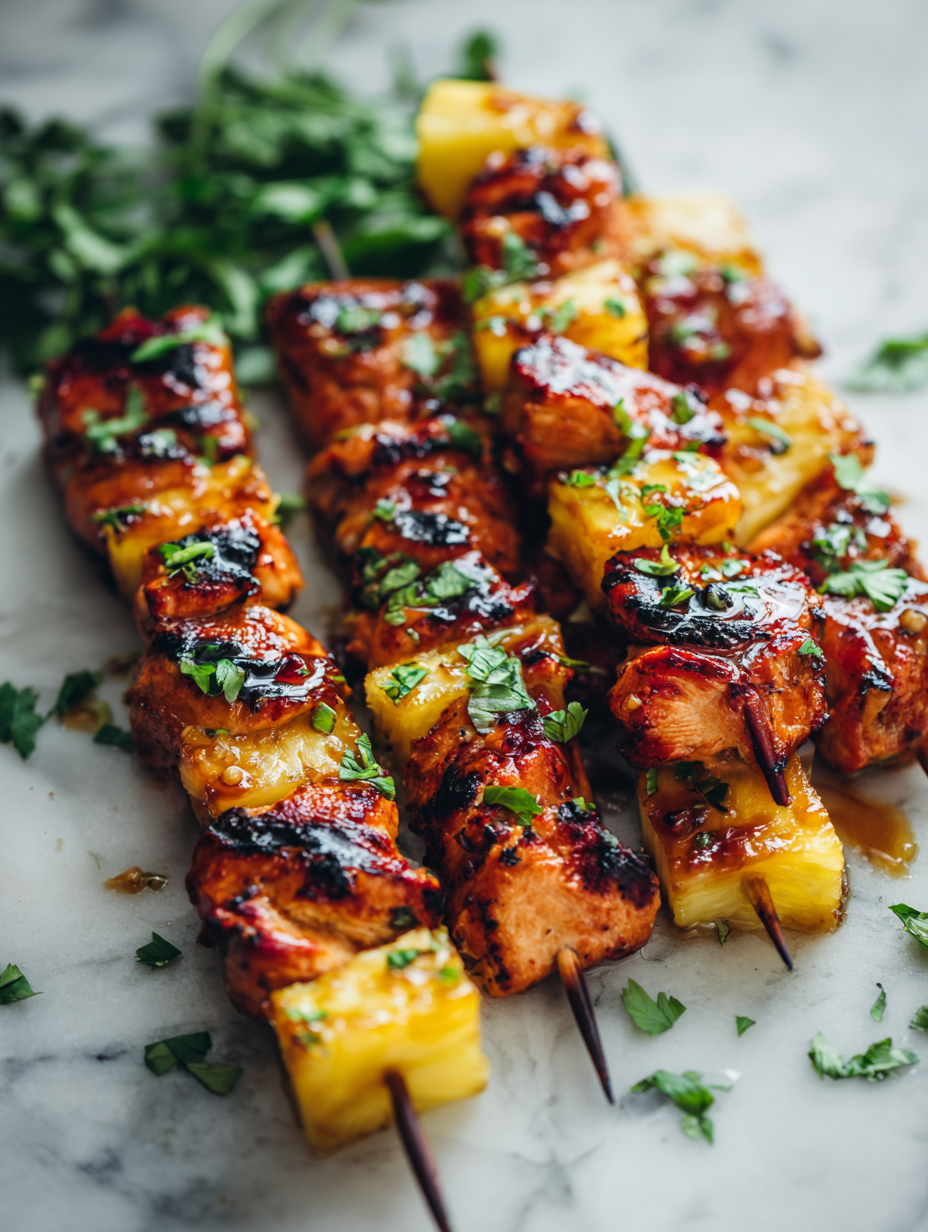
Grilled Chicken Skewers with Pineapple and Cinnamon Marinade
Ingredients
Equipment
Method
- Soak wooden skewers in water for at least 30 minutes to prevent burning during grilling.
- In a large mixing bowl, whisk together pineapple juice, ground cinnamon, crushed garlic, honey, olive oil, and red pepper flakes until well combined. This aromatic marinade will be slightly thick and fragrant.
- Add the chicken cubes to the marinade and toss gently to coat all pieces evenly. Cover the bowl with plastic wrap and refrigerate for at least 1 hour, or up to 3 hours for more flavor infusion.
- Preheat your grill or grill pan to medium-high heat until it shimmers and a light smoke is visible. This ensures a good sear and smoky flavor.
- Thread the marinated chicken pieces onto the soaked skewers, leaving a small space between each piece for even cooking. Repeat until all skewers are assembled.
- Place the skewers on the hot grill, turning every 2-3 minutes. Listen for a gentle sizzle and look for even browning and slight caramelization on the exterior, which takes about 10-12 minutes total.
- Check for doneness by ensuring the chicken is cooked through—juices should run clear and an internal temperature of 75°C / 165°F should be reached. The exterior should be golden with light charring.
- Remove the skewers from the grill and let them rest for 5 minutes. This allows the juices to redistribute, keeping the chicken tender and juicy.
- Sprinkle the freshly chopped herbs over the skewers for a burst of color and fresh aroma. Serve hot with a squeeze of lemon if desired.
Notes
Pro tips for perfect skewers
- High heat: Preheat your grill until it shimmers to get those perfect char lines and smoky flavor.
- Marinate longer: Aim for at least 2 hours in the fridge; the chicken absorbs more flavor and stays juicy.
- Skewer size: Keep chicken pieces uniform, around 1.5 inches, for even cooking and consistent texture.
- Turn frequently: Flip your skewers every 2-3 minutes to prevent burning and ensure even browning.
- Use a thermometer: Check the internal temp at 75°C / 165°F; it’s the clearest sign of doneness.
- Rest the meat: Let skewers sit off heat for 5 minutes; this helps juices redistribute for maximum tenderness.
- Oil the grill: Lightly brush or oil the grill grates before cooking to prevent sticking and tearing the meat.
Common mistakes and how to fix them
- FORGOT to soak wooden skewers → Use water to prevent burning during grilling.
- DUMPED marinade too quickly → Let chicken marinate at least 1 hour for flavor and tenderness.
- OVER-TORCHED skewers → Watch heat and turn skewers frequently to avoid charring.
- MISSED internal temp → Use a thermometer; chicken should reach 75°C / 165°F to be safe.
Fast Fixes for Skewer Success
- When chicken sticks, splash a little oil on the grill to prevent tearing.
- If skewers burn quickly, patch with aluminum foil shields to deflect direct heat.
- DUMPED marinade when chicken was too dry? Rescue with a quick brush of fresh marinade before grilling.
- Overcooked skewers? Rest briefly off heat to reabsorb juices and avoid dryness.
- Pantry swap: soy sauce for salt to add umami, but watch for increased saltiness.
Prep, store, and reheat tips
- Marinate the chicken a day ahead in the fridge; the flavors deepen overnight and the meat becomes more tender.
- Store marinated chicken in an airtight container; it’s safe for up to 24 hours, but best within 12 for optimal juiciness.
- Skewering the chicken can be done ahead; keep the assembled skewers covered in the fridge for up to 4 hours before grilling.
- Reheat leftovers gently in the oven at 150°C / 300°F, or in a skillet over medium heat, until warmed through and slightly smoky.
- The flavor might intensify after storage, so taste and adjust seasoning if reheating, especially the salt and spice levels.
Top questions about chicken skewers
1. How do I prevent skewers from burning?
Soak wooden skewers in water for at least 30 minutes to prevent burning during grilling.
2. How long should I marinate the chicken?
Marinate chicken for at least 1 hour—preferably 2-3 hours—to ensure flavor absorption and tenderness.
3. What temperature should I grill the skewers at?
Cook skewers on a preheated grill at medium-high heat (~200°C / 390°F) until golden and internal temp reaches 75°C / 165°F.
4. How do I know when the chicken is cooked?
Use a meat thermometer to check the internal temperature—75°C / 165°F confirms doneness and safety.
5. Should I rest the skewers before serving?
Let the skewers rest for about 5 minutes after grilling to allow juices to redistribute for maximum tenderness.
6. Can I make the skewers milder or spicier?
Adjust spice levels to your taste; start with a small amount of red pepper flakes and add more for heat.
7. How far ahead can I prepare the chicken?
Refrigerate marinated chicken in an airtight container for up to 24 hours. Reheat gently in the oven or skillet.
8. How can I add more smoky flavor?
For a smoky flavor, try using smoked paprika in the marinade or finishing the skewers over charcoal.
9. What if the chicken sticks or tears during grilling?
If chicken sticks to the grill, oil the grates lightly before placing skewers on them.
10. Should I use fresh or bottled lemon juice?
Use fresh lemon juice for bright flavor and tender meat; bottled lemon works but is less vibrant.
These chicken skewers are more than just a grill recipe; they’re a reminder that simple ingredients can surprise you. The smoky aroma, juicy bites, and unexpected marinade flavors make every bite feel like a little celebration. Sometimes, all it takes is a bit of spice and citrus to turn an ordinary dinner into a memorable moment.
When you’re next craving something quick but flavorful, these skewers will come through. They’re perfect for backyard dinners or even a casual outdoor feast. No matter the occasion, they bring a sense of simplicity and joy that’s hard to beat.

Founded by Rachel Morgan, a proud home cook and foodie from Austin, Texas, this blog is all about transforming everyday meals into moments of joy.