
This protein bento box is my go-to for busy weekdays when I want something nourishing but not boring. I like to think of it as a little edible puzzle — each section offering a different texture and flavor to keep me engaged with my lunch. It’s a way to make eating feel a bit more mindful, even in a rushed moment.
What drew me to this idea was how easy it is to customize. I can swap in grilled chicken, tofu, or even smoked salmon depending on what I have or crave. Plus, it’s a chance to get creative with sides — roasted veggies, pickles, or even a handful of nuts — all packed into one colorful box.
Lining up my ingredients and filling the compartments feels almost meditative. There’s a satisfaction in balancing protein with crunch, freshness, and a touch of sweetness, making each bite a tiny celebration.
Focusing on the balance of textures and flavors in a protein-packed bento box, I aim to create a meal that feels both satisfying and visually inviting, turning everyday lunch into a moment of mindful eating and appreciation for variety.
The story behind this recipe
- This recipe started as a way to use up a mishmash of leftovers from the fridge, but it quickly turned into something I look forward to making every week. Packing a variety of proteins in one box felt like creating a mini feast, a way to make lunch feel special without much fuss. It’s honest cooking, a little messy but full of honest flavor.
- I remember one particular week—busy mornings, no time to cook, but I still wanted something nourishing. I threw together grilled chicken, a handful of edamame, and some quick-pickled cucumbers. Sitting down with that colorful box, I felt a little proud, like I’d hacked the weekday meal routine. It’s become my go-to for keeping lunch interesting and satisfying.
- heading: The story behind this recipe
Key ingredients and tips
- Chicken breast: I prefer mine grilled with a smoky char, juicy inside. Swap it for tofu if you want a veggie version—just marinate it well for flavor.
- Edamame: These little beans are my go-to for a pop of salty sweetness and bright texture. Frozen works fine, just give them a quick boil until tender and shimmery.
- Cucumber: Crisp and refreshing, I like to slice mine thin for that satisfying crunch. If you’re out, try jicama—it’s just as crunchy and slightly sweeter.
- Pickled carrots: They add a zing and vibrant color. I quick-pickle mine with rice vinegar and a dash of sugar. Store leftovers in the fridge for up to a week.
- Nuts & seeds: A handful of toasted almonds or sesame seeds adds crunch and richness. Toast them lightly to boost that nutty aroma—don’t skip this step.
- Protein spread: Sometimes I add a dollop of hummus or a smear of spicy mayo. It’s a creamy contrast to the crisp veggies and adds flavor depth.
- Optional extras: Fresh herbs like cilantro or Thai basil can make the box pop. Just a few leaves fresh on top for a fragrant finish.
Spotlight on key ingredients
Chicken breast:
- I prefer mine grilled with a smoky char, juicy inside. Swap it for tofu if you want a veggie version—just marinate it well for flavor.
- Edamame: These little beans are my go-to for a pop of salty sweetness and bright texture. Frozen works fine, just give them a quick boil until tender and shimmery.
- Cucumber: Crisp and refreshing, I like to slice mine thin for that satisfying crunch. If you’re out, try jicama—it’s just as crunchy and slightly sweeter.
Edamame:
- These little beans are my go-to for a pop of salty sweetness and bright texture. Frozen works fine, just give them a quick boil until tender and shimmery.
- Cucumber: Crisp and refreshing, I like to slice mine thin for that satisfying crunch. If you’re out, try jicama—it’s just as crunchy and slightly sweeter.
Notes for ingredient swaps
- Dairy-Free: Swap traditional yogurt-based dips for coconut yogurt or tahini—creaminess stays, but flavor shifts a bit.
- Vegetarian: Replace chicken with grilled tempeh or seitan for hearty protein, keeping the texture satisfying.
- Low-Sodium: Use reduced-salt soy sauce or tamari to cut salt without sacrificing umami punch.
- Nut-Free: Omit nuts or seeds and add toasted sunflower seeds or crispy chickpeas for crunch and protein.
- Gluten-Free: Ensure soy products are gluten-free or swap with coconut aminos for a sweet, savory alternative.
- Fresh Herbs: Use basil or dill instead of cilantro for a different aromatic lift—each adds a unique freshness.
- Crunchy Veggies: Substitute jicama or radishes for cucumber if you want a different crisp bite and flavor profile.
Equipment & Tools
- Sharp knife: For slicing proteins and vegetables precisely.
- Medium bowl: Marinate proteins or toss vegetables.
- Small pot: Boil edamame or warm ingredients quickly.
- Bento boxes or containers: For organized, compartmentalized presentation.
Step-by-step guide to assembling
- Gather all ingredients and prep your workspace. Have your proteins, veggies, and sides ready to go.
- Equipment & Tools: Use a sharp knife for slicing, a medium bowl for marinating, a small pot for boiling edamame, and bento boxes or containers for assembly.
- Cook the protein: If using chicken, season with salt, pepper, and a splash of soy; grill over medium heat (around 180°C/356°F) for 6-8 minutes per side until juices run clear. For tofu, press out excess moisture, marinate briefly, then pan-fry until golden.
- Prepare the sides: Blanch edamame in boiling water for 3-4 minutes until bright green and tender. Drain and sprinkle with sea salt. Slice cucumbers thinly for crunch.
- Quick-pickle the carrots: Toss julienned carrots with rice vinegar, a pinch of sugar, and a splash of soy sauce. Let sit for at least 10 minutes. They should be mildly tangy and crisp.
- Assemble the bento: Divide proteins, veggies, nuts, and any extras into the compartments. Keep sauces or spreads in small containers if needed.
- Finish with garnishes: Add fresh herbs or sesame seeds on top for aroma and visual appeal. Drizzle any dressings last to prevent sogginess.
- Rest and serve: Let the assembled box sit for 5 minutes to allow flavors to meld. Serve at room temperature or chilled, as preferred.
Let the assembled bento sit for 5 minutes before serving to let flavors meld. Garnish with herbs or seeds as desired. Serve at room temp or chilled, depending on preference.
How to Know It’s Done
- Protein is cooked through with clear juices or golden crust.
- Veggies are tender but retain a bit of bite, with no raw edge.
- Assembly looks colorful and each compartment is filled without spilling.
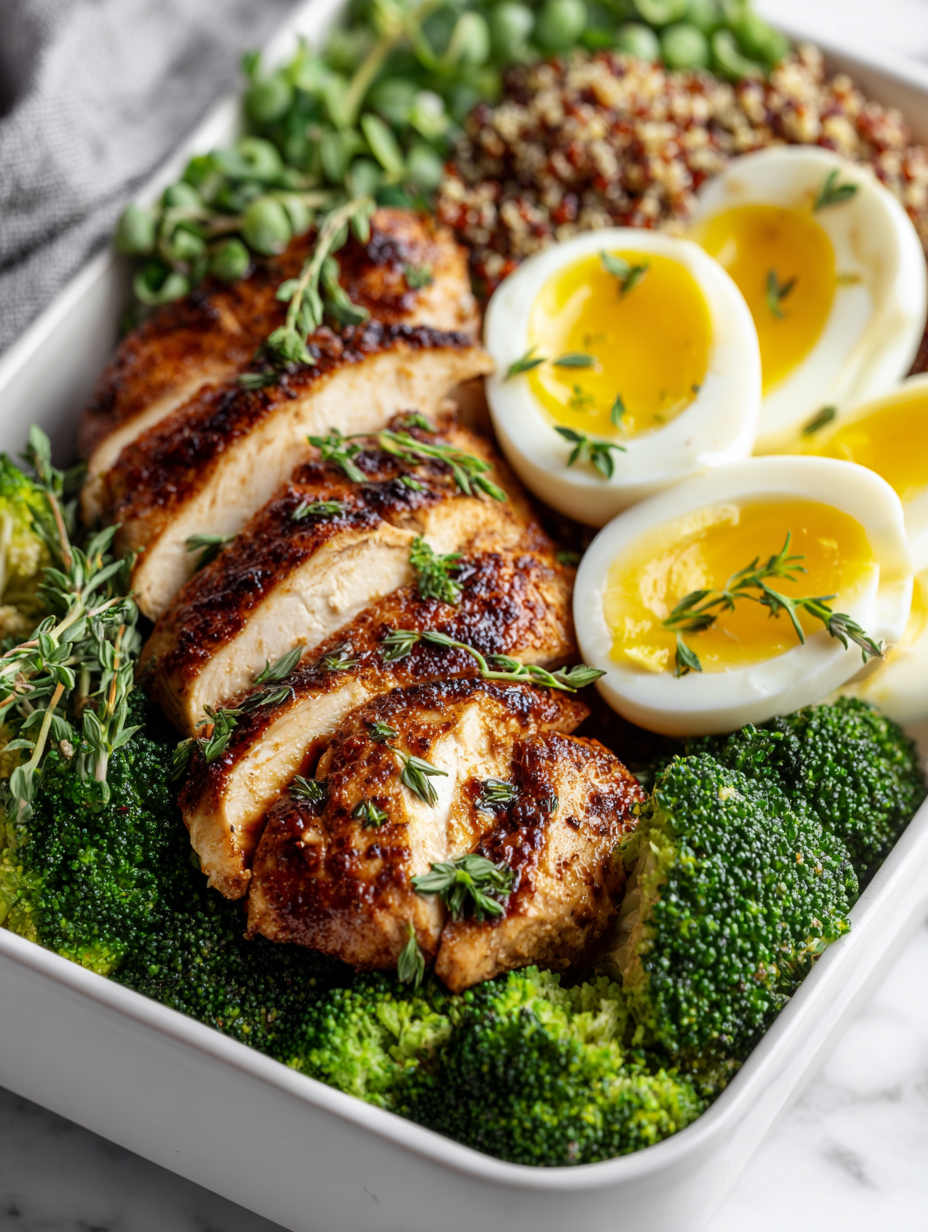
Protein Bento Box
Ingredients
Equipment
Method
- Start by marinating the chicken breast with soy sauce, salt, and pepper. Let it sit for about 10 minutes while you prepare other ingredients.
- Bring a small pot of water to a boil, then add the edamame and cook for 3-4 minutes until bright green and tender. Drain and set aside.
- While the edamame cooks, slice the cucumber into thin rounds or strips for a satisfying crunch.
- Julienne the carrots into thin matchstick-sized strips, then toss them with rice vinegar and sugar in a medium bowl. Let sit for at least 10 minutes to quick-pickle.
- Heat a skillet over medium-high heat and add olive oil. Place the marinated chicken in the skillet and cook for 6-8 minutes per side, until golden brown and cooked through. Let rest for a few minutes, then slice into strips.
- Once the chicken is cooked, assemble the bento box by dividing the chicken, edamame, cucumber slices, and pickled carrots into separate compartments. Sprinkle with nuts or seeds for added crunch.
- Finish by garnishing with extra herbs or seeds if desired. Serve immediately or store in the fridge for later enjoyment.
Notes
Pro tips for perfect protein bento
- Bolded mini-head: Use a hot pan → Ensures quick sear and keeps proteins juicy.
- Bolded mini-head: Chill ingredients before assembly → Keeps the bento fresh and prevents sogginess.
- Bolded mini-head: Layer flavors with marinade → Builds depth, especially for tofu or chicken.
- Bolded mini-head: Taste as you go → Adjust seasoning early, especially with soy or salt.
- Bolded mini-head: Don’t overcrowd the pan → Allows proper browning and prevents steaming.
- Bolded mini-head: Use aromatic herbs last → Keeps their fragrance vibrant and fresh.
- Bolded mini-head: Rest proteins briefly → Juices redistribute, keeping each bite moist.
Common mistakes and how to fix them
- FORGOT to set a timer for tender vegetables; fix by timing carefully and tasting.
- DUMPED too much oil in pan; fix by wiping excess before adding ingredients.
- OVER-TORCHED the protein; fix by lowering heat immediately and adding more marinade.
- UNDERSALTED the edamame; fix by sprinkling more sea salt after cooking.
Quick fixes and pantry swaps
- When sauce shimmers, it’s ready—don’t overcook or it’ll become too thick.
- Splash a little water on dry rice to revive fluffiness before packing.
- Patch a cracked container with plastic wrap for an airtight seal.
- DUMPED too much oil in pan? Wipe with a paper towel, then continue cooking.
- Shield delicate ingredients from over-torching by lowering heat immediately.
Prep, store, and reheat tips
- Prep proteins and chop veggies the night before; store in airtight containers for up to 24 hours, keeping flavors fresh and textures crisp.
- Cook grains or sides ahead; refrigerate for up to 3 days. Reheat gently, noticing a slight nutty aroma or fluffy texture returning.
- Assemble the boxes just before packing; if made in advance, keep components separate to prevent sogginess and maintain crunch.
- Store assembled bento in the fridge for up to 24 hours; flavors meld, but veggies may lose some crunch. Reheat proteins if desired, until steaming hot, with a crackle of sear.
Top questions about Protein Bento Box
1. How do I prepare the proteins for the bento?
Use a sharp knife to slice proteins thinly, making them easier to pack and eat. Feel for a clean cut and avoid tearing the meat or tofu.
2. How do I cook the edamame properly?
Boil edamame in salted water until bright green and tender, about 3-4 minutes. The beans should be plump and slightly shiny.
3. Can I substitute cucumbers?
Slice cucumbers very thin for that crisp bite. If out, jicama offers a similar crunch and a slightly sweeter, milder flavor.
4. How do I pickle vegetables quickly?
Quick-pickle carrots with rice vinegar and a touch of sugar for 10 minutes. They should be tangy and crispy, adding a lively zing to your box.
5. Should I toast the nuts before adding?
Toast nuts or seeds lightly in a dry pan until aromatic and golden. They’ll boost flavor and add crunchy texture to each bite.
6. How do I assemble the bento for best freshness?
Arrange ingredients in the box with protein first, then veggies, nuts, and spreads last. Keep sauces in separate containers to prevent sogginess.
7. How long should I let the bento sit before eating?
Let the assembled box sit for 5 minutes before eating, so flavors meld and everything stays crisp and fresh until you open it.
8. How long can I store a prepared bento?
Refrigerate assembled bento for up to 24 hours; reheat proteins if needed until steaming hot, noticing a crackle of sear or aroma.
9. What if my ingredients get soggy?
If ingredients start to soggy, add a paper towel underneath to absorb excess moisture or keep wet elements separate until serving.
10. How do I pack delicate ingredients without breaking them?
Use a silicone spatula or a gentle spoon to pack ingredients without crushing delicate items like herbs or soft veggies.
This protein bento box is more than just a lunch; it’s a small act of mindful eating in a busy world. The variety of textures and flavors keeps me grounded, even on hectic days. It’s honest, satisfying, and a reminder that good food doesn’t have to be complicated.
Whenever I pack this, I think about how each ingredient tells a little story—smoky grilled chicken, crunchy cucumbers, bright pickled carrots. It’s a simple way to bring a moment of calm and nourishment, right into the middle of a chaotic schedule. That’s what makes this recipe stick around for me.

Founded by Rachel Morgan, a proud home cook and foodie from Austin, Texas, this blog is all about transforming everyday meals into moments of joy.