
Chicken Piccata is one of those dishes that feels fancy but is surprisingly straightforward. The magic lies in the bright, tangy lemon and those little briny capers that lift every bite. It’s a dish I turn to when I want something comforting but with a little zing to keep things interesting.
I love how the simple act of pounding out chicken breasts makes them tender and quick to cook. Then, a quick dredge in flour and a sizzle in butter and olive oil transforms them into something golden and inviting. That burst of lemon at the end? It’s like a little reminder that fresh flavors can turn an everyday dinner into something memorable.
Focusing on how the bright, tangy lemon and briny capers transform simple chicken into a dish that balances comfort with a burst of freshness.
A Bright Twist on Classic Comfort
- Cooking this dish always reminds me of family Sunday dinners, where the kitchen was filled with laughter and the smell of lemon zest.
- There’s a quiet pride in mastering a sauce that’s so simple yet feels like a little celebration on the plate.
- I used to be nervous about capers, but now I love how they add that unexpected burst of salty tang, almost like a culinary surprise.
- Whenever I make Chicken Piccata, I think about how a few bright ingredients can turn a humble chicken breast into something special.
- This recipe is my go-to when I need comfort—bright, tangy, and so satisfying, it always lifts my mood.
The story behind this recipe
- This recipe came about one rainy afternoon when I was craving a dish that felt both bright and comforting. I wanted something quick, but with enough flavor punch to brighten up a grey day. The lemon and capers seemed like just the right twist to make an ordinary chicken dinner feel special.
- Cooking this dish always takes me back to a trip I took to Italy—those tiny trattorias serving simple, flavorful food with a lot of heart. The balance of tangy lemon and briny capers reminds me of strolling through markets, hunting for perfect ingredients that tell a story.
- heading
- story_type
Historical & Cultural Insights
- Chicken Piccata has roots in Italy, where simple ingredients like lemon, capers, and chicken are staples of rustic cooking.
- The dish likely evolved from earlier European recipes that combined citrus and salty elements to preserve and flavor meat.
- In Italy, ‘piccata’ refers to a method of preparing meat with lemon, butter, and capers, emphasizing bright, punchy flavors.
Key Ingredients Breakdown
- Lemon: I love how the zest and juice brighten up the sauce with a zesty, aromatic punch. Use fresh lemon for the best brightness, but if you’re out, bottled lemon juice works in a pinch—just won’t have that fresh, vibrant aroma.
- Capers: These tiny briny bursts add a salty punch that balances the richness of the butter. Rinse them well to remove excess salt, or soak briefly if they taste too salty—your sauce will thank you.
- Chicken breasts: Pounding them thin makes for even cooking and tender bites. Use a meat mallet or rolling pin, and aim for a consistent thickness—this keeps the chicken juicy and quick to cook.
- Flour: A light dredge in flour creates a delicate crust and helps thicken the sauce slightly. Use all-purpose flour; skip if gluten-free, but consider cornstarch for a different texture.
- Butter: Adds richness and a velvety finish to the sauce. Use unsalted, and add at the end for maximum flavor control—be careful not to burn it during sautéing.
- Olive oil: I prefer a good quality extra virgin for its fruity aroma. It handles the initial sear well, but if you want a lighter touch, substitute with a neutral oil like canola or grapeseed.
- White wine (optional): A splash adds depth and a slight acidity that complements the lemon. Use a dry white like Sauvignon Blanc or Pinot Grigio, but skip if you prefer a non-alcoholic version—substitute with chicken broth for similar flavor.
Spotlight on Key Ingredients
Lemon:
- Bright, zesty aroma that wakes up the sauce; fresh lemon zest adds a fragrant punch, while juice provides tangy depth. Use fresh for the best vibrancy, bottled works in a pinch—just lacks that fresh citrus punch.
- Capers: Tiny briny bursts that add a salty, lemony punch; they soften slightly during cooking, releasing a fragrant, almost umami aroma. Rinse well to remove excess salt and preserve that lively tang.
Capers:
- Chicken breasts: When pounded thin, they cook quickly and stay tender; their mild flavor soaks up the bright sauce. Aim for even thickness for uniform cooking, and don’t skip pounding—juiciness depends on it.
- These tiny flavor bombs soften and swell slightly as they cook, releasing a fragrant brine that balances the richness of the butter and chicken. Rinse thoroughly to tame their saltiness and keep the flavor fresh.
Notes for ingredient swaps
- Lemon: I prefer freshly zested and juiced for that zingy brightness. Bottled lemon juice can work in a pinch, but it’s not quite as vivid.
- Capers: Rinse thoroughly to remove excess salt and brine. If they taste overly salty, soak briefly—your sauce will stay balanced.
- Chicken breasts: Pound to even thickness with a mallet or rolling pin. Use skinless, boneless for quick cooking and tender bites.
- Flour: All-purpose works best, but for gluten-free, substitute with cornstarch or rice flour—just expect a slightly different crust.
- Butter: Unsalted butter gives you better control over salt—add at the end to avoid burning during sautéing.
- Olive oil: Choose a good-quality extra virgin for aroma and flavor. Neutral oils like canola work if you want a lighter, less fruity base.
- White wine (optional): A dry Sauvignon Blanc or Pinot Grigio adds depth. Skip if avoiding alcohol—substitute with chicken broth for similar acidity.
Equipment & Tools
- Large skillet: To brown and cook the chicken evenly.
- Meat mallet or rolling pin: To pound chicken to uniform thickness.
- Shallow dish: For dredging the chicken in flour.
- Tongs: To handle chicken slices without breaking them.
- Lemon zester: To extract fresh lemon zest for brightness.
Step-by-step guide to chicken piccata
- Gather your equipment: a large skillet (preferably non-stick), a meat mallet or rolling pin, a shallow dish for dredging, tongs, and a lemon zester. Preheat your skillet over medium heat, about 160°C (320°F).
- Pound the chicken breasts to an even 1/2-inch thickness. Use a mallet or rolling pin, covering the chicken with plastic wrap to avoid splatters. Set aside.
- In the shallow dish, mix 1/2 cup all-purpose flour with a pinch of salt and pepper. Dredge each chicken breast in the flour, shaking off excess. This creates a light crust that browns beautifully.
- Add 2 tablespoons olive oil and 2 tablespoons butter to the hot skillet. Once shimmering and the butter is melted, lay in the chicken. Cook until golden, about 3–4 minutes per side. Check for an internal temperature of 74°C (165°F); the chicken should be firm and no longer pink.
- Remove chicken and set aside on a plate. In the same pan, add 1/2 cup dry white wine (or chicken broth if avoiding alcohol). Scrape up browned bits with a spatula and simmer for 1–2 minutes to reduce slightly. The smell should be bright and slightly tangy.
- Add 1/4 cup capers (rinsed) and the juice and zest of 1 lemon. Cook for another 2 minutes, stirring gently. The sauce should thicken slightly and turn glossy with a citrusy aroma.
- Return the chicken to the pan, spoon sauce over, and cook for another minute to reheat. Taste and adjust seasoning with salt and pepper if needed. The chicken should be juicy and coated with a bright, flavorful sauce.
- Remove from heat. Let rest for 2 minutes. Plate the chicken, spooning extra sauce over each piece. Garnish with fresh parsley if desired. Serve immediately with your choice of sides.
Let the chicken rest for 2 minutes before serving. Spoon the sauce generously over each piece. Serve with lemon wedges or your favorite greens for contrast.
How to Know It’s Done
- Chicken is cooked through, with an internal temp of 74°C (165°F).
- Sauce is glossy, slightly thickened, with a bright lemon aroma.
- Chicken breasts are tender and golden, with no pink remaining.
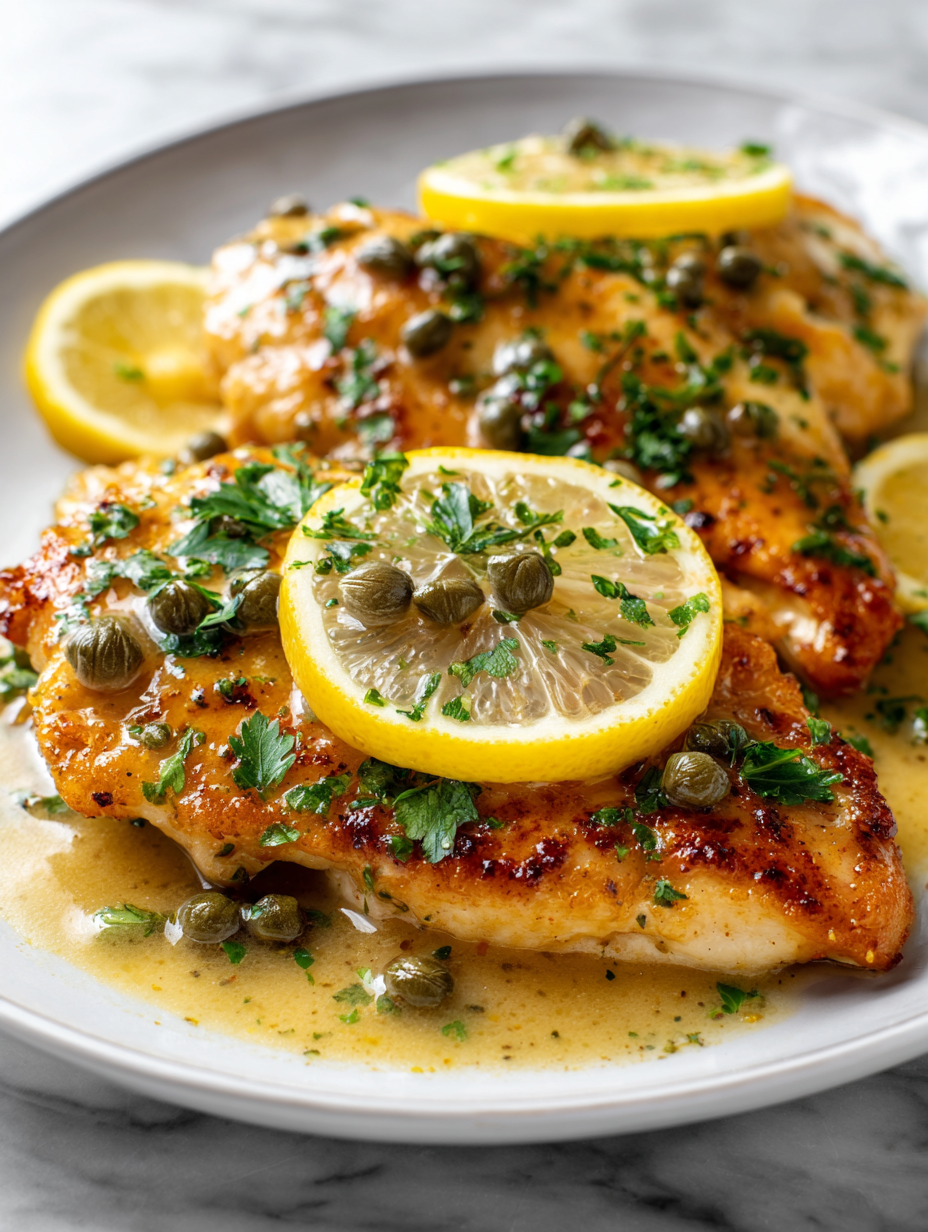
Chicken Piccata
Ingredients
Equipment
Method
- Place each chicken breast between two sheets of plastic wrap and gently pound with a mallet or rolling pin until about 1/2 inch thick; this helps them cook evenly and stay tender. Set aside.
- In a shallow dish, mix the flour with a pinch of salt and freshly ground pepper. Dredge each chicken piece in the flour, shaking off any excess, creating a light, even coating.
- Heat the olive oil and 1 tablespoon of butter in a large skillet over medium heat until shimmering and fragrant. Carefully lay the chicken breasts in the pan, being careful not to overcrowd.
- Cook the chicken until golden brown and cooked through, about 3–4 minutes per side. Once done, transfer to a plate and tent with foil to keep warm.
- In the same skillet, add the wine or broth to deglaze, scraping up the browned bits with a spatula. Let it simmer for 1–2 minutes until slightly reduced and fragrant.
- Add the rinsed capers to the skillet, along with the lemon zest and juice. Stir gently and cook for another 2 minutes, allowing the sauce to thicken slightly and become glossy.
- Return the chicken to the skillet, spooning the sauce over the top. Cook for another minute to reheat and coat the chicken in the flavorful sauce.
- Remove from heat, garnish with additional lemon slices or parsley if desired, and serve immediately. The chicken should be juicy, tender, and coated in a bright, glossy sauce.
Pro tips for perfect Chicken Piccata
- Use a non-stick skillet to prevent sticking and ensure even searing.
- Pound chicken to an even thickness to promote uniform cooking and tenderness.
- Dredge chicken lightly in flour for a delicate, golden crust and to help thicken the sauce.
- Sear chicken over medium heat until golden, then finish cooking on lower heat to avoid burning.
- Deglaze the pan with wine or broth, scraping up browned bits for maximum flavor.
- Add lemon juice and zest at the end to keep the sauce bright and aromatic.
- Rest the chicken briefly after cooking to retain juiciness before serving.
Common mistakes and how to fix them
- FORGOT to pound chicken evenly → Pound to a uniform 1/2-inch thickness for even cooking.
- DUMPED sauce too early → Let the sauce simmer until glossy and slightly thickened.
- OVER-TORCHED the butter → Sauté on medium heat and remove before butter browns.
- SKIPPED rinsing capers → Rinse well to reduce excess salt and preserve bright flavor.
Quick fixes and pantry swaps
- When sauce is too thin → Splash in a little more lemon juice for brightness.
- If chicken is undercooked → Restock with a higher heat and cook longer, check temp.
- Dumped capers too salty → Rinse thoroughly, or soak briefly in water before adding.
- Over-browned butter → Reduce heat immediately and add a splash of lemon juice to cool.
- Splash some water or broth if sauce shimmers too much, then simmer gently for shine.
Prep, store, and reheat tips
- Prep the chicken breasts by pounding and dredging ahead of time; keep covered in the fridge for up to 2 hours for convenience and to save time during cooking.
- The sauce can be made and held in the fridge for up to 24 hours; reheat gently, watching for bubbling and bright lemon aroma.
- Cooked chicken can be stored in an airtight container in the fridge for up to 2 days; reheat in a skillet over low heat until warmed through, checking for juicy texture and vibrant sauce.
- For best flavor, add fresh lemon juice and capers just before serving; these can be prepped and stored separately if needed, but the sauce’s brightness is best fresh.
- Reheating will mellow the fresh lemon aroma slightly; taste and adjust with a splash of lemon juice or a pinch of salt to brighten again, and look for a glossy, flavorful sauce.
Top questions about Chicken Piccata
1. Can I use bottled lemon juice?
Use fresh lemon juice and zest for that bright, tangy flavor. Bottled lemon works in a pinch, but won’t have the same aroma.
2. How do I handle too salty capers?
Rinse capers thoroughly to remove excess salt. Soaking briefly can tame overly salty capers, ensuring a balanced sauce.
3. Why pound the chicken flat?
Pound chicken to an even thickness of about 1/2 inch. This ensures quick, uniform cooking and juicy bites.
4. Can I skip the flour?
Lightly dredge chicken in flour for a delicate golden crust that helps thicken the sauce. Use gluten-free flour if needed.
5. When should I add lemon to the sauce?
Add lemon juice and zest at the end to keep the sauce bright and aromatic, avoiding bitterness.
6. What’s the best pan for this?
Use a non-stick skillet for easy searing and even browning. Keep heat at medium to prevent burning butter or oil.
7. Should I use wine or broth?
Deglaze the pan with white wine or broth after searing. Scrape up browned bits for maximum flavor and a glossy sauce.
8. How do I know when chicken is done?
Cook the chicken until it reaches an internal temperature of 74°C (165°F) and is firm but juicy.
9. Why rest the chicken?
Rest the cooked chicken for a couple of minutes before serving to keep it juicy and flavorful.
10. How do I reheat Chicken Piccata?
Reheat leftovers gently in a skillet over low heat, adding a splash of lemon juice or broth to refresh the sauce.
This Chicken Piccata isn’t just about bright flavors; it’s about those small, satisfying moments—sizzling chicken, fragrant lemon, and that pop of briny capers. It’s a dish I turn to when I need something comforting but with a little zing that lifts the spirits.
In the end, it’s simple ingredients and a bit of attention that make this dish special. It’s quick enough for weeknights but feels fancy enough to serve to friends. No matter the day, this recipe always delivers a burst of freshness that keeps me coming back.

Founded by Rachel Morgan, a proud home cook and foodie from Austin, Texas, this blog is all about transforming everyday meals into moments of joy.