
Getting that perfect sear on chicken and capturing a smoky depth in a skillet sounds ambitious, but it’s really about technique, not just ingredients. My favorite part is how the high heat transforms the chicken’s surface into a caramelized, slightly charred crust that bursts with flavor in every bite. It’s a simple idea, but mastering it makes all the difference when you want restaurant-quality results at home.
This dish is about more than just quick cooking — it’s about understanding how to coax maximum flavor from a humble skillet. I’ve learned to trust my instincts, listening for that crackle and smell that signals the perfect sear, rather than relying on timers. Once you get the hang of it, you’ll find yourself reaching for this recipe whenever you crave something smoky, savory, and satisfying—without fuss.
Focusing on how to achieve restaurant-quality sear and smoky depth in a quick, home-cooked skillet meal, emphasizing technique over ingredients.
Searing secrets for smoky flavor
- Cooking this dish always reminds me of summer nights around a grill, smoky and lively.
- I love how a simple skillet can turn humble chicken into something deeply flavorful and satisfying.
- There’s a nostalgic rush when the peppers and onions sizzle together, filling the kitchen with a savory aroma.
- I feel proud when I get that perfect char on the chicken — it’s a small victory every time.
The story behind this recipe
This recipe came together one busy weeknight when I needed something quick but flavorful enough to feel special. I had a bunch of peppers and onions that needed using, and a couple of chicken breasts that I couldn’t be bothered to fuss over. The skillet method is so forgiving, it turns simple ingredients into something vibrant and satisfying without much fuss. I love how the smoky, caramelized bits cling to the chicken and veggies, making every bite feel like a mini celebration of bold flavors.
Fajita history and fun facts
- Fajitas originated in the border regions of Mexico, where they were cooked over open flames, giving them a smoky, charred flavor.
- The term ‘fajita’ was originally a slang term for skirt steak, a cut traditionally used in these dishes, dating back to the 1930s.
- Modern skillet fajitas became popular in the United States during the Tex-Mex boom of the 1980s, emphasizing quick, customizable meals.
- This dish reflects a fusion of Mexican ingredients with American quick-cooking techniques, making it a household staple today.
Key ingredients and their quirks
- Chicken breasts: I prefer skinless, boneless for quick cooking, but a little marinade helps keep them moist and flavorful—think citrus and cumin. Swap with thighs if you want juicier meat that stays tender even when seared hard.
- Bell peppers: I love a mix of red, yellow, and orange for color and sweetness, but any bell pepper works. Roasting or sautéing brings out their natural sweetness, which contrasts beautifully with the smoky spices.
- Onions: I use yellow onions—they add a mellow, sweet depth when caramelized. Slice them thin for quick, even cooking, and aim for a golden brown that’s slightly sticky and fragrant.
- Spices: Cumin, chili powder, paprika—these are my backbone, giving that roasted, smoky aroma. Feel free to adjust the heat level or add a pinch of oregano for complexity. Toast them briefly in the pan for extra flavor.
- Lime juice: Brightens everything and cuts through the richness. Squeeze it right before serving for that fresh, zingy pop. If you don’t have lime, lemon works too but loses a bit of the authentic vibe.
- Oil: A high-smoke point oil like avocado or vegetable helps get that blistered, charred surface. Use enough to coat the pan and prevent sticking, especially if your skillet isn’t non-stick.
- Optional extras: Fresh cilantro, avocado slices, and sour cream add creamy, herbal contrast. Add these after cooking to keep their bright, fresh qualities intact.
Spotlight on key ingredients
Chicken breasts:
- I prefer skinless, boneless for quick cooking, but a little marinade helps keep them moist and flavorful—think citrus and cumin. Swap with thighs if you want juicier meat that stays tender even when seared hard.
- Bell peppers: I love a mix of red, yellow, and orange for color and sweetness, but any bell pepper works. Roasting or sautéing brings out their natural sweetness, which contrasts beautifully with the smoky spices.
Bell peppers:
- I love a mix of red, yellow, and orange for color and sweetness, but any bell pepper works. Roasting or sautéing brings out their natural sweetness, which contrasts beautifully with the smoky spices.
- Onions: I use yellow onions—they add a mellow, sweet depth when caramelized. Slice them thin for quick, even cooking, and aim for a golden brown that’s slightly sticky and fragrant.
Notes for ingredient swaps
- Dairy-Free: Skip sour cream and cheese, use avocado slices or dairy-free yogurt for creaminess, but expect a milder tang.
- Vegetarian: Substitute chicken with sautéed mushrooms or firm tofu, which absorb spices well and add umami, though they won’t have the same juiciness.
- Low-Sodium: Use unsalted seasoning blends and limit added salt, emphasizing herbs and spices for flavor without the salt punch.
- Gluten-Free: Ensure your spices are pure and free from fillers, and serve with corn tortillas instead of wheat if gluten is a concern.
- Vegan: Replace chicken with chickpeas or tempeh, and omit dairy toppings—these options bring protein and texture, just with different flavor profiles.
Equipment & Tools
- Cast-iron skillet: Creates even heat and a good sear
- Tongs: Flip chicken and stir veggies without breaking them
- Sharp knife: Slice chicken and vegetables precisely
- Cutting board: Prep ingredients safely and efficiently
- Spoon: Stir ingredients and scrape flavorful bits
Step-by-step guide to chicken fajita skillet
- Equipment & Tools: Gather a large cast-iron skillet or heavy-bottomed pan, tongs for flipping, a sharp knife, a cutting board, and a spoon for stirring.
- Slice 2 chicken breasts into thin strips, about 1/2 inch wide. Toss with 1 teaspoon cumin, 1 teaspoon chili powder, salt, and pepper. Let sit for 10 minutes to absorb flavors.
- Core and slice 2 bell peppers (any colors you like) into strips. Thinly slice 1 yellow onion. Keep separate for even cooking.
- Heat 2 tablespoons of oil over high heat until shimmering (~200°C/392°F). Add chicken in a single layer. Sear for 3-4 minutes, until edges are golden and crispy. Flip and cook another 2-3 minutes. Remove and set aside.
- In the same pan, add peppers and onions. Cook over high heat, stirring frequently, for 5-7 minutes. Look for slightly charred edges and softened texture. If sticking, splash with a little water or oil.
- Return chicken to skillet. Mix with veggies. Cook together for 2 minutes to reheat and meld flavors. Check for doneness—chicken should be firm but juicy, peppers tender, onions caramelized.
- Squeeze fresh lime juice over the mixture. Taste and adjust seasoning if needed. For serving, sprinkle with chopped cilantro or serve with warm tortillas.
Let the skillet rest off heat for 2 minutes. Serve straight from pan or transfer to a platter. Garnish with cilantro, lime wedges, or avocado slices if desired.
How to Know It’s Done
- Chicken: internal temp reaches 75°C/165°F, firm but juicy.
- Veggies: edges are slightly charred, peppers are tender but not mushy.
- Overall: aroma is smoky with a hint of citrus, ingredients are hot and sizzling.
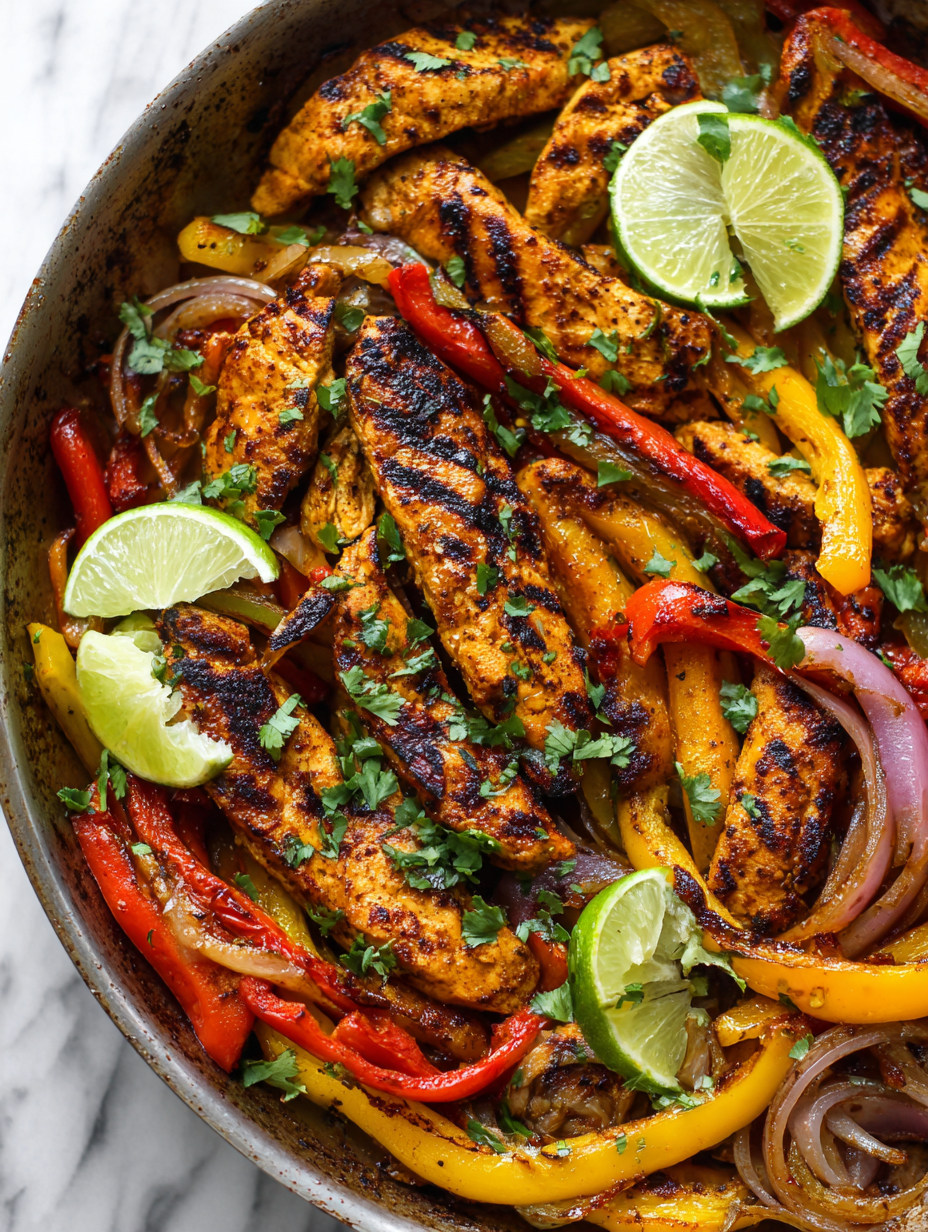
Skillet Chicken Fajitas with Smoky Peppers and Onions
Ingredients
Equipment
Method
- Start by heating your cast-iron skillet over high heat until shimmering hot, and add a tablespoon of oil, swirling to coat the surface.
- Add the sliced chicken strips to the hot skillet in a single layer. Sear for 3-4 minutes without moving, until edges are golden and crispy, then flip and cook another 2-3 minutes until cooked through. Remove the chicken and set aside.
- In the same skillet, add the sliced bell peppers and onions. Cook over high heat, stirring frequently, for about 5-7 minutes. You'll see the peppers blister and char at the edges, and the onions caramelize into a golden, sticky texture with a savory aroma.
- Once the vegetables are nicely charred and softened, return the cooked chicken to the skillet. Toss everything together and cook for another 2 minutes to meld the flavors, allowing the smoky edges to cling to the chicken and veggies.
- Squeeze fresh lime juice over the skillet contents, giving it a quick stir. The bright citrus will balance the smoky, caramelized flavors. Taste and adjust seasoning if needed.
- Garnish with freshly chopped cilantro if desired, and serve hot straight from the skillet with warm tortillas or your favorite sides.
Pro tips for perfect fajitas
- sear: Ensure the pan is truly hot before adding chicken to get that deep, caramelized crust.
- Sizzle check: Listen for a consistent crackle when sautéing peppers and onions—if it muffles, increase heat slightly.
- Oil shimmer: Wait for the oil to shimmer before introducing ingredients; this helps prevent sticking and promotes even browning.
- Color cue: Aim for a rich, golden-brown on the chicken and vegetables—this indicates proper caramelization and flavor development.
- Timing: Keep peppers and onions moving every minute—stagnant spots cause burning and uneven cooking.
- Rest briefly: Let cooked chicken rest for a minute before slicing—this locks in juices and keeps it tender.
- Lime finish: Brighten the dish with a squeeze of lime right before serving—adds freshness and balances smoky spices.
Common mistakes and how to fix them
- FORGOT to preheat the skillet → Do so until shimmering before adding chicken.
- DUMPED too much oil → Use just enough to coat the pan lightly for proper sear.
- OVER-TORCHED the peppers → Sauté over medium-high, not high, to avoid burning.
- MISSED resting the skillet briefly → Let it sit off heat for 1-2 minutes before serving.
Quick fixes and pantry swaps
- When chicken sticks, splash a bit of water to loosen and prevent tearing.
- If peppers burn, reduce heat and add a splash of oil or water to cool.
- Dumped too much oil? Wipe excess and start over to avoid greasy results.
- Over-torched veggies? Lower heat and stir constantly for even caramelization.
- Splash lime juice before serving to lift smoky flavors and add brightness.
Prep, store, and reheat tips
- Prep the chicken and vegetables a day ahead; store in airtight containers in the fridge for up to 24 hours. Their fresh aroma will mellow but stay vibrant.
- Slice peppers and onions ahead of time, keeping them separate. They’ll keep crisp and sweet in the fridge for up to 2 days, but their color might dull slightly.
- Cooked chicken can be stored in the refrigerator for up to 3 days. Reheat in a hot skillet until sizzling and fragrant, restoring that smoky aroma.
- Reheat leftovers over high heat to revive the sear and caramelization. Expect a slightly milder flavor, but the smoky notes will come back with a quick stir.
Top questions about chicken fajita skillet
1. Can I use chicken thighs instead of breasts?
Use thinly sliced chicken breasts for quick searing and even cooking. Thighs are juicier but take longer to cook.
2. How should I prepare peppers and onions?
Slice peppers and onions thinly so they cook quickly and develop a nice char without becoming mushy.
3. What temperature should the skillet be?
High heat (around 200°C/392°F) is key for a good sear. Use a cast-iron skillet if you have one.
4. Why isn’t my chicken getting a good crust?
Cook chicken in batches if your pan is crowded; overcrowding causes steaming instead of searing.
5. When should I add lime juice?
Squeeze lime juice just before serving to add brightness and cut through smoky flavors.
6. How do I prepare ingredients safely?
Use a sharp knife for clean slices and safety. Keep your workspace organized to avoid accidents.
7. How long can I store leftovers?
Store cooked chicken and veggies separately in airtight containers for up to 3 days. Reheat in a hot skillet.
8. What if my vegetables burn?
If veggies burn or stick, lower heat and add a splash of water or oil to loosen them.
9. How do I fix greasy fajitas?
Overly oily? Wipe excess oil from the pan or start with less to prevent greasy results.
10. How can I prevent soggy or greasy fajitas?
For best flavor, avoid overcrowding the pan and ensure ingredients are dry before adding to hot oil.
This skillet chicken fajita recipe is a reminder that simple techniques can turn humble ingredients into something deeply flavorful. The smoky sear, the bright squeeze of lime, and the sizzling sound all come together in a dish that’s honest and satisfying. Sometimes, it’s these straightforward moments in the kitchen that make the best memories.
No matter how busy the week gets, I find comfort in firing up this pan and hearing that satisfying crackle. It’s a small, messy ritual that feeds more than just hunger — it feeds a sense of home and honest effort. And in the end, that’s what keeps me coming back to this dish, time after time.

Founded by Rachel Morgan, a proud home cook and foodie from Austin, Texas, this blog is all about transforming everyday meals into moments of joy.