
Focusing on the tactile satisfaction of perfectly crispy skin, this recipe dives into the sensory dance between crackling flesh and tender meat, highlighting the simple joy of mastering that elusive sear.
There’s something almost meditative about the sound of skin hitting a hot pan, the way it sizzles and crisps up — it’s a small reminder of how patience and attention turn a good piece of fish into something memorable.
This method isn’t about fancy techniques or obscure ingredients; it’s about honing a simple skill that transforms the everyday into a special moment, one crispy bite at a time.
Focusing on the tactile satisfaction of perfectly crispy skin, this recipe dives into the sensory dance between crackling flesh and tender meat, highlighting the simple joy of mastering that elusive sear.
The tactile joy of crispy skin
- Crisping the skin to a perfect golden crackle still feels like a small victory every time.
- I love how the smell of seared salmon fills the kitchen, instantly making everything feel warmer.
- There’s a quiet pride in mastering this simple technique, especially when it turns out just right on a busy weeknight.
- The first bite—crisp skin giving way to tender, flaky flesh—never gets old, no matter how often I make it.
The story behind this recipe
I first stumbled on this searing technique during a hectic weeknight when I was craving something rich but quick. The moment the skin hits the hot pan and starts crackling, I’m transported back to my grandmother’s kitchen, where simple methods made the best meals. It’s a reminder that a good cook doesn’t need fancy gadgets—just patience and a hot pan, and you can turn a humble piece of fish into something memorable. Over the years, I’ve tweaked my approach, but that satisfying sizzle remains the heart of it all.
Historical tidbits about searing salmon
- The technique of pan searing fish dates back to humble home cooks in coastal regions, focused on maximizing flavor with minimal fuss.
- Crispy skin on salmon became popular in European cuisine centuries ago, especially in French and Scandinavian kitchens, where texture is celebrated.
- Mastering the sear was historically a sign of a skilled cook, as controlling heat and timing was crucial before modern non-stick pans.
Ingredient breakdown: key components
- Salmon fillet: I prefer skin-on for that crispy contrast, and it helps the fish hold together. Make sure your fillet is dry—pat it with paper towels until no moisture remains, or you’ll end up with steaming instead of searing.
- Salt: I season the fish generously with sea salt right before hitting the pan. It enhances the flavor and helps crisp the skin. Don’t skimp—this step is key to a tasty sear.
- Oil: I use a high-smoke-point oil like grapeseed or canola. When it shimmers and starts to smoke lightly, I know the pan’s hot enough. Skip the olive oil here—it burns easily at high heat and can give off a bitter smell.
- Pan: A heavy-bottomed stainless steel or cast iron skillet is my go-to. It distributes heat evenly, giving you that perfect, even sear without hot spots. Non-stick pans just won’t give that crispy skin.
- Lemon: A squeeze of fresh lemon brightens the whole dish. I add it right after searing to cut through the richness and add a fresh, zesty contrast. You can also serve lemon wedges on the side if you like a burst of brightness.
- Herbs (optional): A sprig of thyme or dill can add subtle aromatics. I toss them in during the last minute for a whisper of herbal scent that complements the fish without overpowering.
Spotlight on key ingredients
Salmon:
- I look for a firm fillet with shiny, moist flesh. The skin should be dry and intact for a crisp sear.
- It behaves differently when cold—chill it slightly if it’s very warm to help it sear evenly. The smell of fresh salmon is clean and oceanic, a good indicator of quality.
Oil:
- I prefer a high-smoke-point oil like grapeseed or canola. It shimmers and just starts to smoke when hot enough, giving that perfect sizzle.
- It helps to prevent sticking and encourages even browning. If your oil smokes excessively, you need a hotter pan or less oil—don’t be tempted to turn down the heat too early.
Notes for ingredient swaps
- Dairy-Free: Swap butter for a splash of extra virgin olive oil—less richness, more grassy aroma.
- Gluten-Free: Use a gluten-free soy sauce or skip soy altogether—just a touch of salt and lemon keeps it bright.
- Low-Sodium: Opt for less salt and rely on fresh lemon or herbs to boost flavor without the saltiness.
- Herb Variations: Fresh dill can be replaced with tarragon or parsley—each adds a unique aromatic note.
- Oil Choices: If you don’t have grapeseed, canola or sunflower oil works—just avoid buttery or olive oils at high heat.
- Lemon Alternatives: Lime or vinegar can add acidity—use sparingly to avoid overpowering the fish’s natural flavor.
- Salt Types: Sea salt or flaky finishing salt can enhance texture—if using regular table salt, cut back slightly.
Equipment & Tools
- Heavy skillet: Ensures even heat for a perfect sear.
- Tongs or spatula: Helps flip and handle the fish gently.
- Paper towels: Pat dry and remove excess moisture.
- Spoon (optional): For basting with hot oil or butter.
Step-by-step guide to pan searing
- Equipment & Tools: Gather a heavy skillet (preferably cast iron or stainless steel), tongs or a fish spatula, paper towels, and a spoon for basting if desired.
- Pat the salmon fillet dry with paper towels. The drier, the crisper the skin. Season generously with sea salt and a little black pepper on both sides.
- Heat the skillet over medium-high heat until it’s hot but not smoking—about 2-3 minutes. Add a thin layer of high-smoke-point oil (grapeseed or canola). It should shimmer but not smoke heavily.
- Carefully place the salmon skin-side down in the hot oil. Press gently with a spatula for 10 seconds to ensure even contact. Let it cook undisturbed for 4-5 minutes. The edges should turn golden and the skin will start to crisp.
- Check the skin; it should be crispy and release easily from the pan. If it sticks, give it a little more time. Flip the fillet gently using tongs or a spatula. Cook for another 2-3 minutes, depending on thickness, until the flesh is just opaque and flakes easily.
- For extra flavor, add a sprig of thyme or dill during the last minute and baste the fish with the hot oil. This enhances aroma and keeps the flesh moist.
- Remove the salmon from the pan. Rest it on a plate for 2 minutes—this lets the juices settle. Squeeze fresh lemon over just before serving to brighten the rich, crispy skin.
- Serve with the skin side up to keep that crunch intact. Pair with a light salad or steamed greens for contrast.
Let the salmon rest for 2 minutes on a warm plate. Squeeze fresh lemon over just before serving to enhance the crispy skin and tender flesh. Plate with skin side up for maximum crunch.
How to Know It’s Done
- Crispy, golden skin that releases easily from the pan.
- Internal temperature around 50-52°C (122-125°F) for medium doneness.
- Fish flakes gently with a fork, showing no raw translucence.
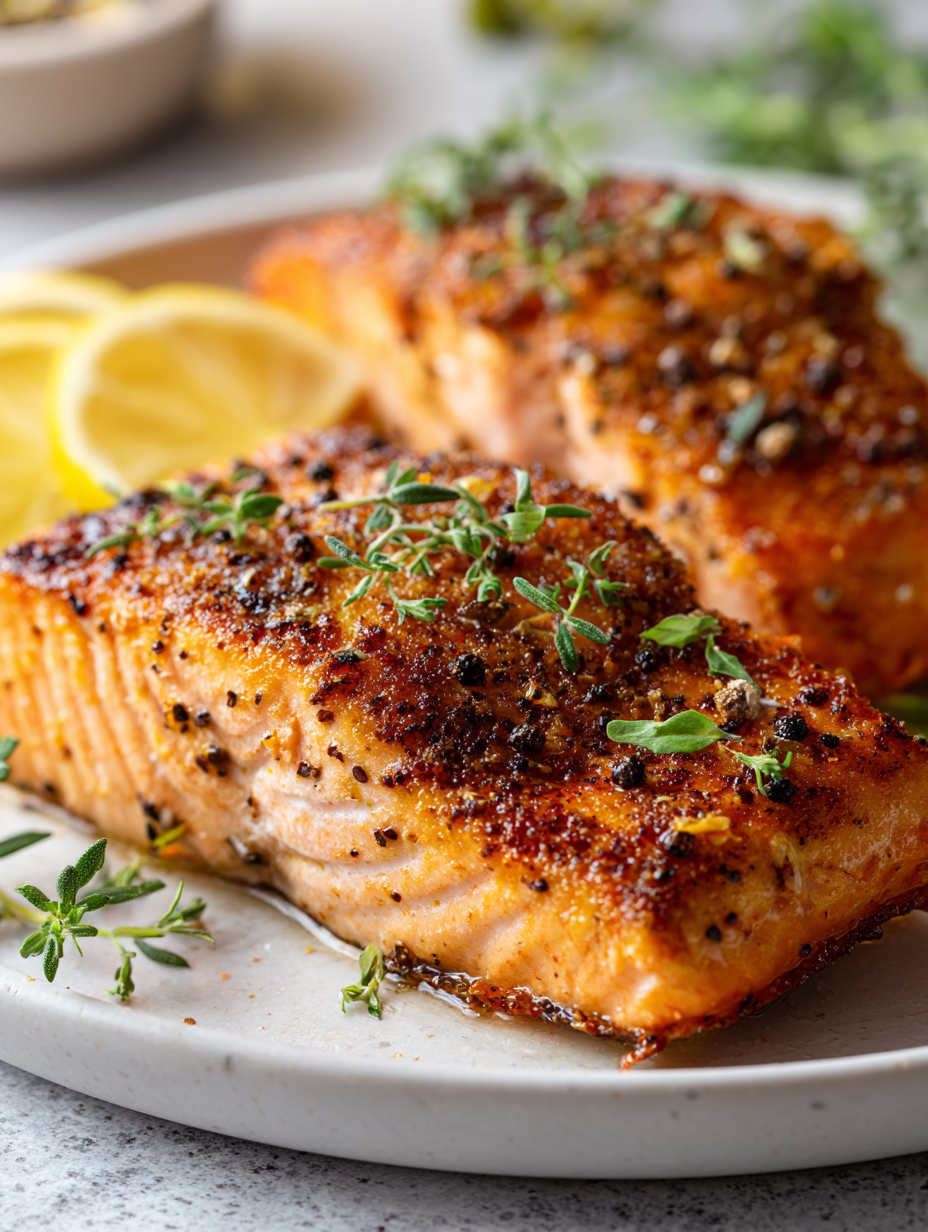
Crispy-Skinned Pan-Seared Salmon
Ingredients
Equipment
Method
- Pat the salmon fillets dry thoroughly with paper towels, especially the skin, until no moisture remains. This step is crucial for crispiness.
- Generously season both sides of the fillets with sea salt, focusing on the skin to help draw out moisture and enhance crisping.
- Heat your heavy skillet over medium-high heat until shimmering hot, about 2-3 minutes. Add a thin layer of high-smoke-point oil, swirling to coat the pan evenly. You’ll see the oil shimmer and just begin to smoke.
- Carefully place the salmon fillets skin-side down into the hot oil, pressing gently with tongs or a spatula for about 10 seconds to ensure even contact. You should hear a sizzle and see the skin start to turn golden.
- Let the fillets cook undisturbed for 4-5 minutes, until the skin is golden brown and crispy, and the edges start to lift slightly from the pan. The sound should be a steady sizzle, and the aroma rich and fragrant.
- Check the skin; if it releases easily from the pan, flip the fillets gently with tongs or a spatula. Cook for another 2-3 minutes on the second side, just until the flesh is opaque and flakes easily with a fork.
- If desired, add a sprig of thyme or dill during the last minute of cooking and baste the fillet with hot oil to infuse aroma and keep the flesh moist.
- Remove the salmon from the skillet and rest it on a plate for 2 minutes. This helps the juices redistribute within the fish, ensuring tenderness. Squeeze fresh lemon over the top for brightness.
- Serve the salmon skin-side up to preserve the crispy skin, accompanied by your favorite sides. Enjoy the crackling skin and tender, flaky flesh with a burst of citrus flavor.
Pro tips for perfect searing
- Bolded mini-head: Ensure the pan is hot enough before adding the fish; it should shimmer and just start to smoke.
- Bolded mini-head: Pat the salmon dry thoroughly; excess moisture prevents that perfect crispy skin.
- Bolded mini-head: Don’t move the fish too early; wait for it to release easily from the pan, about 4-5 minutes.
- Bolded mini-head: Press gently when placing the fish skin-side down to ensure even contact and crispiness.
- Bolded mini-head: Flip the fish carefully once the skin is golden and crispy; cook just until the flesh is opaque.
- Bolded mini-head: Rest the salmon for 2 minutes after cooking to let the juices settle and improve tenderness.
- Bolded mini-head: Finish with a squeeze of lemon immediately before serving to brighten the rich, crispy skin.
Common mistakes and how to fix them
- FORGOT to dry the salmon skin thoroughly → Results in steaming, not crisping. Always pat dry.
- DUMPED oil into the pan → Causes splattering and uneven sear. Use a thin, even layer only.
- OVER-TORCHED the oil → Creates bitter flavor and smoked-out pan. Heat just until shimmering, not smoking.
- MISSED the resting step → Fish loses juiciness. Rest for 2 minutes before serving for maximum tenderness.
Quick fixes and pantry swaps
- When skin sticks, splash a little hot water in the pan—helps release it with less tear.
- If the oil smokes excessively, patch the heat down slightly and increase ventilation.
- Splash a tiny bit of water if the pan starts to smoke—rescue with a quick burst of fresh air.
- Dumped too much salt? Rinse the fish lightly and pat dry before searing again.
- When the skin isn’t crispy enough, open the window, turn up the heat, and shimmer the oil more.
Prep, store, and reheat tips
- You can season the salmon and pat it dry a few hours ahead, keeping it uncovered in the fridge to help dry the skin further, which promotes crispiness.
- Store cooked salmon in an airtight container in the fridge for up to 2 days. Reheat gently in a skillet over low heat until warmed through, aiming for a slight shimmer and avoiding dryness.
- Raw salmon can be frozen for up to 3 months. Thaw overnight in the fridge for best texture, then pat dry before searing to keep the skin crisp.
- Reheating the fillet can cause skin to soften; to restore crunch, briefly pan-sear the reheated piece over medium-high heat, listening for that satisfying crackle.
- The flavor of the salmon may mellow slightly after storage, but a fresh squeeze of lemon or a quick sprinkle of herbs before serving refreshes the dish.
Top questions about pan seared salmon
1. How do I get crispy skin every time?
Use a hot, well-seasoned pan and dry the fish thoroughly. The skin should sizzle immediately and turn golden-brown, giving you that crispy texture.
2. Why isn’t my salmon skin crispy?
Pat the salmon dry with paper towels, season generously with salt, and ensure the pan is hot before adding the fish.
3. How long should I sear the salmon on each side?
Cook skin-side down first for about 4-5 minutes over medium-high heat until golden and crispy, then flip for a brief second side cook.
4. How do I know when my salmon is done?
Check for a golden, crispy skin that releases easily from the pan and that the flesh flakes easily without raw translucence.
5. What internal temperature is perfect for salmon?
Use a meat thermometer; 50–52°C (122–125°F) for medium. Fish should be opaque and flake easily with a fork.
6. My salmon skin sticks to the pan, what now?
If the skin sticks, give it more time to crisp up before trying to flip. If it continues to stick, check for moisture or uneven heat.
7. Can I use olive oil for searing?
Use a high-smoke-point oil like grapeseed or canola. It helps achieve a clean, crackling sear without burning or bitterness.
8. Should I rest my salmon after cooking?
Rest the salmon for about 2 minutes after cooking to let the juices settle, then add lemon or herbs for brightness.
9. Can I make this recipe in advance?
Yes, you can prepare seasoned, dry salmon a few hours ahead and store it uncovered in the fridge to enhance skin crispiness.
10. How do I reheat leftover salmon without losing crispness?
Reheat gently in a skillet over low heat, just until warmed through and the skin is slightly crisp again for best texture.
Seared salmon with crispy skin is a small act of culinary patience that pays off with each crackling bite. It’s a reminder that simple techniques, when done right, can turn an ordinary piece of fish into something memorable.
In a busy kitchen, it’s these little moments—hearing that sizzle, feeling the texture, tasting the bright contrast—that keep the cooking honest and satisfying. No matter how many times I make it, that balance of heat and patience is what keeps it special.

Founded by Rachel Morgan, a proud home cook and foodie from Austin, Texas, this blog is all about transforming everyday meals into moments of joy.