
Balancing moisture and texture in turkey meatballs is an art I’ve spent years trying to perfect. It’s not just about the ingredients, but how gently you handle them and how you treat each step. When everything comes together, you get these tender, juicy bites that don’t fall apart or turn dry, no matter how hectic the kitchen gets.
I’ve learned that the secret isn’t in fancy spices or complicated techniques but in respecting the meat’s delicate nature. A little extra breadcrumb, a splash of milk, and a gentle fold—those are the tricks that make all the difference. This recipe is my honest attempt to share what I’ve finally nailed, in a way that’s practical and honest.
Cooking these turkey meatballs feels like a quiet victory, especially when they come out perfectly moist and flavorful. It’s not about perfection but about understanding how to treat the ingredients with care. And honestly, once you get the hang of it, it’s pretty satisfying to see everyone go back for seconds.
Focusing on the overlooked art of balancing moisture and texture in turkey meatballs, this recipe emphasizes the importance of ingredient ratios and gentle handling to achieve juicy, tender bites every time.
The overlooked art of moisture balance
- I used to think turkey meatballs were bland, but balancing moisture changed everything—I finally got that juicy bite I craved.
- There’s a quiet satisfaction in mastering this recipe; it feels like a small victory for my everyday cooking skills.
- Sometimes I get nostalgic making these; they remind me of family dinners, noisy and warm, with flavors that stick with you.
- I love how tweaking the breadcrumb-to-meat ratio can turn a dry disaster into tender, flavorful bites—it’s all about gentle handling.
- Cooking these is a bit chaotic, but the smell of simmered herbs and turkey makes the mess worth it every time.
The art of balancing moisture
- Making these turkey meatballs took me back to my grandma’s kitchen, where she’d toss a handful of herbs and a splash of milk into her ground turkey without measuring. It was her way of making sure every bite stayed tender and moist, even when cooking for a crowd. I’ve always loved how simple ingredients, treated with patience, can turn into something comforting and real.
- One day, I was in a rush, trying to replicate her magic, but I overmixed and lost that tender texture. That taught me that gentle handling and balancing moisture are everything—no shortcuts in this case. Now, I approach each batch like a small ritual, respecting the delicate meat and the process.
- heading
- story_type
Historical and cultural tidbits
- Turkey meatballs gained popularity in the U.S. during the health-conscious 1990s, as a leaner alternative to beef or pork.
- In some Mediterranean regions, ground turkey was traditionally mixed with herbs like oregano and mint, reflecting local flavors.
- The idea of meatballs stretches back centuries across many cultures, but turkey versions became a practical option as poultry consumption increased post-World War II.
- Using turkey in meatballs was once considered a way to make a hearty dish lighter, especially in regions focusing on low-fat diets.
- Modern recipes often emphasize moisture and tenderness, countering the common misconception that turkey must be dry or bland.
Key ingredients and tips
- Ground turkey: I prefer using a blend of white and dark meat for juiciness—try not to overmix to keep it tender, and look for a fresh, not-too-wet texture.
- Breadcrumbs: I use day-old white bread pulsed into coarse crumbs; they soak up moisture and keep the meatballs light. Swap with panko if you want a crunchier bite.
- Milk: A splash of whole milk makes the mixture silky and tender—skimp on it, and you risk dry, crumbly meatballs. Almond milk works, but it’s less rich.
- Herbs: Fresh parsley or basil brighten the flavor—muddle them first to release aroma, or dry herbs if that’s what you have. The smell should be bright and herbal.
- Garlic: Minced fresh garlic adds punch—don’t skip it. When sautéed briefly in oil, it turns fragrant and slightly sweet, a good sign you’re on the right track.
- Egg: One egg holds everything together without making the mixture dense—beat it lightly before adding. If you forget, the meatballs might fall apart, so fix with a little extra breadcrumbs.
- Seasoning: Salt, pepper, and a pinch of red pepper flakes—taste the mixture before shaping, it should hit you with a savory, balanced aroma.
Spotlight on key ingredients
Ground turkey:
- I prefer a mix of white and dark meat for juiciness—try not to overmix to keep it tender, and look for a fresh, not-too-wet texture.
- Breadcrumbs: I use day-old white bread pulsed into coarse crumbs; they soak up moisture and keep the meatballs light. Swap with panko if you want a crunchier bite.
- Milk: A splash of whole milk makes the mixture silky and tender—skimp on it, and you risk dry, crumbly meatballs. Almond milk works, but it’s less rich.
Herbs and garlic:
- Herbs: Fresh parsley or basil brighten the flavor—muddle them first to release aroma, or dry herbs if that’s what you have. The smell should be bright and herbal.
- Garlic: Minced fresh garlic adds punch—don’t skip it. When sautéed briefly in oil, it turns fragrant and slightly sweet, a good sign you’re on the right track.
Notes for ingredient swaps
- Dairy-Free: Use coconut milk or omit altogether. The texture will be slightly less tender but still flavorful.
- Breadcrumbs: Swap with crushed gluten-free cereal or ground oats for a nutty, hearty texture.
- Herbs: Fresh herbs can be replaced with dried; use half the amount and crush them to release flavor.
- Garlic: Roasted garlic offers a milder, sweeter taste—perfect if you find raw garlic too pungent.
- Egg: Flaxseed meal mixed with water (1 tbsp flaxseed + 3 tbsp water) acts as an egg replacer, adding a nutty note.
- Oil: Use avocado oil or light olive oil for a different richness—just be mindful of flavor impact.
- Seasoning: Add a splash of soy sauce or Worcestershire for umami depth, especially if going for a savory, smoky profile.
Equipment & Tools
- Large mixing bowl: Combine and gently mix ingredients.
- Baking sheet or dish: Bake cooked meatballs evenly.
- Skillet or frying pan: Brown meatballs to develop flavor and texture.
- Meat thermometer: Ensure proper internal temperature.
- Cooking tongs: Handle meatballs safely during browning and baking.
Step-by-step guide to turkey meatballs
- Gather all ingredients and equipment. Preheat oven to 180°C (350°F).
- Combine ground turkey, breadcrumbs, milk, chopped herbs, minced garlic, and egg in a large bowl. Gently mix until just combined—don’t overwork the meat, or the meatballs can turn dense.
- Season with salt, pepper, and red pepper flakes. Taste a small pinch of the mixture to check seasoning—adjust if needed.
- Shape mixture into 1.5-inch meatballs, about the size of a golf ball. Keep them uniform for even cooking.
- Heat a large skillet over medium heat (about 160°C/320°F). Add a drizzle of oil. When shimmering, add meatballs in batches, not overcrowding. Brown on all sides, about 4-5 minutes per batch, until golden.
- Once browned, transfer meatballs to a baking dish or sheet. Roast in the oven for 10-12 minutes, or until internal temperature reaches 74°C (165°F).
- Check for doneness: meatballs should be firm but juicy, with a slight jiggle when gently shaken. The outside should be golden and slightly crispy.
- Remove from oven, let rest for 5 minutes. Serve with your favorite sauce or pasta. Garnish with extra herbs if desired.
Let the meatballs rest for 5 minutes after removing from oven. Plate carefully, spoon sauce over if desired, and garnish with herbs for a fresh finish.
How to Know It’s Done
- Probe temperature reaches 74°C (165°F).
- Exterior is golden and slightly crispy.
- Juices run clear when cut or gently pressed.
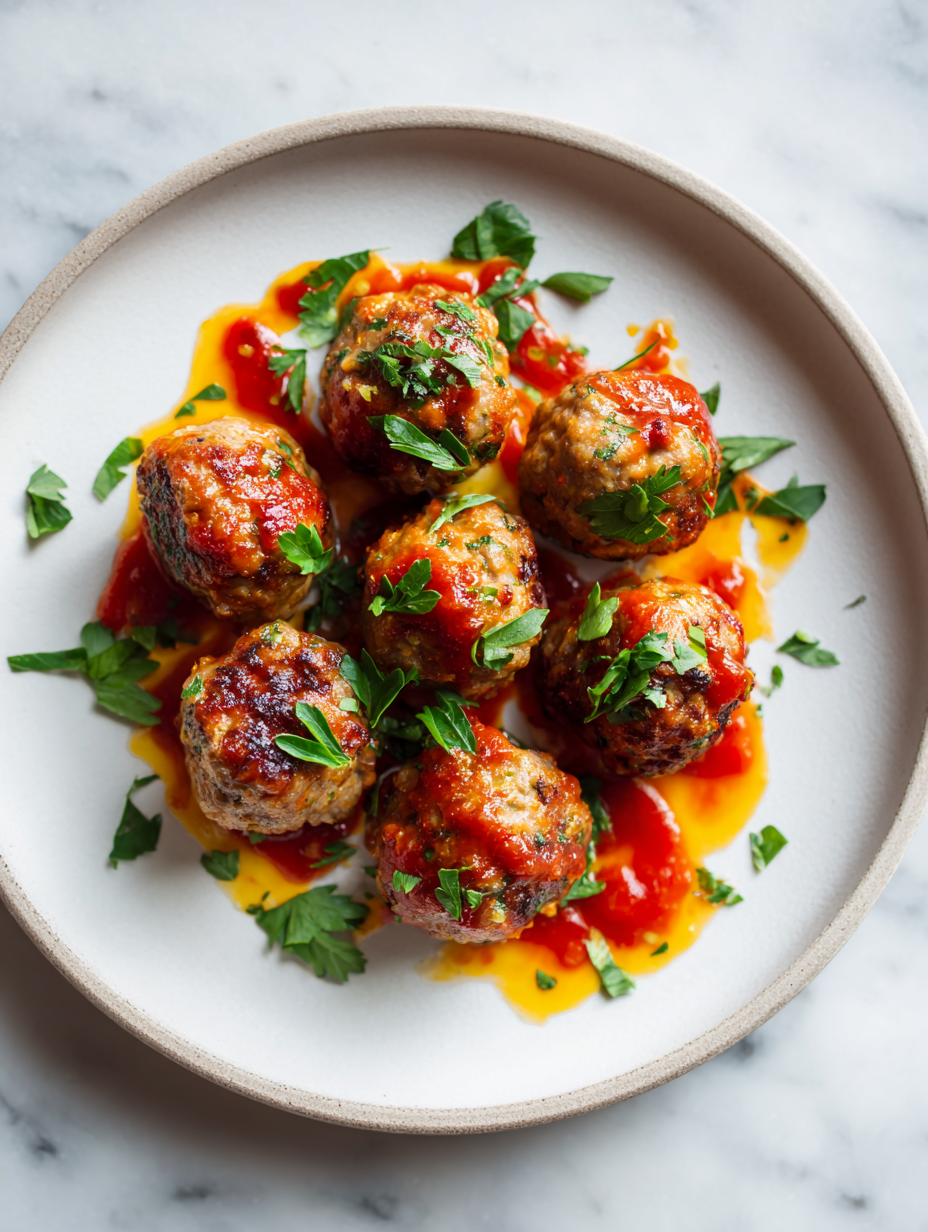
Juicy Turkey Meatballs
Ingredients
Equipment
Method
- In a large mixing bowl, gently combine the ground turkey with breadcrumbs, milk, chopped parsley, minced garlic, and the beaten egg. Use your hands or a spoon to fold everything together just until combined—avoid overmixing to keep the meat tender.
- Season the mixture with salt, pepper, and red pepper flakes, then give it a gentle fold. Taste a small amount of the mixture and adjust the seasoning if needed.
- Using your hands, shape the mixture into uniform meatballs about 1.5 inches in diameter. Place them on a plate or tray as you go.
- Heat a skillet over medium heat and add two tablespoons of olive oil. Once shimmering, carefully add the meatballs, not overcrowding the pan. Brown them on all sides for about 4-5 minutes, until they develop a golden exterior and a slight sizzle.
- Transfer the browned meatballs to a baking sheet or dish and place them in a preheated oven at 180°C (350°F). Roast for an additional 10-12 minutes, or until they reach an internal temperature of 74°C (165°F) and are firm to the touch.
- Once cooked, remove the meatballs from the oven and let them rest for about 5 minutes. This allows the juices to redistribute, ensuring they stay moist and tender.
- Serve the juicy turkey meatballs with your favorite sauce, over pasta, or on their own garnished with extra herbs. Enjoy the tender, flavorful bites with a crispy exterior and moist interior.
Pro tips for perfect turkey meatballs
- Bolded mini-head: Use your hands for gentle mixing—overworking the mixture makes dense meatballs.
- Bolded mini-head: Keep the oven at a steady 180°C (350°F)—hot enough to cook through without burning the exterior.
- Bolded mini-head: Brown the meatballs in batches—crowding the pan causes steaming, not searing.
- Bolded mini-head: Check for doneness with a probe thermometer—74°C (165°F) means safe and juicy.
- Bolded mini-head: Rest meatballs briefly before serving—let the juices redistribute for maximum tenderness.
- Bolded mini-head: Add herbs just before shaping—they release aroma and keep flavors fresh.
- Bolded mini-head: Use a light touch when shaping—firm but gentle forms hold better and stay tender.
Common mistakes and how to fix them
- FORGOT to handle turkey gently → Overmixing can make meatballs dense and tough.
- DUMPED too much moisture → Balance moisture with breadcrumbs and milk to keep them tender.
- OVER-TORCHED outside → Sear on medium heat, then finish in oven to prevent burning.
- SKIPPED resting time → Rest meatballs 5 minutes to retain juices and finalize texture.
Quick fixes and pantry swaps
- When meatballs fall apart → Splash in an extra egg to bind better.
- If dry and crumbly → Patch with a splash of milk and gentle mix.
- Over-browned outside → Shield with foil and lower heat, then finish in oven.
- Forgot to rest → Rest for 5 minutes for juicier, more cohesive bites.
- Dumped too much moisture → Rescue with additional breadcrumbs and gentle folding.
Prep, store, and reheat tips
- Shape the meatballs a day ahead, then refrigerate covered; they firm up and save time later, with a fresh herb aroma lingering.
- Store cooked meatballs in an airtight container in the fridge for up to 3 days, maintaining their juicy, tender texture.
- Freeze leftovers in a single layer on a baking sheet, then transfer to a bag; they keep up to 3 months and develop a deep, savory smell when reheated.
- Reheat gently in a warm skillet or oven (around 150°C/300°F), watching for the meatballs to shimmer and become heated through without drying out.
Top questions about turkey meatballs
1. How do I choose the best ground turkey?
Look for ground turkey with a bit of dark meat for juiciness. It shouldn’t be too wet or dry.
2. What binds the meatballs without making them dense?
Add breadcrumbs and milk to keep the meat tender and moist. Too little makes them dry.
3. How do I get a good sear without burning?
Brown them in a hot skillet until golden, then finish in the oven to cook through evenly.
4. How do I know when the meatballs are cooked?
Use a meat thermometer to ensure the internal temp hits 74°C (165°F) for safety and juiciness.
5. Should I let the meatballs rest before serving?
Rest them for 5 minutes after baking to let the juices settle and improve texture.
6. Can I use dried herbs instead of fresh?
Fresh herbs like parsley brighten flavor; dry herbs work if crushed well. Adjust to your taste.
7. What if my meatballs are too fragile?
If they fall apart, add a little more egg or breadcrumbs to help them hold together.
8. How should I handle the meat mixture?
Use gentle mixing to keep the meat tender. Overmixing can make them dense and tough.
9. How do I reheat leftovers without drying them out?
Reheat in a warm oven or skillet until they shimmer and are heated through, about 10 minutes at 150°C.
10. Can I add other seasonings or flavors?
For a richer flavor, try adding a splash of soy sauce or Worcestershire to the mixture.
Cooking these turkey meatballs is a reminder that simplicity and patience in the kitchen lead to real comfort. Their juicy, tender bite feels like a small victory, especially when paired with a simple tomato sauce or nestled in a bun.
They’re perfect for a busy weeknight dinner or a casual gathering, where flavor and texture matter more than fuss. Sometimes, the best meals come from respecting the ingredients and letting them shine—this recipe is no exception.

Founded by Rachel Morgan, a proud home cook and foodie from Austin, Texas, this blog is all about transforming everyday meals into moments of joy.