
Quite often, in the rush of weeknight dinners, we overlook the magic of the salmon’s skin. I’ve found that giving it proper attention transforms the whole dish—crisp, smoky, with a satisfying crackle that makes every bite feel special. It’s not just about cooking fish; it’s about honoring that delicate layer that can turn simple baked salmon into something memorable.
This recipe grew out of my frustration with soggy, tired-looking salmon. I wanted that irresistible, golden-brown crust that reminds me of seaside grills. It’s honestly a straightforward method, but the trick is in the skin—getting it crispy without overcooking the tender flesh beneath. That crackle and aroma are what make this dish stand out, and once you nail it, you’ll never want salmon any other way.
Focusing on the overlooked importance of the fish’s skin in baked salmon, this recipe emphasizes how a crispy, well-rendered skin can elevate the dish from simple to memorable. It’s about celebrating that satisfying crackle and smoky aroma, which often gets pushed aside for the flesh itself.
Celebrating the Salmon’s Skin
- I love how crispy salmon skin adds that smoky crunch, making every bite more satisfying.
- There’s a nostalgic rush when I hear that sizzle and smell the rich aroma of baked fish fresh from the oven.
- Sometimes, I feel proud when I manage to get that perfect golden crust without overcooking the tender flesh underneath.
- In chaos, I find calm in the simple act of seasoning and watching the fish transform in the oven.
The story behind this recipe
- This recipe came together on a quiet weekend when I realized how often I neglect the potential of salmon skin. I started experimenting with simple oven techniques to get that perfect crackle—something I craved after too many soggy fillets from rushed weeknights. It’s become a go-to, especially when I want dinner that’s straightforward but feels indulgent.
- Cooking salmon this way reminds me of seaside mornings and the smell of smoky grills. I love how a few careful steps can turn a humble fillet into something with a crisp, golden crust and a tender inside. It’s a small act of patience that pays off with every crackly bite and bright, lemony aroma.
- I keep coming back to this method because it’s honest—no fancy equipment, just a good eye, and a little attention. Plus, it’s flexible; you can tweak the seasoning or add a splash of something special. It’s simple comfort, with a crispy edge that makes the whole meal feel a little more celebratory.
Salmon Skin’s Surprising Journey
- Salmon skin was once considered waste, but chefs now prize its crispy texture and smoky aroma.
- In Scandinavian cooking, the skin’s crackle signifies careful, respectful preparation, turning humble fish into a celebration.
- Crisping salmon skin in the oven mimics seaside grilling traditions, bringing a smoky, satisfying crunch to home kitchens.
- Historically, preserving the skin’s integrity was a sign of skilled fishmongers, now appreciated by home cooks for flavor and texture.
Ingredient breakdown
- Salmon fillets: I prefer skin-on for that crispy, smoky crackle—makes the dish feel special and adds flavor. Skip it if you’re not a fan of the skin’s texture.
- Olive oil: A good splash helps the skin crisp up beautifully and prevents sticking. Use a flavorful extra virgin for richer taste or skip if you’re avoiding oil.
- Salt: I like coarse sea salt—gives a satisfying crunch and helps draw out moisture. Adjust the amount based on your salt preference.
- Lemon: Brightens the fish and makes the aroma pop. Squeeze fresh lemon juice just before serving for that zesty kick, or use lemon zest for a more intense citrus aroma.
- Herbs & spices: A sprinkle of black pepper and fresh dill adds a fragrant, earthy note. Feel free to experiment with paprika or garlic powder for extra depth.
- Optional toppings: Capers or a dollop of herb butter can elevate the dish, adding bursts of saltiness or creamy richness that contrast the crispy skin.
Spotlight on key ingredients
Salmon fillets:
- I prefer skin-on for that crispy, smoky crackle—makes the dish feel special and adds flavor. Skip it if you’re not a fan of the skin’s texture.
- Olive oil: A good splash helps the skin crisp up beautifully and prevents sticking. Use a flavorful extra virgin for richer taste or skip if you’re avoiding oil.
- Lemon: Brightens the fish and makes the aroma pop. Squeeze fresh lemon juice just before serving for that zesty kick, or use lemon zest for a more intense citrus aroma.
Herbs & spices:
- Salt: I like coarse sea salt—gives a satisfying crunch and helps draw out moisture. Adjust the amount based on your salt preference.
- A sprinkle of black pepper and fresh dill adds a fragrant, earthy note. Feel free to experiment with paprika or garlic powder for extra depth.
Notes for ingredient swaps
- Dairy-Free: Olive oil can be swapped with avocado oil for a milder, fruitier flavor that still crisps the skin well.
- Salt Type: Coarse sea salt is ideal, but if you only have table salt, use half the amount to avoid over-salting.
- Lemon: Lemon juice adds brightness, but lime juice works as a zesty alternative with a slightly different tang.
- Herbs: Fresh dill is lovely, but chopped parsley or cilantro can add a fresh, herbal note if dill isn’t available.
- Oil: If you prefer a neutral fat, avocado oil or even melted ghee can be used, but it might alter the smoky aroma slightly.
- Add-ins: Capers or a dollop of herb butter add richness—skip or replace with chopped green onions or a splash of white wine for a different touch.
- Spice Variations: Paprika or garlic powder can replace herbs for a smoky or savory boost, depending on your mood.
Equipment & Tools
- Ovenproof skillet: To sear the fish and finish in the oven, ensuring even heat and crispy skin.
- Spatula: To flip the fillet carefully without breaking the skin.
- Tongs: For handling and turning the fish delicately.
- Parchment or foil-lined baking sheet: For catching drips and easy cleanup after baking.
- Instant-read thermometer: To check the internal temperature for perfect doneness.
Step-by-step guide to baked salmon
- Preheat your oven to 200°C (390°F). Place a rack inside a baking sheet lined with parchment or foil for easy cleanup.
- Pat the salmon fillets dry with paper towels. This helps the skin crisp up nicely. Season generously with coarse sea salt, especially on the skin side.
- Heat a large ovenproof skillet over medium-high heat (about 180°C/356°F). Add a splash of olive oil, enough to coat the bottom.
- Once shimmering, place the salmon fillets skin-side down. Press gently with a spatula for 10 seconds to prevent curling. Cook until the skin is golden brown and crispy, about 4-5 minutes.
- a. Check for a deep amber color and a crackling sound. b. If the skin isn’t crisp enough, cook a minute longer. c. If the flesh starts to cook over the sides, reduce heat slightly.
- Carefully flip the fillets using tongs or a spatula. Transfer the skillet to the preheated oven. Bake for 6-8 minutes, depending on thickness, until the salmon is just cooked through and flakes easily.
- Remove from oven. Let rest for 2 minutes on the pan, allowing residual heat to finish cooking the flesh. Don’t cover; this helps keep the skin crispy.
- Plate the salmon skin-side up, squeeze fresh lemon over, and garnish with dill or herbs of your choice. Serve immediately for the best crackle.
Let the salmon rest for 2 minutes to settle juices. Finish with a squeeze of lemon and a sprinkle of herbs. Plate skin-side up to keep the crackle intact and serve immediately.
How to Know It’s Done
- Skin is deeply golden and crackling when pressed gently.
- The flesh is opaque and flakes easily with a fork, indicating doneness.
- A probe inserted into the thickest part reads 52-54°C (125-130°F), just shy of fully cooked.
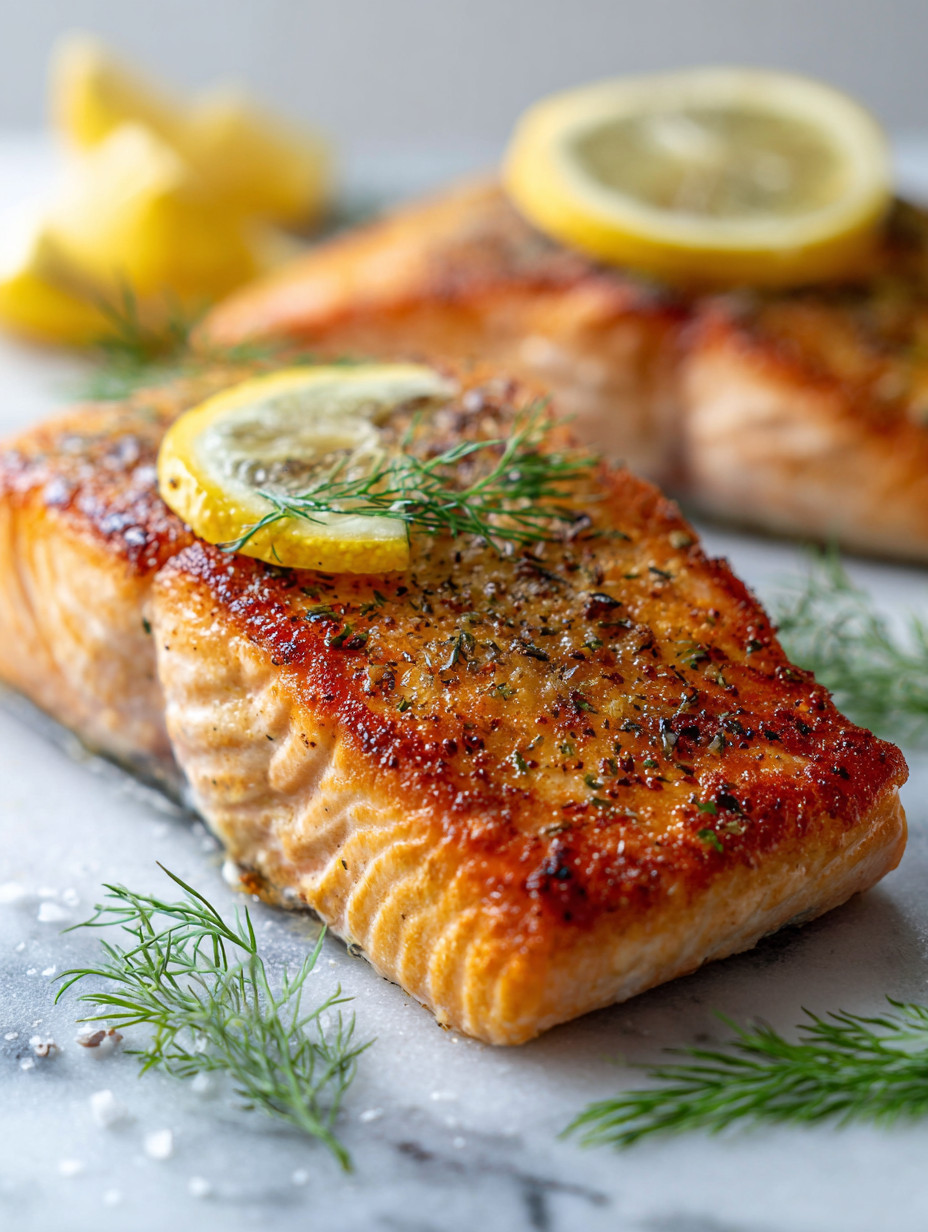
Crispy Baked Salmon with Golden Skin
Ingredients
Equipment
Method
- Preheat your oven to 200°C (390°F) and line a baking sheet with parchment or foil.
- Pat the salmon fillets dry thoroughly with paper towels to remove excess moisture, especially on the skin—this helps achieve that crispy crackle.
- Rub the fillets with a little olive oil on all sides, focusing on the skin, and sprinkle generously with coarse sea salt to help draw out moisture and promote crispness.
- Heat an ovenproof skillet over medium-high heat until hot—when you flick a drop of water, it should sizzle immediately.
- Add a splash of olive oil to the skillet, swirling to coat the bottom evenly.
- Place the salmon fillets skin-side down into the hot skillet, pressing gently with a spatula for about 10 seconds to prevent curling and ensure contact.
- Sear the fillets for 4-5 minutes, watching for the skin to turn deep golden brown and crackle, with a rich aroma filling the air.
- Use tongs or a spatula to carefully flip each fillet and transfer the skillet to the preheated oven.
- Bake the salmon for 6-8 minutes, or until the flesh is opaque and flakes easily when tested with a fork, indicating perfect doneness.
- Remove the skillet from the oven, transfer the fillets to a plate, and squeeze fresh lemon juice over the top, garnishing with chopped dill and black pepper for brightness and aroma.
- Serve immediately, with the crispy skin facing up to enjoy that satisfying crackle with every bite.
Notes
Tips for Crispy, Juicy Salmon
- Crisp Skin First: Start with a hot skillet to render the fat and get that golden, crackling skin.
- Pat Dry: Always dry the salmon thoroughly; moisture is the enemy of crispness and causes splatter.
- Press Down: Gently press the fillet into the pan for a few seconds after placing it down to prevent curling.
- Use High Heat: Cook skin-side down on medium-high heat until deeply golden and crackling, about 4-5 minutes.
- Finish in Oven: Transition to the oven to finish cooking evenly without overcooking the flesh, around 6-8 minutes at 200°C/390°F.
- Don’t Rush Resting: Let the fish rest for a couple of minutes after baking to let juices settle and maintain texture.
- Lemon Last: Squeeze fresh lemon just before serving to brighten the flavors and enhance that smoky aroma.
Common mistakes and how to fix them
- FORGOT to pat dry the salmon skin → Moisture prevents crisping, so dry thoroughly before cooking.
- DUMPED oil or seasoning → Use enough oil and seasoning to ensure even browning and flavor.
- OVER-TORCHED the skin → Keep an eye on the skin; remove or lower heat if it darkens too quickly.
- UNDERESTIMATED cooking time → Adjust based on fillet thickness; undercooked fish is a common mistake.
Quick fixes and pantry swaps
- When skin sticks, splash cold water on the pan to loosen and rescue the crispy crackle.
- If fillets are overcooked and dry, patch with a quick drizzle of lemon-infused olive oil.
- Splash a little soy sauce or miso paste if the flavor feels flat or dull after baking.
- DUMPED seasoning before searing? Reapply with a gentle hand and a touch of oil to revive flavor.
- When skin is not crispy enough, increase oven heat for the last minute to shimmer and crackle.
Prep, store, and reheat tips
- Prep the salmon by patting it dry and seasoning with salt a day ahead. Keeps the skin crisp and flavors deep.
- Store the raw fillets in an airtight container in the fridge for up to 24 hours; the flesh stays firm, and the skin remains ready to crisp.
- Cooked salmon can be refrigerated for 1-2 days. Reheat gently in a warm skillet or low oven until just warmed—look for that slight shimmer and aroma of lemon and herbs.
- Reheating may soften the skin; for best crackle, briefly broil for 30 seconds, watching carefully for charring or over-drying.
- Frozen salmon is fine if tightly wrapped, good for up to 3 months. Thaw overnight in the fridge for best texture before reheating.
Top questions about baked salmon
1. How does crispy salmon skin enhance the dish?
Salmon skin is crispy, smoky, and crackles when perfectly cooked, adding a delightful texture contrast.
2. Can I make this with skinless salmon?
Use skin-on fillets and make sure to dry the skin thoroughly before searing for maximum crispness.
3. What’s the best way to get crispy skin?
Preheat your skillet well and don’t overcrowd the pan to ensure a golden, crackling skin.
4. How long should I bake the salmon?
Bake the salmon at 200°C (390°F) for 6-8 minutes, depending on thickness, until just opaque and flaky.
5. What’s the internal temp for perfect baked salmon?
Check the internal temperature; 52-54°C (125-130°F) signals perfect doneness without overcooking.
6. Should I rest the salmon after baking?
Rest the fish for 2 minutes after baking to let juices settle and preserve the crispy skin.
7. How can I add more flavor to the salmon?
For extra flavor, squeeze fresh lemon juice just before serving and garnish with herbs like dill.
8. Can I use regular table salt?
Use coarse sea salt on the skin to enhance crispiness and flavor, adjusting to your taste.
9. How do I reheat baked salmon without ruining the skin?
Reheat leftovers gently in a low oven or skillet to maintain moisture and crispness.
10. The skin isn’t crispy enough—what now?
If the skin isn’t crispy, increase oven heat for a minute or broil briefly to re-crisp.
This baked salmon with its crispy skin is a reminder that simple techniques can turn humble ingredients into something memorable. The crackle and smoky aroma evoke seaside mornings and quiet satisfaction in the kitchen.
Once you get the hang of that golden, crackling skin, you’ll see how much joy a well-cooked piece of fish can bring. It’s perfect for busy nights or when you want something honest and flavorful without fuss. Every time, it feels like a small celebration of straightforward, honest cooking.

Founded by Rachel Morgan, a proud home cook and foodie from Austin, Texas, this blog is all about transforming everyday meals into moments of joy.