Focusing on the caramelization process, I want to show how patience with low heat transforms ordinary onions into a complex, sweet, and smoky base that defines the soul of this soup. It’s about embracing the slow burn, the patience, and the small, almost meditative steps that make the final bowl deeply satisfying and rich in flavor.
This recipe isn’t about rushing through the onion prep or turning up the heat to speed things along. It’s about giving those onions time—time to develop a deep, golden hue and a jammy sweetness that can’t be rushed. That slow caramelization is what makes this soup truly special, with every spoonful packed with layered, smoky richness.
Focusing on the caramelization process, I want to show how patience with low heat transforms ordinary onions into a complex, sweet, and smoky base that defines the soul of this soup. It’s about embracing the slow burn, the patience, and the small, almost meditative steps that make the final bowl deeply satisfying and rich in flavor.
The quiet thrill of perfect searing
- Cooking this soup always reminds me of my grandmother’s kitchen, where onion soup was a Sunday staple, filling the house with its sweet, toasted aroma.
- There’s a quiet pride in watching the onions slowly turn a deep amber — it’s a simple act that demands patience and rewards you with flavor.
- The first spoonful of hot, bubbly soup, with that perfectly melted cheese, always sparks a little nostalgia for cozy winter nights.
- Sometimes, I get lost in the process, feeling the caramelization’s slow dance—there’s a meditative rhythm to it that clears my mind.
- Sharing this soup with friends feels like passing down a small tradition, a warm reminder of home and honest cooking.
The story behind this recipe
- Making this soup for me always sparks a memory of a rainy afternoon in Paris, where I first tasted a bowl that was richer and more comforting than anything I’d ever had. Since then, it’s become my go-to for chilly evenings, a dish that feels like a warm hug from a distant, cobblestone-lined city.
- The secret to it isn’t just the caramelized onions, but the patience it demands—letting them slowly turn sweet and smoky over low heat. That quiet, almost meditative process turns humble ingredients into something deeply satisfying, almost nostalgic in its simplicity.
- Every time I make it, I remember that cooking isn’t about shortcuts; it’s about honoring small moments—watching, waiting, tasting—and trusting that the best flavor comes from patience and care.
Historical & Cultural Tidbits
- French Onion Soup dates back to Roman times, where onions and bread were common peasant fare, slowly simmered into hearty stews.
- The dish gained popularity in France during the 18th century, especially among farmers who used available ingredients to create satisfying meals.
- Traditional recipes often call for Gruyère cheese, whose nutty, melting qualities became iconic in classic French onion soup.
- In some regions, the caramelization process was believed to have mystical qualities, symbolizing patience and transformation through slow cooking.
- The use of oven-toasted bread on top of the soup was originally a way to stretch ingredients and add extra texture, a clever culinary hack.
Key ingredients and tips
- Yellow onions: I love their sweet, mellow flavor when caramelized—skip the shallots here, they can turn bitter if cooked too long.
- Beef broth: I prefer a rich, homemade version that adds depth, but a good quality store-bought works if you simmer it down to concentrate flavors.
- Dry white wine: I use a splash to lift the sweetness of the onions, but you can omit it if you want a non-alcoholic version; just add a touch more broth.
- Gruyère cheese: Its nutty meltiness is essential, but Swiss or Emmental can be stand-ins if you want a slightly milder, less gooey top.
- Baguette slices: I toast them until just crispy—soft bread won’t hold the cheese well, and too crispy can be a little sharp against the smooth soup.
- Herbs & seasonings: Thyme and bay leaf add a subtle earthiness, but don’t skimp—these are the quiet stars that round out the flavor.
- Butter & oil: I use a mix for the caramelization—rich and smooth, it helps the onions cook evenly without burning, giving that perfect golden hue.
Spotlight on key ingredients
Yellow onions:
- I love their sweet, mellow flavor when caramelized—skip the shallots here, they can turn bitter if cooked too long.
- Beef broth: I prefer a rich, homemade version that adds depth, but a good quality store-bought works if you simmer it down to concentrate flavors.
- Dry white wine: I use a splash to lift the sweetness of the onions, but you can omit it if you want a non-alcoholic version; just add a touch more broth.
Gruyère cheese and baguette:
- Gruyère cheese: Its nutty meltiness is essential, but Swiss or Emmental can be stand-ins if you want a slightly milder, less gooey top.
- Baguette slices: I toast them until just crispy—soft bread won’t hold the cheese well, and too crispy can be a little sharp against the smooth soup.
Notes for ingredient swaps
- Dairy-Free: Swap Gruyère for a nutty, melting vegan cheese or a thickened cashew cream. Expect a slightly milder, less bubbly top.
- Gluten-Free: Use slices of toasted sourdough or gluten-free bread instead of baguette. Keep an eye on toasting time to prevent burning.
- Vegetarian: Replace beef broth with a rich mushroom or vegetable broth—adds earthy depth without sacrificing umami.
- Low-Sodium: Opt for low-sodium broth and skip added salt. Enhance flavor with a splash of balsamic vinegar or a pinch of smoked paprika.
- Sweet Onions: Use Vidalia or Walla Walla for a milder sweetness. Be mindful of cooking time—they caramelize faster, so watch closely.
- White Wine: Substitute with apple cider vinegar diluted in water (1:3 ratio) for a tangy lift, or omit entirely if alcohol-free.
- Herbs: Fresh thyme or bay leaf can be swapped for dried herbs—use half the amount to prevent overpowering the delicate onion sweetness.
Equipment & Tools
- Heavy-bottomed pot: Ensures even heat for slow caramelization without scorching.
- Sharp knife and cutting board: For thin, uniform onion slices that cook evenly.
- Baking sheet: To toast bread slices evenly for topping.
- Oven-safe bowls or crocks: For broiling and serving the finished soup.
- Wooden spoon: Gentle stirring that won’t scratch your pot and helps evenly cook onions.
Step-by-step guide to French Onion Soup
- Equipment & Tools: Gather a heavy-bottomed 4-quart pot for even heat, a sharp knife for onions, and a sturdy wooden spoon for stirring. Have a baking sheet ready for toasting bread and an oven-safe bowl or crocks for serving.
- Peel and slice onions thinly, about 1/8-inch. The thinner, the faster and more even the caramelization.
- Heat a tablespoon of butter and a splash of oil in the pot over medium-low heat—around 130°C/265°F. Add onions and a pinch of salt. Cook slowly, stirring every 10 minutes, until onions are deeply golden and jammy—about 45-60 minutes.
- a. If onions start to stick or burn, lower the heat and add a splash of water or broth to deglaze. b. Keep stirring gently; you’ll notice a rich aroma and the onions turning a deep amber. c. Don’t rush this step; patience yields the best sweetness and smoky notes.
- When onions are caramelized, pour in 1/4 cup of dry white wine (optional). Increase heat slightly to 150°C/300°F. Let it simmer until the wine reduces by half, about 5 minutes. This lifts the flavor and adds brightness.
- Add 4 cups of beef or vegetable broth. Tie a sprig of thyme and a bay leaf in cheesecloth or use a tea infuser for easy removal. Bring to a gentle simmer and cook uncovered for 20 minutes, allowing flavors to meld and deepen.
- Taste and adjust seasoning with salt and pepper. Remove thyme and bay leaf. For a smoother texture, you can blend part of the soup, but traditionally, it’s chunky with tender onions.
- Preheat your oven to 200°C/390°F. Slice a baguette into rounds, about 1/2-inch thick. Toast on a baking sheet until golden, about 8 minutes. Rub with garlic if desired for extra flavor.
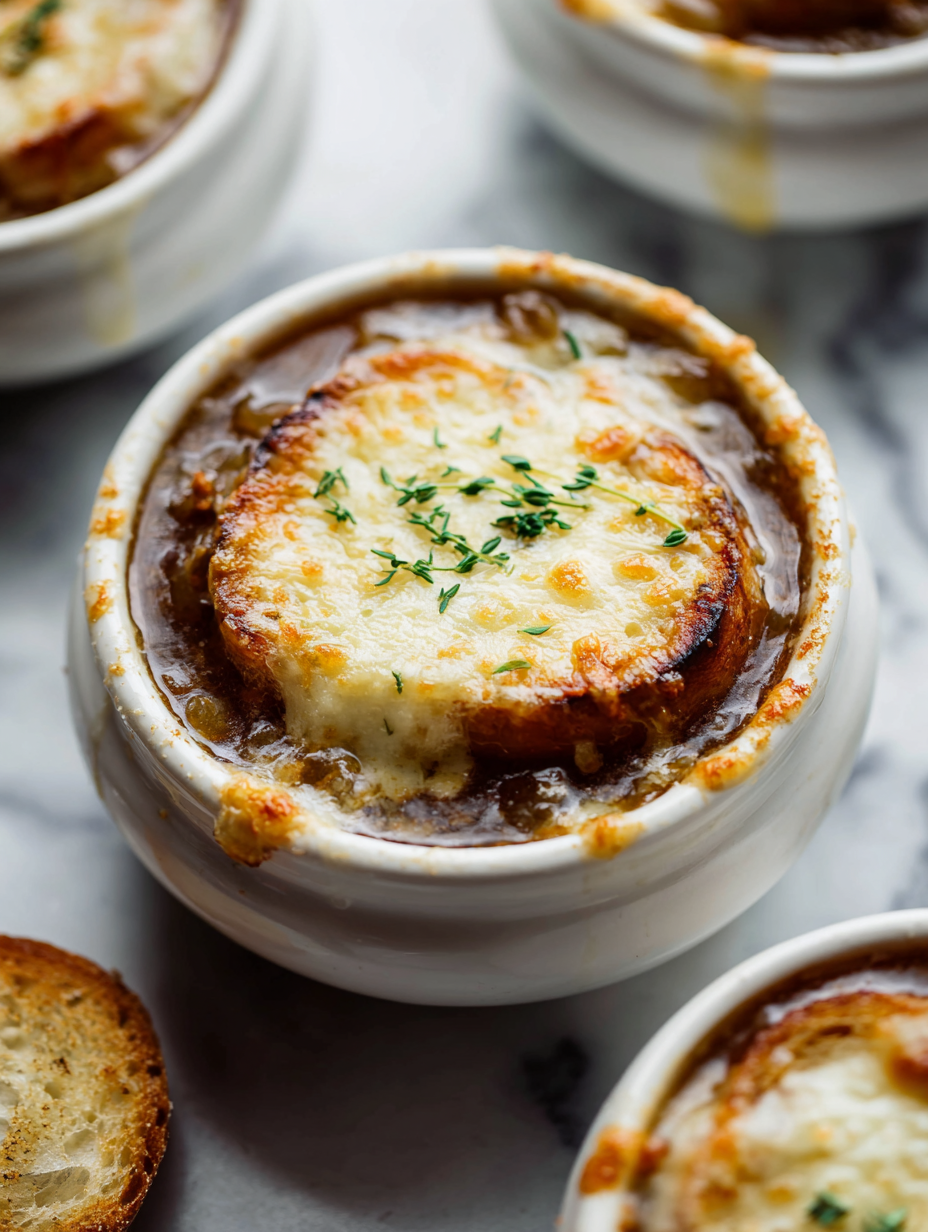
- Ladle hot soup into oven-safe bowls or crocks. Top each with a toasted baguette round. Generously sprinkle grated Gruyère cheese over the bread—covering the entire surface.
- Place the bowls on a baking sheet. Broil for 3-5 minutes until cheese is bubbling, golden, and slightly crispy at the edges. Keep an eye to prevent burning.
- Remove from oven and let sit for 1-2 minutes. The cheese will be hot and gooey, and the bread crispy. Serve immediately, with a little freshly chopped thyme if you like.
Let the soup sit for a minute after broiling to settle. Serve hot, with extra thyme if desired. The cheese should be gooey and golden, and the bread crispy yet tender underneath.
How to Know It’s Done
- Onions are deeply caramelized with a rich amber color and sweet smell.
- Wine has reduced by half, adding a bright, fruity aroma.
- Cheese is melted, bubbly, and golden brown, with a slight crisp on the edges.
French Onion Soup
Ingredients
Equipment
Method
- Peel and thinly slice the onions, aiming for about 1/8-inch slices. This helps them caramelize evenly and develop a rich flavor.
- Heat the butter and oil in a heavy-bottomed pot over medium-low heat until melted and fragrant. Add the sliced onions and a pinch of salt, stirring to coat them evenly in the fat.
- Cook the onions slowly, stirring every 10 minutes, until they turn a deep golden brown and become jammy, about 45-60 minutes. Keep the heat low to avoid burning and add a splash of water if they start sticking.
- Once caramelized, pour in the white wine and increase the heat slightly. Let it simmer until the wine reduces by half, about 5 minutes, to lift the sweet onion flavors.
- Add the broth, thyme, and bay leaf. Bring to a gentle simmer and cook uncovered for 20 minutes to meld all the flavors. Taste and season with salt and pepper as needed.
- Preheat your oven to 200°C/390°F. Slice the baguette into rounds and toast on a baking sheet until crispy and golden, about 8 minutes.
- Remove the herbs from the soup and ladle it into oven-safe bowls. Top each with a toasted baguette slice, then sprinkle generously with grated Gruyère cheese.
- Place the bowls on a baking sheet and broil in the oven until the cheese is bubbling and golden, about 3-5 minutes. Keep a close eye to prevent burning.
- Carefully remove the bowls from the oven and let sit for 1-2 minutes. The cheese will be hot and gooey, with a crispy edge, ready to serve.
Notes
Pro tips for perfect onion soup
- caramelization: Keep the heat low and stir often to develop deep, sweet, smoky onions without burning.
- deglazing: Use a splash of white wine or broth to loosen flavorful browned bits from the pan, boosting richness.
- cheese layering: Grate the Gruyère finely for quick melting and a bubbly, golden crust that seals in flavor.
- bread prep: Toast baguette slices until just crispy—this prevents sogginess and provides a perfect base for cheese.
- broiling: Watch the cheese closely under the grill; aim for bubbling and golden edges, not burnt. A quick, hot broil does the trick.
Common mistakes and how to fix them
- FORGOT to adjust heat during caramelization → Keep heat low, stir often, avoid scorching.
- DUMPED onions too early → Patience is key; onions need slow, even cooking for deep flavor.
- OVER-TORCHED cheese → Watch broiling closely; cheese should be golden, not burnt.
- MISSED deglazing with wine → Use wine or broth to loosen caramelized bits, boosting flavor.
Quick Fixes and Pantry Swaps
- When onions burn, splash in a little water to cool and loosen stuck bits.
- If soup is too salty, add a peeled potato and simmer 10 minutes to absorb excess salt.
- When cheese isn’t melting well, sprinkle a bit of cornstarch mixed with water before broiling.
- Splash a little lemon juice if the broth tastes flat or dull.
- Patch a broken bread top by adding fresh toasted slices to cover gaps for a uniform golden crust.
Prep, store, and reheat tips
- Caramelized onions can be made up to 2 days in advance; store in an airtight container in the fridge for a mellow, sweet aroma when reheated.
- Soup base—broth and onions—keeps well refrigerated for 2-3 days. Reheat gently on the stove, stirring often until warm and fragrant.
- Toasted bread and grated cheese can be prepared ahead; keep bread in a paper bag to maintain crispness, and cheese in an airtight container.
- Reheating: Warm soup on low heat, adding a splash of broth if it thickens or flavors dull. Broil cheese-topped bowls just before serving for that bubbly, golden top.
- Soup’s flavor deepens overnight. The caramelized onions develop a richer, more complex sweetness, so leftovers taste even better the next day.
Top questions about French Onion Soup
1. How do I know when the onions are caramelized enough?
Look for onions that have a deep, golden hue and smell sweet and caramelized. They should be soft and jammy when cooked properly.
2. Can I use vegetable broth instead of beef broth?
A good quality beef broth adds richness and depth, but vegetable broth works well for a lighter, vegetarian version.
3. Can I omit the wine or substitute it with something else?
Use a dry white wine to lift the sweetness and add brightness; if you prefer non-alcoholic, substitute with apple cider vinegar diluted with water.
4. What cheese works best for the topping?
Gruyère cheese melts beautifully into a bubbly, golden crust that’s slightly crispy on top. Swiss or Emmental can be good alternatives.
5. How should I prepare the bread topping?
Toast the baguette slices until crispy but not burnt, about 8 minutes at 200°C/390°F, for the perfect base for the cheese.
6. How do I know when the cheese is perfectly broiled?
Broil the cheese until bubbling and golden, about 3-5 minutes. Keep a close eye to avoid burning the cheese.
7. How far in advance can I prepare the onions?
Store caramelized onions in an airtight container in the fridge for up to 2 days. Reheat gently on the stove, stirring often.
8. Can I make this soup ahead of time?
Reheat the soup on low heat, adding a splash of broth if it thickens. Broil cheese-topped bowls just before serving for best texture.
9. What if the cheese doesn’t melt or brown properly?
If the cheese isn’t melting well, sprinkle a tiny bit of cornstarch mixed with water before broiling to help it bubble and brown properly.
10. What should I do if the onions start to burn?
When onions stick or burn, splash a little water or broth to loosen the bits and reduce the heat. Stir gently and patiently.
Making this soup is a slow, honest process that demands patience and attention. It’s about embracing the time it takes for onions to soften, caramelize, and develop that smoky sweetness that defines the dish. When it’s finally ready, every spoonful feels like a small reward for the quiet effort involved.
In a world that moves fast, this recipe reminds me to slow down and appreciate simple, honest ingredients. It’s a comforting dish that connects me to tradition, nostalgia, and the quiet joy of watching humble onions turn into something deeply satisfying.

Founded by Rachel Morgan, a proud home cook and foodie from Austin, Texas, this blog is all about transforming everyday meals into moments of joy.