
This spaghetti with tomato and basil isn’t just about the ingredients; it’s about tuning into the tiny, often overlooked adjustments that make all the difference. I’ve learned that balancing the bright acidity of fresh tomatoes with a touch of sugar transforms this dish from simple to extraordinary. It’s a dance of flavors that depends on your mood, your tomatoes, and that moment of perfect seasoning.
I come back to this recipe whenever I need a quick meal that feels like a small victory. The smell of garlic sizzling, the glisten of ripe tomatoes, and the fresh basil bursting with aroma—these are the signals that I’m close. It’s humble but layered, a reminder that sometimes less is more, especially when you pay close attention to those tiny flavor shifts.
Focusing on the unspoken art of balancing acidity and sweetness in a simple tomato basil spaghetti, highlighting how minor adjustments can transform the dish into a vibrant, flavor-rich experience.
The subtle art of flavor balance
- This dish reminds me of my grandmother’s small kitchen in Italy, where simple ingredients danced together in perfect harmony.
- There’s a quiet joy in watching ripe tomatoes burst open in the pan, releasing their sweet, tangy juice—like a little celebration.
- I often feel a surge of pride when I tweak the seasoning just right, catching that elusive balance of acidity and sweetness.
- Cooking this feels like a meditation—a moment to slow down and appreciate how a few fresh ingredients can create something so lively.
- It’s comfort food that sparks nostalgia, yet always invites me to experiment with new herbs or a splash of olive oil.
The story behind this recipe
- This recipe took root during a summer visit to a tiny Italian village, where I watched a nonna toss simple tomatoes and basil into her pot with such ease. That moment made me realize how unassuming ingredients, treated with respect, can turn into something extraordinary, even in a hurried kitchen.
- Every time I make this dish, I think back to those sun-drenched afternoons, the smell of fresh basil wafting through the air, and the way her hands moved confidently, balancing flavors without a fuss. It’s a reminder that the simplest meals are often the most memorable, especially when made with care and a bit of love.
- The act of seasoning just right, tasting as you go, feels like a quiet conversation between you and the ingredients. It’s not about perfection but about finding that sweet spot where acidity and sweetness sing together. That’s what keeps me returning to this dish, season after season, craving that perfect bite.
Contextual origin, trivia, or history
- This dish traces its roots to Italy’s southern regions, where fresh, sun-ripened tomatoes and herbs are abundant.
- The combination of tomato and basil became iconic in Italian cuisine during the Renaissance, symbolizing simplicity and freshness.
- Historically, spaghetti was a common pasta shape in Italy by the 12th century, but pairing it with fresh tomato sauce gained popularity in the 19th century.
- Basil was once considered a sacred herb in ancient Greece and India, valued for both culinary and medicinal properties.
- In Italy, this dish is often made with ingredients from the garden, emphasizing seasonal freshness and local flavor.
Ingredient breakdown: key components
- San Marzano tomatoes: I love their rich, sweet flavor and low acidity. If you can’t find them, opt for any ripe, heirloom variety for that lush, jammy quality.
- Fresh basil: Nothing beats the aroma of just-picked basil—vivid, peppery, with hints of mint. Use it generously, and consider adding a few leaves at the end for maximum aroma.
- Garlic: I prefer thin slices over minced—less bitter, more fragrant. When it sizzles to a light golden, that’s your cue to add the tomatoes.
- Good olive oil: I use a fruity, peppery oil—each drizzle enhances the dish’s richness. Skip it, and the flavor feels flat; use a neutral oil for a milder finish.
- Sea salt: I like flaky sea salt for a clean, briny pop. Adjust as you go—salty enough to elevate but not overpower the tomatoes.
- Pasta: I go for spaghetti with a bit of bite—al dente. Overcooked noodles turn mushy and drown in sauce; cook just to the recommended time, then toss hot into the sauce to finish.
- Black pepper: Freshly cracked, it adds a subtle heat and complexity. Grind over just before serving, and don’t forget to taste and adjust.
Spotlight on key ingredients
San Marzano tomatoes:
- I love their rich, sweet flavor and low acidity. If you can’t find them, opt for any ripe, heirloom variety for that lush, jammy quality.
- Fresh basil: Nothing beats the aroma of just-picked basil—vivid, peppery, with hints of mint. Use it generously, and consider adding a few leaves at the end for maximum aroma.
Fresh basil:
- Nothing beats the aroma of just-picked basil—vivid, peppery, with hints of mint. Use it generously, and consider adding a few leaves at the end for maximum aroma.
- Garlic: I prefer thin slices over minced—less bitter, more fragrant. When it sizzles to a light golden, that’s your cue to add the tomatoes.
Notes for ingredient swaps
- Fresh Tomatoes: I prefer ripe, heirloom or vine-ripened—juicy, vibrant, with a natural sweetness. You can substitute with canned San Marzano for a consistent, concentrated flavor.
- Basil: Use dried basil in a pinch, but it lacks the bright, peppery aroma of fresh leaves. Consider oregano or thyme for a different herbal note.
- Garlic: Roasted garlic offers a mellow, sweet depth—skip raw if you want a softer, less pungent taste. Use garlic powder if fresh isn’t available, but reduce quantity.
- Olive Oil: Opt for extra-virgin, fruity olive oil—its peppery, grassy notes elevate the dish. Neutral vegetable oil dulls the flavor; avoid it unless necessary.
- Salt: Flaky sea salt provides a clean, briny punch. For a milder saltiness, use fine sea salt or reduce the amount slightly.
- Pasta: Traditional spaghetti works best, but linguine or bucatini can be great alternatives. Cook to al dente, as overcooking turns them mushy in the sauce.
- Black Pepper: Freshly cracked for a lively bite. Pre-ground pepper is okay but loses its punch quickly; add just before serving for maximum aroma.
Equipment & Tools
- Large skillet: Cook the tomato sauce and sauté garlic.
- Pasta pot: Boil and cook spaghetti.
- Tongs: Toss and combine pasta with sauce.
- Wooden spoon: Mash tomatoes and stir sauce.
- Measuring cup: Reserve pasta water.
Step-by-step guide to perfect spaghetti
- Gather your equipment: a large skillet, tongs, a wooden spoon, and a pasta pot. Fill the pot with water, add salt, and bring to a rolling boil at 100°C (212°F).
- While waiting, prepare your ingredients: peel and thinly slice 3-4 garlic cloves, pick fresh basil leaves, and halve or quarter 4 ripe San Marzano tomatoes.
- Add spaghetti to boiling water. Cook until just al dente, about 8-10 minutes. Stir occasionally to prevent sticking. Set a timer for precise cooking and reserve a cup of pasta water before draining.
- Heat the skillet over medium heat (about 160°C / 320°F). Add 2-3 tablespoons of good olive oil, then sauté garlic slices until fragrant and light golden, about 30 seconds to 1 minute. Watch for a nutty aroma and slightly crispy edges.
- Add the tomatoes to the skillet. Cook gently, mashing slightly with a spoon, until they soften and release their juices, about 3-5 minutes. You want a simmering, fragrant, slightly thickened sauce. If it’s too dry, splash in a bit of reserved pasta water.
- Taste and season the sauce with sea salt and freshly cracked black pepper. Adjust acidity with a pinch of sugar if needed. Add a handful of basil leaves and stir through, letting the flavors meld for about 1 minute.
- Toss the drained spaghetti directly into the skillet with the sauce. Use tongs to coat every strand evenly. Cook together for 1-2 minutes to allow flavors to combine and noodles to absorb the sauce.
- Finish with a drizzle of olive oil, a few fresh basil leaves, and an extra crack of black pepper. Plate promptly with a sprinkle of flaky sea salt for added sparkle.
Serve immediately with a drizzle of olive oil, fresh basil, and a sprinkle of flaky sea salt. No resting needed—this dish is best enjoyed hot, straight from the skillet.
How to Know It’s Done
- Tomatoes are soft, fragrant, and slightly jammy.
- Noodles are just al dente, with a slight bite.
- Sauce coats pasta evenly, glossy and vibrant in color.
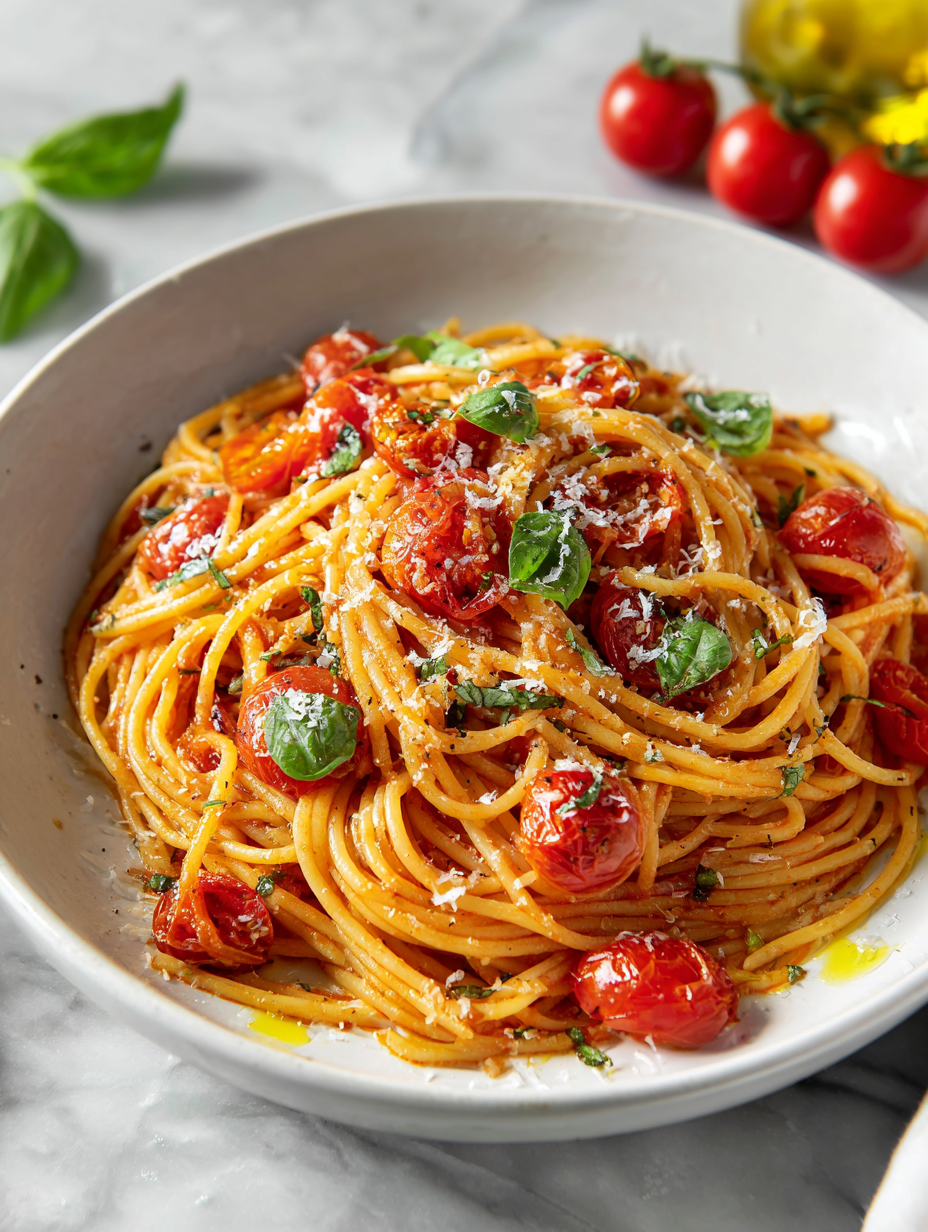
Simple Tomato Basil Spaghetti
Ingredients
Equipment
Method
- Bring a large pot of salted water to a rolling boil, then add the spaghetti. Cook until just al dente, about 8 to 10 minutes, stirring occasionally. Reserve a cup of pasta water, then drain the noodles and set aside.
- While the pasta cooks, heat the olive oil in a large skillet over medium heat. Add the sliced garlic and sauté until fragrant and lightly golden, about 30 seconds to 1 minute, releasing a warm, nutty aroma.
- Add the halved or quartered tomatoes to the skillet. Cook gently, mashing them slightly with the back of a wooden spoon, until they soften and release their juices, about 3 to 5 minutes. The mixture should become fragrant and slightly thickened, with vibrant red color.
- Season the sauce with sea salt and freshly cracked black pepper, tasting and adjusting as needed. Toss in the torn basil leaves, letting their aroma infuse the sauce for about a minute.
- Add the drained spaghetti directly into the skillet. Using tongs, toss the noodles with the sauce to coat evenly, allowing them to absorb the flavors for 1 to 2 minutes over low heat. If the sauce seems thick, stir in a splash of reserved pasta water for a glossy finish.
- Finish with a drizzle of olive oil, a few whole basil leaves for garnish, and an extra crack of black pepper. Serve immediately while hot, enjoying the vibrant aroma and lively flavors.
Tips and tricks for perfect spaghetti
- Use high-quality olive oil—its fruity aroma and peppery kick make or break the sauce.
- Sauté garlic gently—golden and fragrant, never brown or bitter—about 30 seconds in warm oil.
- Crush tomatoes with the back of a spoon—breaking them down gently to release maximum sweetness.
- Reserve pasta water—starchy and salty—to loosen the sauce and help it cling to every strand.
- Add basil at the end—bright, peppery, and fresh—so its aroma doesn’t cook away and stays lively.
- Taste and adjust seasoning—balance acidity with a pinch of sugar and proper salt for harmony.
- Serve immediately—hot and glossy—so the flavors are vibrant and the noodles have perfect bite.
Common mistakes and how to fix them
- OVERCOOKED PASTA: Rinse in cold water to stop cooking and prevent mushiness.
- DUMPED TOMATOES: Use fresh, ripe tomatoes; canned can turn dish flat if overused.
- FORGOT BASIL: Add basil at the end for aroma; stir in early for flavor infusion.
- TOO MUCH OIL: Use sparingly; too much makes the dish greasy and masks tomato flavor.
Quick fixes and pantry swaps
- When sauce shimmers and smells fragrant, it’s ready to toss with pasta.
- Splash a bit of pasta water if sauce is too thick and clings unevenly.
- Patch dull flavors with a pinch of sugar—brightens the acidity instantly.
- Shield with a lid if tomatoes splatter—keeps your stove clean in seconds.
- DUMPED tomatoes? Use canned for a quick fix—rich, consistent, and fuss-free.
Prep, store, and reheat tips
- Chop garlic and basil leaves ahead of time; store separately in airtight containers in the fridge for up to 2 days, preserving their aroma and freshness.
- Prepare the tomato base and cook the sauce up to stage five; cool and refrigerate in an airtight container for up to 24 hours. Reheat gently on low, watching for bubbling and fragrant aroma.
- Cook the pasta just shy of al dente, drain, and toss with a little olive oil to prevent sticking. Store in a sealed container in the fridge for up to 24 hours. Reheat in boiling water or microwave, checking for firmness and warmth.
- This dish’s flavors deepen slightly after a day; the basil’s aroma might mellow, but the tomato’s sweetness and acidity become more integrated. Reheat with a splash of reserved pasta water for a glossy finish.
- Avoid freezing the assembled dish; the texture of the pasta and fresh basil may suffer. Best enjoyed fresh or within a day for optimal flavor and texture.
Top questions about spaghetti with tomato and basil
1. What kind of tomatoes work best?
Use ripe, fresh tomatoes like heirlooms or vine-ripened for the best flavor. If tomatoes are bland, a splash of good olive oil can boost sweetness.
2. Should I use fresh or dried basil?
Fresh basil adds a peppery, aromatic punch. Use leaves generously, and add a few at the end for maximum freshness.
3. How long should I cook the spaghetti?
Cook pasta until just al dente, about 8-10 minutes. It will finish cooking in the sauce, so don’t overdo it.
4. How do I know when garlic is ready?
Sauté garlic until fragrant and lightly golden, about 30 seconds to 1 minute. Watch for a nutty aroma and avoid burning.
5. Why save pasta water?
Reserve a cup of pasta water before draining. It’s starchy and helps loosen the sauce or help it cling to the noodles.
6. How do I season the sauce properly?
Taste the sauce and balance acidity with a pinch of sugar. Adjust salt and pepper last, just before serving.
7. When should I add basil?
Add basil at the very end to keep its bright aroma. Toss it through the hot sauce just before serving.
8. Should I reheat leftovers?
Serve immediately while hot and glossy. This ensures the flavors are fresh and the noodles have the perfect bite.
9. What if the sauce is too thick?
If sauce gets too thick, stir in a bit of reserved pasta water to loosen it up and make it glossy again.
10. Can I use any olive oil?
Use good-quality extra-virgin olive oil for richness and aroma. Skip neutral oils to preserve flavor complexity.
This simple dish has a way of grounding me, reminding me how a handful of fresh ingredients can deliver such a lively punch of flavor. It’s quick, honest, and a little messy—just like cooking should be sometimes.
Whenever I make this, I feel connected to those small, bright moments in the kitchen, where patience and taste come together. It’s a reminder that good, honest food doesn’t need fuss—just a bit of attention and respect for the ingredients.

Founded by Rachel Morgan, a proud home cook and foodie from Austin, Texas, this blog is all about transforming everyday meals into moments of joy.