
Focusing on the overlooked art of balancing acidity and herbal brightness in roast chicken, this dish becomes a canvas for exploring how lemon and herbs transform simple poultry into a lively, aromatic centerpiece, emphasizing the importance of seasoning and timing over more complex techniques.
There’s something satisfying about a roast chicken that’s both straightforward and vibrant. The lemon’s tang and fresh herbs elevate the meat, making it feel like a special meal even on a busy weeknight. It’s a reminder that a few good ingredients and a bit of patience can turn the ordinary into something memorable.
This recipe is my go-to when I want the kitchen to smell like citrus and herbs, and I want a dinner that feels lively without fuss. It’s all about that perfect balance—crispy skin, juicy meat, and a bright, herbal punch that keeps everyone coming back for more.
Focusing on the overlooked art of balancing acidity and herbal brightness in roast chicken, this dish becomes a canvas for exploring how lemon and herbs transform simple poultry into a lively, aromatic centerpiece, emphasizing the importance of seasoning and timing over more complex techniques.
Balancing Brightness and Herbaceousness
- There’s a quiet joy in hearing the crackle of crispy skin as I carve into the chicken, releasing that fragrant lemon-herb steam.
- I remember the first time I added too much lemon—turned the whole dish into a tangy revelation that I still chase in every roast.
- This dish feels like a warm hug, even when I’m cooking for myself after a long day, the herbs filling the kitchen with life.
- Watching the herbs crisp up and turn golden makes me proud—like I’ve unlocked a simple secret to real flavor.
- Sometimes, I get nostalgic for family dinners around the table, where this roast was always the centerpiece, full of laughter and shared bites.
Inspiration Behind This Dish
I came across this recipe during a quiet weekend when I had a small, nearly forgotten lemon in the fridge and a bunch of herbs that needed using up. That burst of citrus and fragrant herbs made me realize how simple ingredients can transform a humble roast chicken into something surprisingly lively. It’s become my go-to for those evenings when I want comfort but also crave a fresh, bright flavor punch. Every time I make it, it reminds me that straightforward is often best, especially when the ingredients are good and the timing is right.
Contextual origin, trivia, or history
- Historically, roast chicken with lemon and herbs dates back to medieval Europe, where citrus was prized for its preservative and flavor-enhancing qualities.
- Lemon became a staple in Mediterranean cooking, especially in coastal regions where fresh citrus was abundant and used to brighten hearty poultry dishes.
- Ancient Romans often used herbs like thyme and rosemary in their roast meats, a tradition that continues in modern Mediterranean recipes.
- The practice of stuffing poultry with herbs and citrus likely originated as a way to ensure moisture and flavor during long, slow roasts before refrigeration.
Ingredient breakdown: key components
- Lemon: I love using a plump, fragrant lemon—its bright, zesty aroma really wakes up the chicken. If it’s too sour, balance with a touch of honey or sugar.
- Fresh herbs: I prefer a mix of thyme, rosemary, and parsley—they add a fragrant, earthy punch. Feel free to swap in sage or oregano for a different herbal note.
- Garlic: I mash cloves into the cavity for a mellow, aromatic infusion; if you dislike raw garlic, roast it first for a sweeter, milder flavor.
- Olive oil: I drizzle generously before roasting to ensure crisp skin and even browning. For a lighter option, use half olive oil, half chicken broth.
- Salt and pepper: I season generously—trust me, good seasoning makes all the difference. Don’t skimp on the salt, especially if using kosher or sea salt.
- Vegetables (optional): Roasting root veggies alongside adds sweetness and soak up the flavorful juices. Carrots, potatoes, or fennel work beautifully.
- Additional citrus: A squeeze of lemon over the finished dish brightens everything right before serving, adding a fresh, zesty shimmer.
Spotlight on key ingredients
Lemon and Herbs:
- Lemon: I love using a plump, fragrant lemon—its bright, zesty aroma really wakes up the chicken. If it’s too sour, balance with a touch of honey or sugar.
- Fresh herbs: I prefer a mix of thyme, rosemary, and parsley—they add a fragrant, earthy punch. Feel free to swap in sage or oregano for a different herbal note.
Notes for ingredient swaps
- Lemon: Use bottled lemon juice in a pinch—less bright but still adds acidity. For a sweeter twist, try orange zest.
- Fresh herbs: Dried herbs like thyme or rosemary can replace fresh, but use about a third of the amount and add early in cooking for flavor infusion.
- Garlic: Garlic powder or minced garlic from a jar can work if fresh isn’t available. Be mindful of the intensity—less is more.
- Olive oil: Avocado oil offers a milder, slightly nuttier flavor and a similar high smoke point. Butter can add richness but less crisp skin.
- Salt and pepper: Kosher salt can be swapped with sea salt; reduce quantity slightly if using fine salt to avoid over-seasoning.
- Vegetables: Fennel or shallots can replace traditional root veggies, adding a different aromatic profile and sweetness.
- Additional citrus: Lime or grapefruit can swap lemon for a different tang and aroma, providing a more exotic touch.
Equipment & Tools
- Oven: For roasting the chicken evenly at high heat.
- Roasting pan or ovenproof skillet: Supports the chicken and promotes crisp skin.
- Kitchen twine: Secures the cavity and keeps herbs inside during roasting.
- Meat probe or instant-read thermometer: Checks internal temperature for doneness.
- Basting brush or spoon: To baste the chicken with juices for added flavor and shine.
Step-by-step Roast Chicken with Lemon and Herbs
- Preheat your oven to 220°C (425°F). Rinse the chicken and pat dry thoroughly with paper towels—moisture is the enemy of crispy skin.
- In a small bowl, mix kosher salt, freshly ground pepper, and a tablespoon of olive oil. Rub this mixture all over the chicken, including under the skin if possible, for maximum flavor.
- Stuff the cavity with halved lemon, a few sprigs of thyme, rosemary, and a smashed garlic clove. Secure the cavity with kitchen twine if needed.
- Place the chicken on a roasting pan or ovenproof skillet—preferably with a rack—to promote even airflow and crisping. Tuck extra lemon slices and herbs around the bird.
- Roast uncovered for 15 minutes to get that initial sizzle. Then, reduce oven temperature to 180°C (350°F). Continue roasting for about 45-55 minutes, depending on chicken size, until the skin is golden and crispy.
- Baste the chicken with its juices halfway through to keep the skin glossy and flavorful. Watch for the skin to turn deep amber—this is your visual cue.
- Test for doneness: a meat probe inserted into the thickest part of the thigh should read 75°C (165°F). The juices should run clear when pierced.
- Once cooked, transfer the chicken to a cutting board and let rest for 10–15 minutes. Cover loosely with foil to retain warmth and allow juices to redistribute.
- Finish by squeezing fresh lemon over the resting chicken. Carve and serve with any roasted vegetables or simple greens.
Let the chicken rest on a cutting board, loosely covered with foil, for 10–15 minutes. Then squeeze fresh lemon over and carve. Serve immediately with roasted veggies or a simple salad.
How to Know It’s Done
- Skin is deep golden and crisp, not pale or soggy.
- Juices run clear when thigh is pierced, with no pink residual.
- Meat temperature reaches 75°C (165°F) for safety and juiciness.
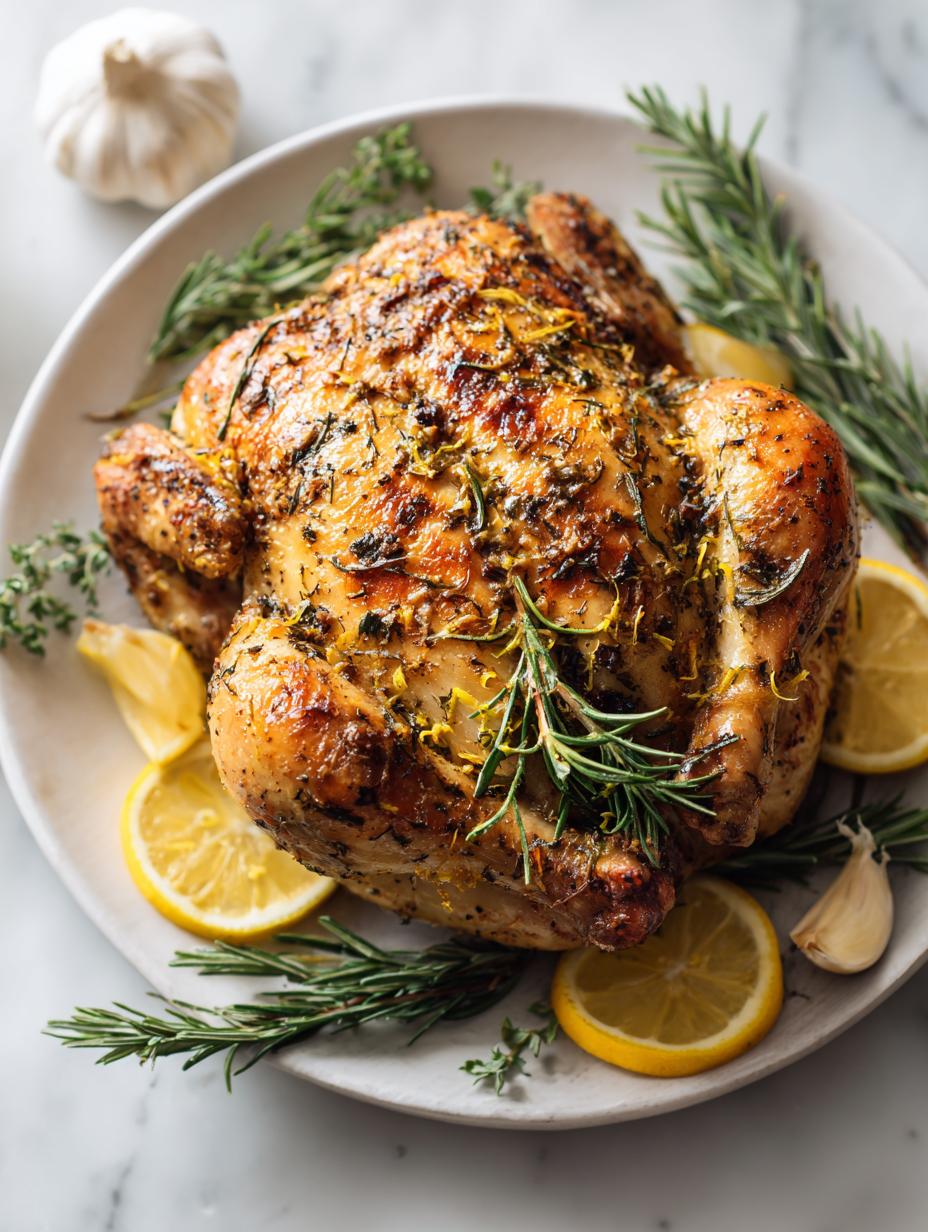
Lemon and Herb Roast Chicken
Ingredients
Equipment
Method
- Preheat your oven to 220°C (425°F). Rinse the chicken and pat it completely dry with paper towels; dry skin helps achieve that perfect crispy texture.
- Mix the olive oil with a generous sprinkle of salt and pepper, then rub this mixture all over the chicken, making sure to get under the skin where possible for extra flavor.
- Stuff the cavity with lemon halves, smashed garlic, and a few sprigs of thyme and rosemary, then secure the opening with kitchen twine to keep the herbs inside during roasting.
- Place the chicken on a roasting pan or ovenproof skillet, ideally on a rack, and tuck extra lemon slices and herb sprigs around it for added aroma and flavor during cooking.
- Roast the chicken uncovered for 15 minutes at high heat; then, reduce the oven temperature to 180°C (350°F) and continue roasting for about 45–55 minutes, until the skin is deep golden and crispy.
- Halfway through, baste the chicken with its juices using a basting brush or spoon to promote a glossy, flavorful skin and even browning.
- Check the internal temperature by inserting a thermometer into the thickest part of the thigh; it should reach 75°C (165°F), and the juices should run clear.
- Once cooked, transfer the chicken to a cutting board and let it rest for 10–15 minutes, loosely covered with foil, to allow the juices to settle and keep the meat juicy.
- Squeeze fresh lemon juice over the rested chicken, then carve into serving pieces, revealing moist, tender meat and crispy skin.
- Serve the chicken with your favorite sides, enjoying the vibrant herbal aroma and bright citrus flavor in every bite.
Tips and Tricks for Perfect Roast Chicken
- Crispy skin: Ensure the chicken skin is completely dry before oil and seasoning—moisture is the enemy of crispness.
- Herb infusion: Tuck whole sprigs of herbs and lemon slices inside the cavity for a fragrant, flavorful boost.
- Baste for shine: Baste the chicken with its juices halfway through roasting to enhance gloss and flavor.
- Monitor color: Watch the skin turn deep golden—overly dark means the oven’s too hot or too long.
- Rest properly: Rest the bird for at least 10 minutes before carving—juices need time to redistribute for maximum juiciness.
- Acid balance: Squeeze fresh lemon over the chicken right before serving to brighten all those herbal, roasted flavors.
- Use a rack: If possible, elevate the chicken on a rack in the pan—air circulates better, crisping the skin evenly.
Common mistakes and how to fix them
- FORGOT to pat the chicken dry, resulting in less crispy skin. Dry thoroughly before roasting.
- DUMPED too much lemon juice—make sure to balance acidity with herbs and seasoning.
- OVER-TORCHED the skin by roasting at too high a temperature longer than needed. Watch for deep amber color.
- UNDERSEASONED the bird—generous salt and herbs are key to flavor, don’t skimp.
Quick kitchen fixes
- When chicken skin isn’t crispy enough, splash a little vinegar in the pan; it shimmers and crisps better.
- If the chicken is undercooked, rescue with a quick 5-minute blast at 180°C (350°F) and check again.
- Patch a dry roast by brushing with warm, seasoned butter—adds moisture and boosts flavor.
- Dumped too much lemon? Add a pinch of sugar to balance the acidity instantly.
- When herbs burn or blacken, shield the chicken with foil and lower the oven temp slightly.
Prep, store, and reheat tips
- You can prep the chicken’s seasoning and herb stuffing a day ahead; keep it refrigerated to let flavors meld and save time on cooking day. The lemon can be sliced and stored separately, wrapped tightly to prevent drying.
- Roasted chicken is best enjoyed within 2–3 days when stored in an airtight container in the fridge. The aroma of herbs and lemon will mellow slightly but still carry a bright, herbal scent.
- Reheat gently in a low oven—around 150°C (300°F)—covered with foil. Expect the skin to lose some crispness but the meat to stay juicy, with a lingering citrus-herb aroma.
- Leftovers can be shredded and used in salads, sandwiches, or soups. The flavors deepen slightly as they sit, making the dish even more aromatic the next day.
Top questions about roast chicken
1. Should I bring the chicken to room temperature before roasting?
Use room temperature chicken for even cooking and better browning. It helps the heat penetrate more uniformly.
2. How do I know when the chicken is cooked through?
A meat thermometer inserted into the thickest part of the thigh should read 75°C (165°F). Juices should run clear.
3. Why is resting the chicken important?
Let the chicken rest for 10–15 minutes after roasting. This redistributes juices and keeps the meat moist.
4. How do I get crispy skin on roast chicken?
Dry the chicken thoroughly before seasoning to achieve crispy skin. Moisture prevents skin from crisping up.
5. Can I use dried herbs instead of fresh?
Use fresh herbs like thyme, rosemary, or parsley for maximum aroma. Dried herbs can be used but add earlier in cooking.
6. Should I start roasting at a high temperature?
Roast at high heat (around 220°C/425°F) initially to get the skin crackling, then lower to finish cooking.
7. What’s the best way to flavor the inside of the chicken?
Stuff the cavity with lemon halves, garlic, and herbs for flavor infusion. Secure with twine if needed.
8. What if the skin burns before it’s cooked through?
If skin is burning, cover with foil and lower oven temperature slightly. Check frequently as cooking times vary.
9. Should I use a rack when roasting?
Use a rack in the pan to promote even air circulation and crispy skin. It prevents the chicken from sitting in its juices.
10. How long can I keep roasted chicken leftovers?
Store leftovers in an airtight container in the fridge for up to 3 days. Reheat gently to keep moist.
This roast chicken with lemon and herbs isn’t just a recipe; it’s a reminder that simple ingredients can create something memorable. The aroma alone—bright citrus and fragrant herbs—makes the entire kitchen feel alive.
When I cook this, I think about how a few honest touches—like resting the meat or adding a squeeze of lemon—turn a straightforward meal into something that feels special without fuss. It’s honest cooking, rooted in tradition but always fresh.

Founded by Rachel Morgan, a proud home cook and foodie from Austin, Texas, this blog is all about transforming everyday meals into moments of joy.